

Paper
James M. Acton, Ankit Panda
{
  "authors": [
    "James M. Acton"
  ],
  "type": "legacyinthemedia",
  "centerAffiliationAll": "dc",
  "centers": [
    "Carnegie Endowment for International Peace"
  ],
  "collections": [
    "U.S. Nuclear Policy"
  ],
  "englishNewsletterAll": "ctw",
  "nonEnglishNewsletterAll": "",
  "primaryCenter": "Carnegie Endowment for International Peace",
  "programAffiliation": "NPP",
  "programs": [
    "Nuclear Policy"
  ],
  "projects": [],
  "regions": [
    "North America",
    "United States"
  ],
  "topics": [
    "Nuclear Policy",
    "Nuclear Energy"
  ]
}
Source: Getty
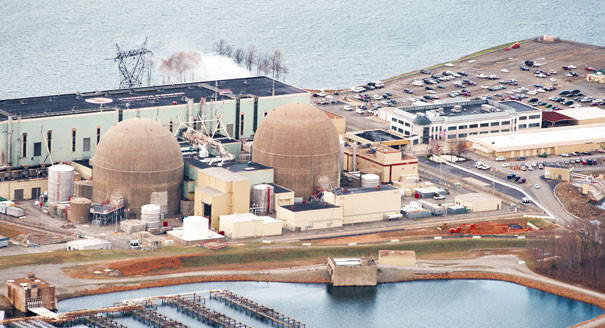
The former chairman of the U.S. Nuclear Regulatory Commission, Gregory Jaczko, is back in the news with a story that’s causing a stir in the nuclear industry.
Source: Platts Energy Week
The former chairman of the U.S. Nuclear Regulatory Commission is back in the news with a story that’s causing a stir in the nuclear industry. At a Washington conference, Gregory Jaczko said all 104 nuclear power reactors in the U.S. are fundamentally flawed and should be phased out. What will be the fallout of his remarks in the industry and the public? Carnegie's James Acton spoke with Platts Energy Week host Bill Loveless.
"The chairman made remarks about the problem of decay heat and there is no question that the problems of mismanaging decay heat were vividly demonstrated in the Fukushima accident," Acton said, adding that he thinks that opposing the filtered, hardened venting, which is an issue that is going before the NRC at the moment, is a mistake on behalf of the industry.
"I think that had the industry been pro-active about this issue, as they had been very pro-active about the so-called FLEX approach for managing a severe accident should one occur, the industry would have done itself a much greater service than by trying to oppose the particular step of filtered, hardened venting," Acton said.
"My interpretation of the chairman's comments was that he was saying that there are issues with current reactors and that they should be phased out over time, that is something that I fundamentally disagree with," concluded Acton.

Jessica T. Mathews Chair, Co-director, Nuclear Policy Program
Acton holds the Jessica T. Mathews Chair and is co-director of the Nuclear Policy Program at the Carnegie Endowment for International Peace.
Recent Work

James M. Acton, Ankit Panda
James M. Acton
Carnegie does not take institutional positions on public policy issues; the views represented herein are those of the author(s) and do not necessarily reflect the views of Carnegie, its staff, or its trustees.

Ongoing uncertainty in the Middle East allows Moscow to both increase its influence in Tehran and continue to enjoy the financial windfall of higher oil prices.

Nikita Smagin

Governments in Estonia, Latvia, and Lithuania want to ensure that a U.S. military withdrawal would not leave them dangerously exposed to a Russian attack.

Sergejs Potapkins
Troubled by the growing salience of nuclear debates in East Asia, Moscow has responded in its usual way: with condemnation and threats. But by exacerbating insecurity, Russia is forcing South Korea and Japan to consider radical security options.

James D.J. Brown

The Russian leadership wants to avoid a dangerous precedent in which it is squeezed out of Iran by the United States and Israel—and left powerless to respond in any meaningful way.
Nikita Smagin
Lukashenko is willing to make big sacrifices for an invitation to Mar-a-Lago or the White House. He also knows that the clock is ticking: he must squeeze as much out of the Trump administration as he can before congressional elections in November leave Trump hamstrung or distracted.

Artyom Shraibman