

Commentary
Bayram Balci
{
  "authors": [
    "Bayram Balci"
  ],
  "type": "legacyinthemedia",
  "centerAffiliationAll": "dc",
  "centers": [
    "Carnegie Endowment for International Peace"
  ],
  "collections": [],
  "englishNewsletterAll": "menaTransitions",
  "nonEnglishNewsletterAll": "",
  "primaryCenter": "Carnegie Endowment for International Peace",
  "programAffiliation": "MEP",
  "programs": [
    "Middle East"
  ],
  "projects": [],
  "regions": [
    "North America",
    "United States",
    "Caucasus",
    "Russia"
  ],
  "topics": [
    "Security"
  ]
}
Source: Getty
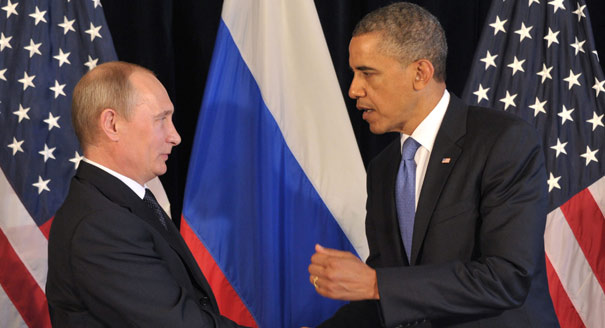
After the Boston bombings by two ethnically Chechen brothers, Russia is angling for added U.S. anti-terrorism support in its efforts to subdue the rebellious northern Caucasus region.
Source: Globalist
It is striking how Russia, led by President Putin, has been actively pushing for greater anti-terrorism cooperation with the United States since the Boston marathon bombing — irrespective of the open question about whether there were earlier failures of intelligence sharing that could have helped avoid it. But despite the deep the grief of the American people and the need for quick answers, Moscow should be engaged with discriminatingly.
Although cooperation is essential in this specific case, it would be counterproductive to let Putin take the lead in U.S.-endorsed counter-terrorism operations in a broader sense.
The impact of the Chechen Wars of the 1990s and the associated indiscriminate repression in the Northern Caucasus led to significantly greater support for violent jihad.Caution is essential in drawing any firm conclusions while the police and intelligence investigation is ongoing. But it has so far failed to establish a definitive link between the bombing and the international jihadist rebellion in the Caucasus.
It is also important to note that the "Caucasus Emirate," the leading jihadist terrorist group in opposition to Moscow's rule in the North Caucasus region, has always targeted Russian interests, Russia's local allies and "apostates". Since 2007, they have almost completely stopped targeting civilians.
No links between the Tsarnaev brothers and the Caucasus Emirate have been confirmed. It seems most likely that the rookie terrorists succumbed to desperation and nihilism and acted alone by pure folly.Even though the younger brother got American citizenship, they failed to adapt effectively in the United States.
They should be seen in some respects as typical of the young Chechen generation: born in exile, shaped by family stories of deportation and oppression and instilled with a sense of war and desire for revenge.
For many Chechens, the war has never stopped. It's still going on, wherever they are.
The Boston terrorist attack demands again that Russia and the U.S. work together more closely to take a firm stand on stopping terrorism. This remains the case although Moscow and Washington hold divergent views on what constitutes terrorism and how it should be eradicated.
In the Russian Northern Caucasus, counter-terrorism efforts seek to tackle all kinds of resistance to Russian rule but are often pursued with disrespect for even the most basic human rights.Greater cooperation with the United States serves Putin's interests as he hopes that Washington will express less criticism of Russian operations in the Caucasus as a result. Chechen terrorism has until now had nothing to do with the United States directly.
And before getting involved further in Russian and Chechen issues, the U.S. administration should understand how Chechen terrorism is in many ways a reaction to Russian colonial and repressive rule that dates back to the middle of the 19th century.
Regardless of initial promises, the Soviet regime ended up doing much worse still.
Stalin's purges targeted over 50,000 Chechens in the 1930s. In 1944 the entire Chechen people were deported in freight wagons and disembarked in the steppes of Kazakhstan. A third of them died in the process. The rest survived in exile infected with rage.
Russian and Soviet terror was followed by Yeltsin's chaotic rule and then Putin's. The wars of 1994 and 1999 were fought in the name of independence. But the sacrifice of as many as 200,000 lives proved in vain as the "Chechen issue" remains very present for the Russian state and the Chechen people.Both Yeltsin and Putin should be seen as ultimately responsible for the atrocities carried out during the wars of the 1990s — as well as for the radicalization of a population that had previously been more secular and nationalist than any other Muslim province of the USSR.
Despite this complicated history it is vital that the United States and Russia increase cooperation to help make sure that this isolated act of terrorism remains just that.
But the American administration should be careful about the way it engages in centuries-long Russian-Chechen antagonism so as not to add anti-Americanism to Caucasian claims.
Former Nonresident Scholar, Russia and Eurasia Program
Balci was a nonresident scholar in Carnegie’s Russia and Eurasia Program, where his research focuses on Turkey and Turkish foreign policy in Central Asia and the Caucasus.
Recent Work
Bayram Balci
Bayram Balci, Daniyar Kosnazarov
Carnegie does not take institutional positions on public policy issues; the views represented herein are those of the author(s) and do not necessarily reflect the views of Carnegie, its staff, or its trustees.

Russia’s ruling party would have benefited from Putin appearing as its distant patron, but as an active frontman imposing his views on the public, he has done nothing but harm both the party’s election campaign and the ruling system overall.

Andrey Pertsev

Depleted financial reserves and a shrinking tax base mean it is no longer possible to simultaneously deliver high defense spending, price stability, and economic growth.

Alexandra Prokopenko
Blurring the line between humans and animals is a long-standing tradition in social utopian prose. In his latest novel, Leonid Bershidsky reminds us that in social experiments, people are often treated no differently than animals.

Alexander Baunov
While France and Australia are seeking to establish the legal obligations of messaging apps like Telegram, Russia wants total subordination.

Maria Kolomychenko
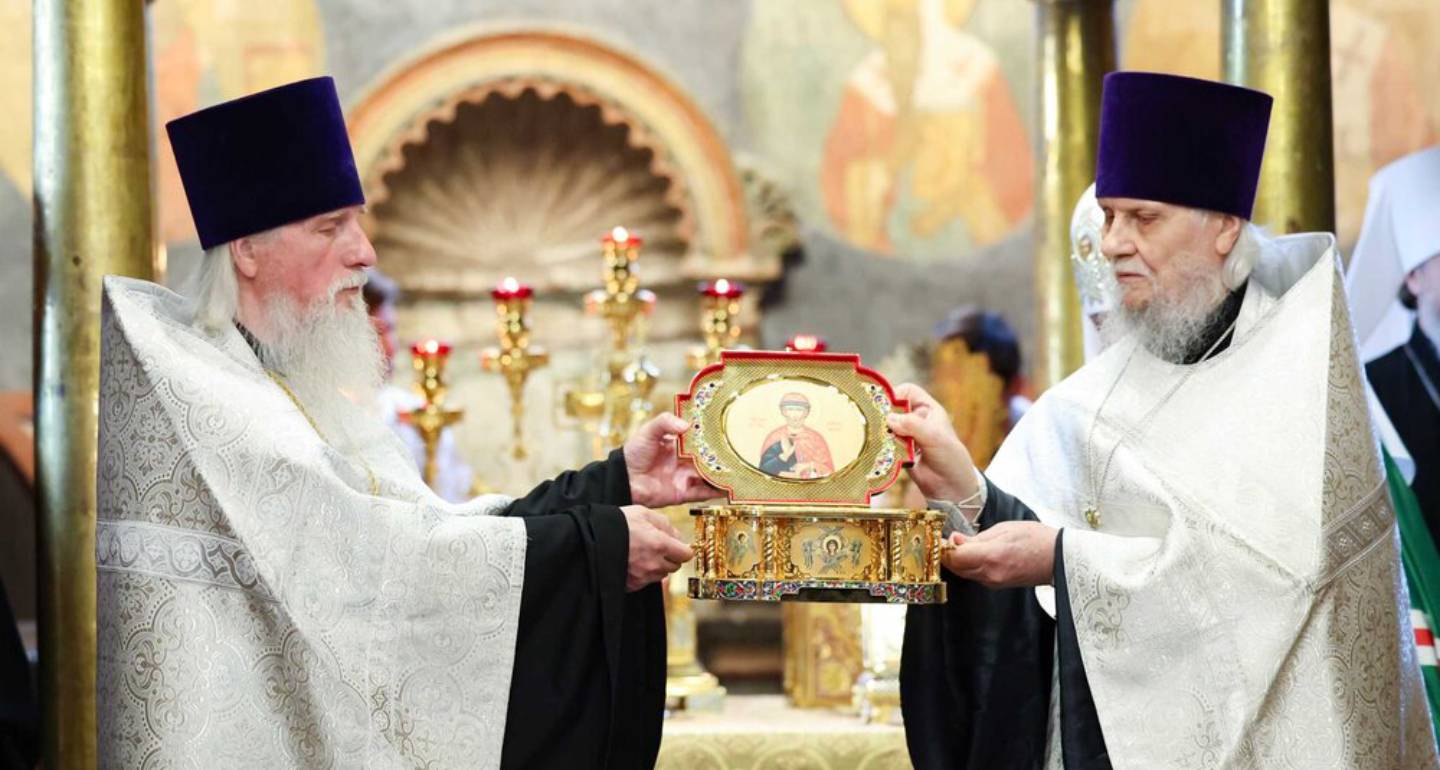
The recent uncovering of Dmitry Donskoy’s relics in the Cathedral of the Archangel is yet another attempt by the Russian Orthodox Church to help the state solve its problems. However, parroting the state’s version of Russian history leaves the Church with no message except “patriotism.”
Alexander Zanemonets