

In The Media
John Judis
{
  "authors": [
    "John Judis"
  ],
  "type": "legacyinthemedia",
  "centerAffiliationAll": "",
  "centers": [
    "Carnegie Endowment for International Peace"
  ],
  "collections": [],
  "englishNewsletterAll": "",
  "nonEnglishNewsletterAll": "",
  "primaryCenter": "Carnegie Endowment for International Peace",
  "programAffiliation": "",
  "programs": [],
  "projects": [],
  "regions": [
    "North America",
    "United States"
  ],
  "topics": [
    "Political Reform",
    "Security"
  ]
}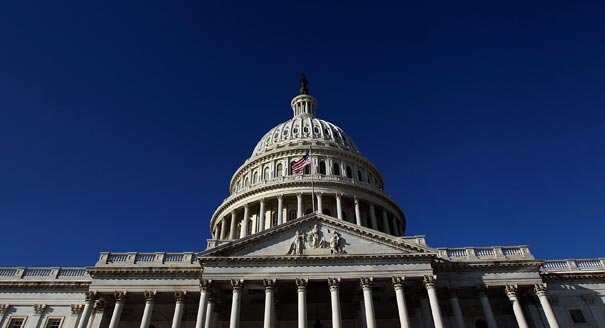
Source: Getty
The United States needs a re-examination of the National Security Agency and other national security agencies, as well as the Foreign Intelligence Surveillance Court that is supposed to authorize their activities.
Source: New Republic
The defenders of government surveillance have used the media’s fascination with personalities to turn attention onto leaker Edward Snowden and away from what he disclosed. What Snowden’s leak should prompt is a re-examination of the National Security Agency (NSA) and other national security agencies and the Foreign Intelligence Surveillance Court (FISA) that is supposed to authorize their activities.Nancy Gertner, a former federal judge who teaches at the Harvard Law School, casts doubt on FISA’s. The court, whose members are appointed by Chief Judge Roberts, is stocked with conservatives, including Robert Vinson, who approved the NSA surveillance, and who earlier declared the Affordable Care Act unconstitutional. Its opinions are secret, and not subject to public debate.
Gertner, responding to a statement commending the FISA court, told a meeting in Washington, “As a former Article III judge, I can tell you that your faith in the FISA Court is dramatically misplaced. Two reasons: One … The Fourth Amendment frameworks have been substantially diluted in the ordinary police case. One can only imagine what the dilution is in a national security setting. Two, the people who make it on the FISA court, who are appointed to the FISA court, are not judges like me. Enough said.”

Former Visiting Scholar
As a visiting scholar at Carnegie, Judis wrote The Folly of Empire: What George W. Bush Could Learn from Theodore Roosevelt and Woodrow Wilson.
Recent Work
John Judis
John Judis
Carnegie does not take institutional positions on public policy issues; the views represented herein are those of the author(s) and do not necessarily reflect the views of Carnegie, its staff, or its trustees.

Japan’s long-term security policy is driven by concerns about China, and there is little appetite for (or interest in) pursuing a confrontation with Moscow.

James D.J. Brown

The truth of the strategic situation is that Europe and Russia are extremely unlikely to be able to “turn the page” on their confrontation within the next two decades.

Arkady Moshes

Putin’s conservative staffing policies and search for ever greater control have cemented parliament’s transformation into a bureaucratic appendage of the executive branch.

Andrey Pertsev

Russia’s AI-driven propaganda campaigns operate in a fragmented, chaotic, and often illogical manner. That’s not necessarily a problem for the Kremlin, though: It’s much easier to mimic genuine public debate that way.

Ilya Klishin

Russian strikes are weakening the economy sustaining Ukraine’s war effort. Closing the growing funding gap will require more European support and politically contentious reforms in Kyiv.

Balázs Jarábik