

Article
C. Raja Mohan, Darshana M. Baruah
{
  "authors": [
    "C. Raja Mohan"
  ],
  "type": "legacyinthemedia",
  "centerAffiliationAll": "dc",
  "centers": [
    "Carnegie Endowment for International Peace",
    "Carnegie India"
  ],
  "collections": [],
  "englishNewsletterAll": "ctw",
  "nonEnglishNewsletterAll": "",
  "primaryCenter": "Carnegie India",
  "programAffiliation": "SAP",
  "programs": [
    "South Asia"
  ],
  "projects": [],
  "regions": [
    "South Asia",
    "India",
    "Pakistan"
  ],
  "topics": [
    "Security",
    "Military",
    "Foreign Policy"
  ]
}
Source: Getty
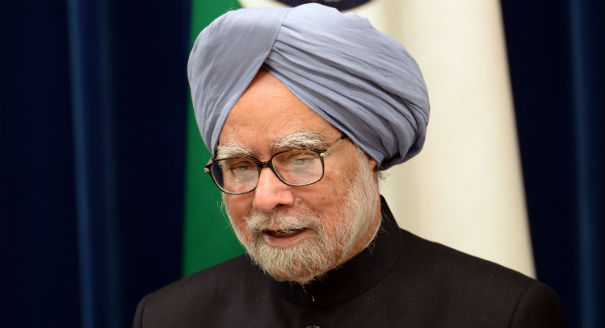
If Prime Ministers Sharif and Singh want to make real headway, they’ll have to take ownership of the reconciliation process.
Source: Indian Express
Pakistan Prime Minister Nawaz Sharif's special envoy, Shaharyar Mohammad Khan, was in Delhi last Friday conveying the new premier's determination to transform bilateral relations with India. Sharif was reciprocating Manmohan Singh's gesture of sending his special envoy, Satinder Lambah, to Pakistan a few weeks ago.
Lambah and Khan now form a credible channel of communication between Singh and Sharif, thanks to their long experience in India-Pakistan negotiations. Lambah has been PM Singh's back channel negotiator with General Pervez Musharraf and President Asif Ali Zardari since 2005. He was high commissioner to Pakistan and has known the Sharifs for more than a quarter of a century. Khan was foreign secretary of Pakistan in the early 1990s and helped initiate a dialogue with India under rather difficult circumstances—when Kashmir and Punjab were burning and military crises on the border were frequent. The heir to the royal throne of Bhopal and a former chairman of the Pakistan Cricket Board, Shaharyar Khan is the cousin of late Indian cricketer Mansur Ali Khan Pataudi. Few can match Khan's deep appreciation of the intimacies and intricacies of India-Pakistan relations.Lambah and Khan are also fully conscious of the fragility of the bilateral relations and the difficulty of turning good intentions towards each other into practical results. The two envoys know better than anyone that India-Pakistan relations are accident-prone. They have seen minor incidents acquire gigantic political proportions and undercut carefully crafted agreements. What is worse, the political calendars in the two countries are rarely in sync.
With their deep knowledge of India-Pakistan diplomatic history, Lambah and Khan must convince the two prime ministers to act quickly and decisively on five important imperatives confronting them.
For one, they must remind Manmohan Singh and Sharif that time is of the essence. The current window of opportunity in India-Pakistan relations will not be open for too long. The extraordinary problems that confront Sharif will ensure his political honeymoon in Pakistan is short. Meanwhile, the approaching general elections in India will make it difficult to take new policy initiatives after the end of this year. Put simply, Singh and Sharif have just a few months to make some bold moves.
Two, the two leaders should personally drive the process rather than let their respective bureaucracies set the pace and direction of the renewed engagement. Nawaz Sharif's political capital is at its peak right now and he is in a position to take some risks. As he completes 10 years at the helm, Manmohan Singh needs to make at least one big effort to get some results from a political project in which he has invested so much.
Three, Singh and Sharif must recast the structure of the current bilateral process, called the "composite and integrated dialogue." The process today is as ponderous as its name. The two leaders should not be tied down by this framework. They must focus on a few priorities and low-hanging fruit that can be plucked. Both sides also know some issues—like Siachen, Sir Creek, and the normalization of trade relations—now need political intervention. Further talks at the bureaucratic level will not be consequential.
Four, the two leaders should draw new stakeholders into the India-Pakistan peace process, especially the chief ministers of the border states. The interaction between the chief ministers of the two Punjabs over the last decade has only reinforced the peace process. Encouraging an early visit to India by Shahbaz Sharif, Nawaz's brother, who is chief minister of West Punjab, should generate good momentum for the dialogue between the two prime ministers. That the Akali Dal, an ally of the BJP, is demanding deeper cooperation between the two Punjabs should help create some political space for Manmohan Singh and the UPA government. Delhi should also encourage the chief minister of Rajasthan, for instance, to reach out to his counterpart across the border in the Sindh province.
Five, Manmohan Singh and Sharif need to be sensitive to the political constraints on the other. In Pakistan, there has not been adequate appreciation of what the 26/11 attacks on Mumbai meant for India and why it is important to make steady progress in bringing the perpetrators to justice.
In its relentless emphasis on 26/11, India tends to forget the limitations of the civilian leaders in Pakistan and to give a veto to opponents of Pakistan's normalization of relations with India. The lack of sufficient public warmth in the UPA government and among Congress leaders for renewed engagement makes Delhi look arrogant and unresponsive to the widespread desire in Pakistan for friendly relations with India.
Beyond 26/11, India and Pakistan badly need communication and consultation between the two intelligence establishments. A mechanism between the RAW and the ISI had operated in the past. Its revival will be an important confidence-building measure. There is also much room for expanding CBMs across the Line of Control in Kashmir and implementing effectively those already in place.
Finally, its time Manmohan Singh travelled to Pakistan. Over the last decade, Musharraf has made two visits to India and Zardari one. Rather than wait for agreements to be finalized, the PM should set the dates for an early visit. That would indeed galvanize the two systems to produce consequential outcomes.
From a political perspective, too, the UPA government needs to inject some boldness into its Pakistan policy. Atal Bihari Vajpayee, representing the "communal" BJP, visited Pakistan twice during his six-year tenure as PM. Manmohan Singh representing the "secular" Congress has been too timid to go across the border. Surely that is not the legacy that Manmohan Singh and the Congress want to leave for the next government.
Former Nonresident Senior Fellow, Carnegie India
A leading analyst of India’s foreign policy, Mohan is also an expert on South Asian security, great-power relations in Asia, and arms control.
Recent Work

C. Raja Mohan, Darshana M. Baruah


Alexander Gabuev, Paul Haenle, C. Raja Mohan, …
Carnegie does not take institutional positions on public policy issues; the views represented herein are those of the author(s) and do not necessarily reflect the views of Carnegie, its staff, or its trustees.

This year’s wars have made alternative routes to transit through Russia no less risky for Central Asian countries.

Galiya Ibragimova
Reestablishing a dialogue with Moscow is not a goal in its own right. The goal is to guarantee the independence of Ukraine and the peace and security of Europe.
Arkady Moshes
Ukraine’s increasingly confrontational posture on Belarus reflects Kyiv’s effort to shape the emerging regional order in Eastern Europe. Kyiv wants to limit European normalization with Minsk—and any future rapprochement with Russia.

Balázs Jarábik
By fueling the arguments of both supporters and opponents of Armenian Prime Minister Nikol Pashinyan, Azerbaijan wants to ensure he is re-elected with a weaker mandate.

Bashir Kitachaev

A much-discussed disagreement over internet restrictions in Russia was never an existential threat for Putin: It was about elite groups protecting their interests.

Alexandra Prokopenko