

Article
C. Raja Mohan, Darshana M. Baruah
{
  "authors": [
    "C. Raja Mohan"
  ],
  "type": "legacyinthemedia",
  "centerAffiliationAll": "dc",
  "centers": [
    "Carnegie Endowment for International Peace",
    "Carnegie India"
  ],
  "collections": [],
  "englishNewsletterAll": "ctw",
  "nonEnglishNewsletterAll": "",
  "primaryCenter": "Carnegie India",
  "programAffiliation": "SAP",
  "programs": [
    "South Asia"
  ],
  "projects": [],
  "regions": [
    "South Asia",
    "Afghanistan",
    "Pakistan"
  ],
  "topics": [
    "Security",
    "Foreign Policy"
  ]
}
Source: Getty
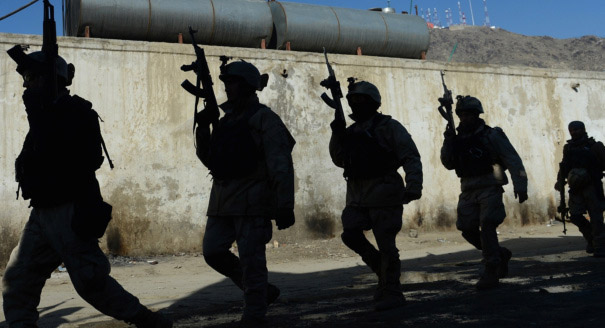
Pakistan’s leverage over the Taliban is driving negotiations over Afghanistan’s future.
Source: Indian Express
As tensions between Kabul and Islamabad threaten the fragile peace process in Afghanistan, the Taliban's role as a proxy for Pakistan's interests has come back into sharp focus this week.
Gen. Sher Mohammad Karimi, the head of the Afghan armed forces told the BBC in an interview that the prolonged war in his country can come to an end "within a week" if Pakistan stops supporting the Taliban.
On the face of it, Gen. Karimi's statement is not a shocking revelation. Despite repeated Pakistani that it controls the Taliban, few in the world question the reality of the Pakistan army's extraordinary influence on the militancy in Afghanistan.The doubts, if any, have disappeared as Pakistan in recent months orchestrated the process of political reconciliation, by selectively releasing some Taliban leaders from detention, promoted the opening of their office in Qatar, and managed their communication and contact with the United States.
Karimi's decision to reaffirm the well-known truth about Pakistan's control over the Taliban comes amidst the reports that Islamabad is pushing for a power sharing arrangement in which the Taliban will control the eastern and southern provinces in Afghanistan.
Although Islamabad has denied these allegations, Kabul says that Sartaj Aziz, foreign policy adviser to the Pakistan Prime Minister Nawaz Sharif, put across the proposal to the Afghan ambassador in Islamabad, Umer Daudzai in a meeting last week.
The Afghan Deputy Foreign Minister, Ershad Ahmadi pointed to "the elements within the Pakistan government who have a grand design for using the peace process as a means to undermine the Afghan state and establish little fiefdoms around the country in which the Taliban--its most important strategic asset in Afghanistan--play an influential role".
Ahmadi expressed his deep disappointment that the newly elected Nawaz Sharif government might be buying into the attempts by the ISI to weaken the Afghan state. He said federalising Afghanistan is part of an effort to win at the peace table what the ISI could not achieve on the battlefield with its proxy, the Taliban.
Interestingly, the Afghan Taliban too expressed its opposition to any form of federalism in Afghanistan. Cynics would say this is mere posturing. They argue that the Taliban in any case has no incentive to abide by any arrangement to share power once the international forces withdraw from Afghanistan and will seek to establish an Islamic Emirate in the nation.
Former Nonresident Senior Fellow, Carnegie India
A leading analyst of India’s foreign policy, Mohan is also an expert on South Asian security, great-power relations in Asia, and arms control.
Recent Work

C. Raja Mohan, Darshana M. Baruah


Alexander Gabuev, Paul Haenle, C. Raja Mohan, …
Carnegie does not take institutional positions on public policy issues; the views represented herein are those of the author(s) and do not necessarily reflect the views of Carnegie, its staff, or its trustees.

Japan’s long-term security policy is driven by concerns about China, and there is little appetite for (or interest in) pursuing a confrontation with Moscow.

James D.J. Brown

The truth of the strategic situation is that Europe and Russia are extremely unlikely to be able to “turn the page” on their confrontation within the next two decades.

Arkady Moshes

Russia’s AI-driven propaganda campaigns operate in a fragmented, chaotic, and often illogical manner. That’s not necessarily a problem for the Kremlin, though: It’s much easier to mimic genuine public debate that way.

Ilya Klishin

Without a ceasefire with Ukraine on attacking each other’s energy infrastructure—to which the Kremlin is unlikely to agree—the diesel agreement between Putin and Trump is largely for show, rather than representing a genuine increase in the volumes of Russian diesel on the global market.

Sergey Vakulenko

Russian strikes are weakening the economy sustaining Ukraine’s war effort. Closing the growing funding gap will require more European support and politically contentious reforms in Kyiv.

Balázs Jarábik