

In The Media
John Judis
{
  "authors": [
    "John Judis"
  ],
  "type": "legacyinthemedia",
  "centerAffiliationAll": "",
  "centers": [
    "Carnegie Endowment for International Peace",
    "Malcolm H. Kerr Carnegie Middle East Center"
  ],
  "collections": [],
  "englishNewsletterAll": "",
  "nonEnglishNewsletterAll": "",
  "primaryCenter": "Carnegie Endowment for International Peace",
  "programAffiliation": "",
  "programs": [],
  "projects": [],
  "regions": [
    "North America",
    "United States",
    "Middle East",
    "Syria",
    "Levant"
  ],
  "topics": [
    "Political Reform",
    "Security",
    "Democracy",
    "Foreign Policy",
    "Global Governance"
  ]
}
Source: Getty
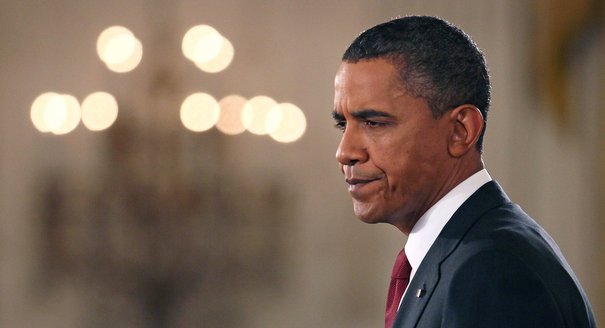
Barack Obama, known previously for his caution, has decided to take an enormous risk and seek Congressional authorization for a military strike against Syria.
Source: New Republic
Barack Obama, known previously for his caution, has decided to take an enormous risk and seek Congressional authorization for a military strike against Syria. If Obama fails to get authorization, does he then go ahead regardless? Or does he renege on his promise to enforce a “red line” on the use of chemical weapons? At risk is Obama’s presidency and the country’s ability to act in the world.
Obama has good reason to worry about gaining Congressional support. One need only look back at what happened in 1999 during the American-led war against Serbia in Kosovo. Bill Clinton, like Obama , had failed to get U.N. Security Council backing for the war because of opposition from China and Russia, but he had the firm support of NATO, and in late March, without Congressional authorization, but with tepid public support, the U.S. and NATO launched the air war that was designed to drive Serbian troops out of Kosovo.
A month later, with the war dragging on, Congress voted on whether to authorize military action. The Senate backed the administration by 58 to 41, with most Democrats and with “old guard” Republicans like Orrin Hatch and foreign policy hawks like John McCain in favor, but in the House the resolution failed by 213 to 213 because of opposition from 187 Republicans and 25 Democrats. Clinton, of course, ignored the House vote, and six weeks later, the NATO offensive succeeded, but it’s not clear that Obama will be able to ignore the lack of a Congressional majority.Is Obama likely to lose a vote in Congress? Let’s take the example of 1999. In the Senate, Obama should get his way just as Clinton did, and perhaps even more so, because he enjoys a Democratic majority. But in the House he could be in big trouble. The Republicans have a larger majority now than they did in 1999—234 to 201 now vs. 223 to 211 then. The parties are more polarized now than then. There are fewer Republican moderates or Southern hawks in the House, and there are more Democrats who, in the wake of the wars of Iraq and Afghanistan, are likely to oppose the President. And there is not the kind of public support that even Clinton enjoyed in the Spring of 1999. The only advantage in Obama’s favor is that the military action he proposes is relatively limited and not open-ended.
If Obama does win authorization in the House and goes ahead, he will have scored an immense political victory—one that would bode well for the budget and debt battles to come. To succeed, he will have to split the Republican party that, to date, has presented a fairly united front in the face of his proposals. If he wins, he will also be strengthened internationally, particularly in comparison to British Prime Minister David Cameron who was not able to win Parliament’s backing for striking Syria. But if he loses, woe betide.
If he loses, and unlike Cameron, goes ahead anyway, he will increase his troubles at home. Cries of imperial presidency will be heard. But equally important, the military action he undertakes will have less intentional force behind it. One reason why a military strike could deter Syria’s Bashar al Assad from further use of chemical weapons, and perhaps even contribute to a negotiated settlement, is that Assad would have to fear that if he were to escalate in response to the American action, the United States would escalate in kind. But if Obama appears embattled at home, and barely able to act, that threat will not be as credible, and the American action may be less likely to accomplish its objective of deterring Assad.
If Obama loses in the House and does follow Cameron’s example by withdrawing the threat of military force, then America will have ceased to have a role in the war in Syria, and its power and influence elsewhere—which doesn’t depend on the sheer existence of planes and boats, but in the willingness in an extremity to use them—will also be diminished. That might be acceptable if the United States were Belgium, but the United States, for better or worse, is currently the only country capable of enforcing international norms—whether on chemical or nuclear weapons, or on gross violations of human rights, or on the subjugation of smaller countries by larger countries.
The United Nations Security Council enjoyed a brief window of success in 1991 when the United States was able to build a coalition, with U.N. backing, to oust Saddam Hussein from Kuwait. But if something similar were to happen today, it is unlikely that the United States could win Chinese or Russian support for acting. The European Union has still not escaped the global financial crisis, and Europe’s public, like that in the United States, has become deeply distrustful of foreign intervention in the wake of Bush and Tony Blair’s war in Iraq. Cameron’s failure to win backing in Parliament may have been due immediately to his own ineptitude, but the ultimate culprits were Bush and Blair.
So who is to act if not the United States? Who will enforce the “red line” on chemical weapons? One can dream about the revival of the United Nations or about a new international organization to displace it, but that prospect is decades away. If the United States cannot act—or if it can’t mount a credible threat in lieu of acting—then the world as it now exists is unlikely to coalesce into a new international order. More likely it will descend into a Hobbesian chaos. That’s the kind of large risk that ultimately lurks beneath Obama’s bold move to ask for Congressional authorization for a military strike against Syria.

Former Visiting Scholar
As a visiting scholar at Carnegie, Judis wrote The Folly of Empire: What George W. Bush Could Learn from Theodore Roosevelt and Woodrow Wilson.
Recent Work
John Judis
John Judis
Carnegie does not take institutional positions on public policy issues; the views represented herein are those of the author(s) and do not necessarily reflect the views of Carnegie, its staff, or its trustees.

Russian strikes are weakening the economy sustaining Ukraine’s war effort. Closing the growing funding gap will require more European support and politically contentious reforms in Kyiv.

Balázs Jarábik

Ex-president Gurbanguly Berdimuhamedov remains interested in politics, but his son Serdar, Turkmenistan’s current president, is becoming increasingly independent and willing to break with his father’s legacy. If their covert rivalry goes too far, both risk losing power.

Galiya Ibragimova

Despite a new textbook, an influx of Russian teachers and managers, and an end to the teaching of Ukrainian, the Kremlin is unlikely to have “reprogrammed” locals.

Konstantin Skorkin

Cargo traffic through Russia’s Northern Sea Route has increased because of the disruption caused by the conflict in the Middle East, the Ukraine war, and U.S.-China tensions.

Mikhail Korostikov

Sergei Kiriyenko used Russia’s parliamentary vote to further hone his strategy of corporate mobilization that is designed to maximize votes for United Russia.

Andrey Pertsev