

Q&A
Suzanne Maloney, Aaron David Miller, Karim Sadjadpour
{
  "authors": [
    "Karim Sadjadpour"
  ],
  "type": "legacyinthemedia",
  "centerAffiliationAll": "dc",
  "centers": [
    "Carnegie Endowment for International Peace",
    "Malcolm H. Kerr Carnegie Middle East Center"
  ],
  "collections": [
    "Iranian Proliferation"
  ],
  "englishNewsletterAll": "menaTransitions",
  "nonEnglishNewsletterAll": "",
  "primaryCenter": "Carnegie Endowment for International Peace",
  "programAffiliation": "MEP",
  "programs": [
    "Middle East"
  ],
  "projects": [],
  "regions": [
    "Middle East",
    "Iran"
  ],
  "topics": [
    "Foreign Policy",
    "Nuclear Policy"
  ]
}
Source: Getty
The Obama administration’s ambitions of reducing America’s role in the Middle East are contingent upon a better relationship with Iran.
Source: BBC
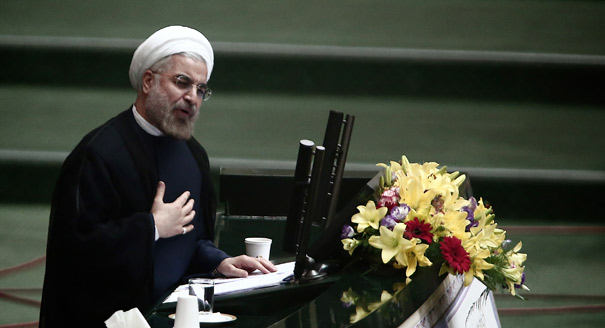
With Iranian president Hassan Rouhani expressing interest in improving ties with the West and reversing Iran’s economic isolation and Supreme Leader Ayatollah Khomeini reiterating his religious opposition to having nuclear weapons, is a potential breakthrough in U.S. relations with Iran possible? Speaking on the BBC, Carnegie’s Karim Sadjadpour argued that it’s clear that the Iranians are floating trial balloons. While Khomeini has been famously inflexible throughout his 24-year term, Sadjadpour said, he recently stated that Iran should be prepared to display “heroic” flexibility, a term uncommon for him. Many people are seeing it as a sign that Iran is preparing its public for some type of a nuclear compromise, Sadjadpour contended.
“The mistrust and ill-will between the two sides has been building for 35 years and it’s not going to be bridged easily but I think that this is the first time in 12 years in which we’ve had a moderate president in Tehran and a moderate president in Washington who’re interested in repairing the relationship,” Sadjadpour explained. While the Obama administration is interested in reducing America’s role in the Middle East, Sadjadpour noted, it will be contingent upon a better relationship with Iran.

Senior Fellow, Middle East Program
Karim Sadjadpour is a senior fellow at the Carnegie Endowment for International Peace, where he focuses on Iran and U.S. foreign policy toward the Middle East.
Recent Work


Suzanne Maloney, Aaron David Miller, Karim Sadjadpour

Aaron David Miller, Karim Sadjadpour, Robin Wright
Carnegie does not take institutional positions on public policy issues; the views represented herein are those of the author(s) and do not necessarily reflect the views of Carnegie, its staff, or its trustees.

Minsk clearly expected the dialogue with Washington to yield more results, in particular the lifting of EU sanctions and permission to export potash.

Artyom Shraibman

With the growth in points of friction between the great powers, organizations like the SCO will continue to play a role in the strategic adaptation of the smaller powers caught between them.

Temur Umarov

When faced with fuel shortages in the past, Central Asian governments could always count on additional supplies from Moscow. That safety net no longer exists.

Galiya Ibragimova

Despite unhappiness on the ground, Moscow is determined to use both carrot and stick to ensure there is record support for United Russia in occupied Ukraine.

Konstantin Skorkin
The recent damage inflicted by Ukrainian drones and missiles on Russia has made Belarus aware of its own vulnerabilities—and surprisingly amenable to Kyiv’s demands.
Artyom Shraibman