Source: Indian Express
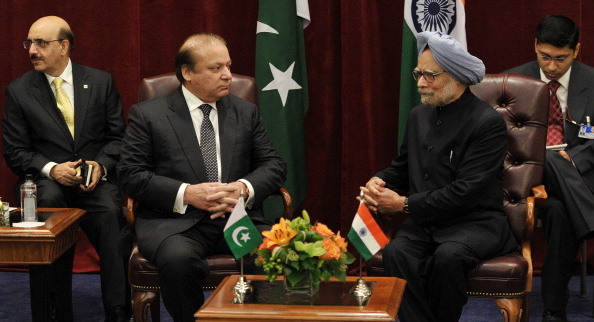
After his low-key meeting in New York with Nawaz Sharif on Sunday, there is no avoiding the conclusion that Manmohan Singh will end his prime ministerial tenure without advancing his vision to transform India's relations with Pakistan.
Singh is not alone. Many of his predecessors, some of them much stronger leaders than him, over the last quarter of a century have sought but failed to change the structure of India-Pakistan relations, despite much investment of political capital and diplomatic energies.
Given the burden of history and extended conflict, negotiating with Pakistan has never been easy. But unlike his predecessors, Singh has certainly had more opportunities to take important steps forward but could not convert them into practical results, thanks to the dissipating domestic political consensus on Pakistan.
Rajiv Gandhi reached out to General Zia-ul-Haq during 1985-88 and made an all-out bid to seek a rapprochement with Benazir Bhutto, who succeeded the military dictator. By the time Rajiv's tenure came to an end in 1989, the relationship with Pakistan was in tatters as the Pakistan army, flush with a newly minted nuclear deterrent, fanned the flames of insurgency in Kashmir with impunity.
A decade later, Atal Bihari Vajpayee faced a daunting challenge as cross-border terrorism from Pakistan acquired great intensity. At the same time, the international pressures to mediate on Kashmir acquired some traction. He had to reverse the Pakistani aggression in Kargil in the summer of 1999 and manage the prolonged military confrontation that followed the terror attack on Parliament in December 2001.
Vajpayee, however, kept faith with the proposition that changing the relationship with Pakistan was in India's national security interest. After trial and error — which included his visit to Lahore in February 1999 and the invitation to General Pervez Musharraf to visit Agra in July 2001 — Vajpayee successfully hammered out a framework for building peace with Pakistan when he travelled to Islamabad in January 2004. Meanwhile, Vajpayee's significant outreach to the United States helped make Washington neutral on the Kashmir question and reduce the international pressures on India.
The Vajpayee-Musharraf framework involved three elements: Pakistan army reins in cross-border terrorism, India negotiates on Kashmir, and the two sides put in place expansive confidence-building measures. The most important of these was the agreement in November 2003 to observe a ceasefire on the international border and the Line of Control in Kashmir. As the BJP went in for early elections, Vajpayee was confident he would return to power and accelerate the peace process with Pakistan. That was not to be.
Singh, who inherited a positive dynamic with Pakistan, sought to advance the Vajpayee framework. As Musharraf brought cross-border militancy under some control, Singh opened a back channel on Kashmir. These were the first talks on the subject since the failed negotiations of 1962-63. The expansion of CBMs saw the steady growth in trade and people-to-people contact. Despite this good beginning and a strong conviction on pursuing peace in the subcontinent, Singh is leaving the Pakistan relationship in a state of greater flux than he found it in 2004.
Any diplomatic engagement involves some difficult internal negotiation. The PM has had his share of problems in talking to Pakistan. There is no doubt that the series of terror incidents over the last decade tended to break the momentum in the peace process. But it was the inability to dominate the domestic debate that eventually crippled Singh's Pakistan policy.
If the BJP has been unwilling to cut much slack for the prime minister on Pakistan, the Left parties, obsessed as they are with opposing the US, have offered little encouragement to Singh's regional peace initiatives. The most damaging factor, however, was the lack of enthusiasm in the Congress high command for Singh's outreach to Pakistan. What made it worse was the prime minister's reluctance to assert his authority over the different bureaucratic agencies that had a say in the making of Pakistan policy. His temptation to follow the line of least resistance meant a squandering of the fleeting moments of opportunity that presented themselves.
In mid-2005, for example, after Musharraf's visit to India, agreements on the Siachen and Sir Creek disputes were within reach. But the PM was unwilling to either overrule the sceptical bureaucracy or persuade the conservative leadership of the Congress party to go ahead. By the time he was ready to go to Pakistan in early 2007, Musharraf's power had begun to erode rapidly.
Singh's persistent efforts to revive the peace process with Pakistan paid some important dividends again in 2012, when the two sides successfully negotiated a road map for the normalisation of trade relations and a liberalisation of the visa regime. Yet, when reports on the mutilation of Indian soldiers on the LoC came to light in January, a panicked establishment overreacted. That, in turn, brought an end to the engagement with Asif Ali Zardari, who had been more eager than most previous leaders to normalise relations with India.
As the Congress becomes more nervous about talks with Pakistan and UPA 2's political stock begins to evaporate, Singh's New York encounter with Sharif was bound to be tentative. While some small steps may yet be possible under Singh, it will now be up to the next government to develop a coherent strategy towards Pakistan.
Singh's successor, however, might find the going even tougher, as our northwestern frontiers become more volatile in the months ahead. Posturing for domestic audiences on Pakistan in election year is easy. But dealing with the challenges emanating from an increasingly unstable Pakistan will not be. And if we don't draw the right lessons from Manmohan Singh's failures, there will be no end to the tragedy of India's Pakistan policy.