

Commentary
Yukon Huang, Isaac B. Kardon, Matt Sheehan
{
  "authors": [
    "Yukon Huang"
  ],
  "type": "legacyinthemedia",
  "centerAffiliationAll": "dc",
  "centers": [
    "Carnegie Endowment for International Peace"
  ],
  "collections": [],
  "englishNewsletterAll": "asia",
  "nonEnglishNewsletterAll": "",
  "primaryCenter": "Carnegie Endowment for International Peace",
  "programAffiliation": "AP",
  "programs": [
    "Asia"
  ],
  "projects": [],
  "regions": [
    "East Asia",
    "China"
  ],
  "topics": [
    "Economy"
  ]
}
Source: Getty
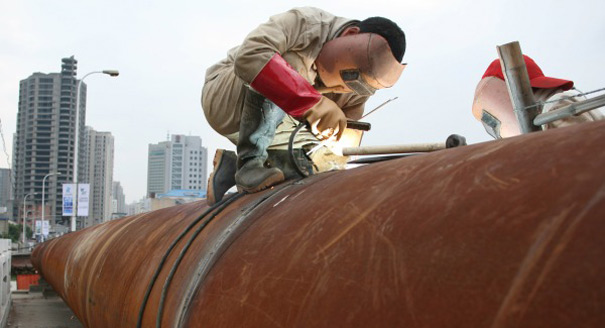
All successful development stories, from the United States to Korea, involved the same unbalanced growth trajectory China is now on, and they only rebalanced once they reached high income.
Source: China View
Carnegie’s Yukon Huang appeared on China View to discuss his perspective on China’s unbalanced growth process. Huang argued that all economies that have successfully reached high income status, including the United States, Korea, and Japan, did so through unbalanced growth processes of high investment and low consumption. These success stories only became balanced after they reached high income states, which China will not reach until around 2020. He also pointed out that the fundamental goal of any economy is not simply GDP growth but improvement in living standards. This is partially accomplished through consumption growth and, despite consumption’s unusually small share of GDP, China has produced the most rapid growth of consumption of any country over the past three decades. Finally, Huang added that the key for maintaining sustainable growth going forward is improving productivity.

Senior Fellow, Asia Program
Huang is a senior fellow in the Carnegie Asia Program where his research focuses on China’s economy and its regional and global impact.
Recent Work

Yukon Huang, Isaac B. Kardon, Matt Sheehan
Yukon Huang, Genevieve Slosberg

Most of Moscow’s military resources are tied up in Ukraine, while Beijing’s foreign policy prioritizes economic ties and avoids direct conflict.


Alexander Gabuev, Temur Umarov

The interventions in Iran and Venezuela are in keeping with Trump’s strategy of containing China, but also strengthen Russia’s position.

Mikhail Korostikov

The Russian army is not currently struggling to recruit new contract soldiers, though the number of people willing to go to war for money is dwindling.

Dmitry Kuznets
For a real example of political forces engaged in the militarization of society, the Russian leadership might consider looking closer to home.

James D.J. Brown

China has found a unique niche for itself within the global security ecosystem, eschewing military alliances to instead bolster countries’ internal stability using law enforcement. Authoritarian regimes from the Central African Republic to Uzbekistan are signing up.
Temur Umarov