

Commentary
Dmitri Trenin
{
  "authors": [
    "Dmitri Trenin"
  ],
  "type": "legacyinthemedia",
  "centerAffiliationAll": "",
  "centers": [
    "Carnegie Endowment for International Peace",
    "Carnegie Russia Eurasia Center"
  ],
  "collections": [],
  "englishNewsletterAll": "",
  "nonEnglishNewsletterAll": "",
  "primaryCenter": "Carnegie Russia Eurasia Center",
  "programAffiliation": "",
  "programs": [],
  "projects": [],
  "regions": [
    "Russia"
  ],
  "topics": [
    "Political Reform",
    "Foreign Policy"
  ]
}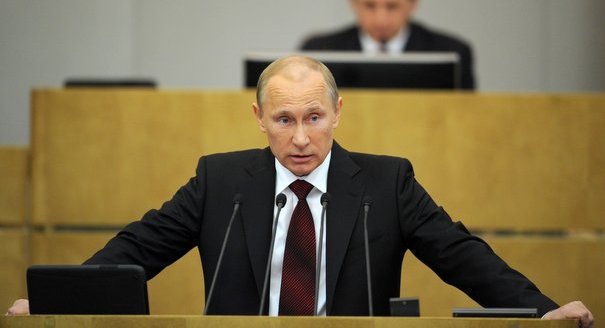
Source: Getty
Russia’s recent amnesties reveal the strength of Putin’s position in the country. The release of several high-profile prisoners disarms criticism from the opposition and abroad.
Source: Global Times
Periodic amnesties in Russia are a tradition, but the two amnesties granted in December 2013 are special.
Under the first, about 2,000 people convicted of economic crimes were set free. This amnesty was essentially an effort to ease pressure on the business community in the hope of improved economic growth. The measure was half-hearted, to say the least. The effect is likely to be marginal. For the bulk of international observers, this is hardly an event worth their time.
Under the second amnesty, 10 times more prisoners were allowed to leave their places of detention, among them a handful of celebrities: the Pussy Riot activists, Greenpeace's Arctic Sunrise crew and of course Mikhail Khodorkovsky. It was this amnesty that was picked up by the media and analyzed by the pundits who sought to answer the question: How to read these acts of clemency on behalf of the Russian authorities, and of President Vladimir Putin personally?Most commentators link the prisoner release with the Winter Olympic Games in Sochi, which is due to kick off on February 7, and the Kremlin's desire to burnish its international reputation. There is little doubt that the Olympics did play a role in this case. Putin invested a lot into the games, and sees them as a prestige-booster for Russia. Presenting a friendlier face to the world helps.
This also explains the decision to release the 30 members of the international crew of the Arctic Sunrise, a ship which belongs to Greenpeace. The charges against them were first commuted from piracy to hooliganism; the activists were then transferred from Murmansk to St. Petersburg; the authorities must have decided some time ago that months of detention were enough punishment for the ecologists.
Similarly for the two Pussy Riot women who had served out most of their two-year terms. Under Russian law, they could have been released even earlier, but the authorities were adamant that they pay a high price for their misdeeds. Given Pussy Riot's international fame, releasing the women a few months before their terms were up was tantamount to disarming a considerable volley of criticism.
Yet Sochi is not the only factor which weighed in on Moscow's decision-making, as Khodorkovsky's case illustrates best.
Only a few weeks ago, the Russian procurator's office was busy preparing a new case against Khodorkovsky, which would have left him behind bars for many more years. Many Russians believed that Khodorkovsky, a Putin enemy, would never leave prison, certainly while Putin was in power.
The fact that Khodorkovsky was flown to Berlin immediately after his release led to speculation about Germany's behind-the-scenes role in the matter. German Chancellor Angela Merkel publicly invoked the strategic partnership between Berlin and Moscow, which to many existed in name only. The Obama Administration's recent refusal to extend the Magnitsky Act pointed in the same direction: The West's most powerful countries were interceding with the Kremlin, extracting symbolic concessions.
Khodorkovsky put a brake on Magnitsky. From Putin's perspective, this deal was made possible by two factors. One was the obvious weakness of the Russian opposition. Last September, Alexei Navalny, the opposition candidate for Moscow major, was only able to poll just over a quarter of the popular vote - with the authorities doing nothing to tamper with the result. The opposition's performance elsewhere in local and regional elections in Russia last fall, with few exceptions, was unimpressive. Two years after the mass anti-government rallies in Russia, Putin is again fully sovereign.
Even more importantly, Putin received a letter from Khodorkovsky, in which his former foe was asking for release from prison on humanitarian grounds: His mother is ill. Putin felt he triumphed, and his enemy acknowledged this.
Khodorkovsky accepted other things as well. He went into exile, renounced claims on the Yukos company and vowed not to go into politics.
Putin has had a good year. He was able to prevent a US military strike against Syria, he has been able to sway Ukraine's current leadership to his side, and finally through the amnesty, he has been able to resolve the Khodorkovsky issue.
Forbes magazine called the Russian president the "most powerful man in the world." Yet none of this has made him popular with domestic liberal opposition or in the West. Putin will enjoy opening the Sochi Olympics, but the US and most EU leaders will stay away.
Former Director, Carnegie Moscow Center
Trenin was director of the Carnegie Moscow Center from 2008 to early 2022.
Recent Work
Dmitri Trenin
Dmitri Trenin
Carnegie does not take institutional positions on public policy issues; the views represented herein are those of the author(s) and do not necessarily reflect the views of Carnegie, its staff, or its trustees.

In the discussions made possible by the State Duma election campaign, one question is being asked more and more loudly. “What next?”

Andrey Pertsev
While the Nazis rushed ahead in a revolutionary fervor, Russia’s modern crusaders against enemies of the state work methodically, giving their targets time to adjust to restrictions before closing the loopholes.

Leonid Bershidsky

When faced with fuel shortages in the past, Central Asian governments could always count on additional supplies from Moscow. That safety net no longer exists.

Galiya Ibragimova
Reading the purported correspondence of celebrity Ksenia Sobchak sheds light on her role within the system, and how journalism and politics function in Putin’s Russia.
Vladislav Gorin
When political power is concentrated in the hands of a small circle of people, a country invariably ends up with technological stagnation.
Aleksei Kiselev