

Paper
Renée DiResta, Rachel Kleinfeld, Margot Treadwell
{
  "authors": [
    "Rachel Kleinfeld"
  ],
  "type": "legacyinthemedia",
  "centerAffiliationAll": "dc",
  "centers": [
    "Carnegie Endowment for International Peace"
  ],
  "collections": [],
  "englishNewsletterAll": "democracy",
  "nonEnglishNewsletterAll": "",
  "primaryCenter": "Carnegie Endowment for International Peace",
  "programAffiliation": "DCG",
  "programs": [
    "Democracy, Conflict, and Governance"
  ],
  "projects": [],
  "regions": [
    "North America",
    "United States"
  ],
  "topics": [
    "Political Reform",
    "Democracy",
    "Global Governance",
    "Foreign Policy"
  ]
}
Source: Getty
Organizations are a form of technology. From the creation of the corporation to Wikipedia’s crowdsourcing, new organizational forms can provide new ways to cooperate and resolve today’s global problems.
Source: San Francisco Chronicle
More than 150 polling centers burned last weekend during Bangladeshi elections. Refugees are pouring in to the U.N. compound in South Sudan, desperate to escape the collapse of the world's newest country, birthed with fanfare just two years ago. Fallujah is again running with blood as the Iraqi government works to oust insurgents who resettled after Americans fought, house by house, against them during our war in Iraq.
Many Americans look at this turmoil and think: Let's sit this one out.After all, our interventions in Iraq and Afghanistan cost so many lives and dollars, and seem to have won little peace. Maybe we should stop trying to solve the world's problems, because we are just not good at it. But the question "should we engage or not?" is the wrong one.
As a global power, America is engaged. All our choices - sending money or troops or doing nothing - are read as actions for or against various sides in these conflicts. A disengaged U.S. public doesn't mean we do nothing. It means we are sending a very clear signal to the world: bring on more violence and turmoil, we won't bother you. State collapse is horrible for the people caught in it. Eventually, it reaches our shores.
Our problem, however, is not that America is unable to do anything right. The problem is that we haven't got the right tools. Most of the global foreign policy apparatus was built in the 1940s and 1950s, from our Department of Defense and Central Intelligence Agency to the United Nations, the North Atlantic Treaty Organization, and most global financial institutions. Our State Department dates to 1789. These tools were designed to engage with other big, mostly functional countries at a government-to-government level.
But the world now is different. Many problems reside within states, not between them. Reducing terrorism, for example, requires helping countries build stronger public services and train their police to be less corrupt, among other tasks. Those are fundamentally different jobs than getting a government to agree to a treaty.
Where narco-traffickers have taken over swaths of a country, we need to starve them financially and fight them with law enforcement - sending in the Marines won't help. Where governments are abusive and unstable, we need to help citizens create the checks and balances that lead to long-term stability. That's a different set of skills than holding elections.
One: Silicon Valley big data firms are at the forefront of helping our government build a set of tools for the 21st century. They are assisting our military to gain a much deeper understanding of battlefields and our intelligence agencies to see just about everything, for better or worse. They are working with the Department of Justice to track complex financial transactions that could be hiding money-laundering. Gaining this data is crucial, because the issues we face today require deep understanding of the complex interactions of the domestic politics, economic actors and social movements within other countries.
The second step: We need to take all this data and build it into a story that shows us lives in other countries not as numbers in memos, but as characters in novels full of complex, interacting, human forces. Some firms are working on this: searching through social media, for instance, to understand the mood of the public in other countries, not just the bits and bytes.
Step three, however, hasn't begun. We need to build new tools to interact at this complex, human level.
For a decade, we've thrown our military at non-military problems. We need to deploy to violent parts of the world, but we've starved other governmental agencies of funding until they are so weak, so risk-averse, and so hemmed in by red tape that they can't work. We need to legitimize international action - but the U.N. is hamstrung by the whims of the great powers of the 1940s. We need to empower citizens in other countries; but our aid agencies are built to shovel money out the door, not to engage people in the slow, but less-costly job of making their own governments work.
Organizations are a form of technology. From the creation of the corporation to Wikipedia's crowdsourcing, new organizational forms provide new ways to cooperate. We need the California innovation machine to help invent new types of organizations that can solve today's problems. Facebook and Twitter drastically reduced the cost of organizing revolutions - but failed to help people govern and lead. Programs such as See, Click, Fix empower people to help their governments work better - but only when governments want to help their citizens.
If you have to put a screw into a wall, but have only a rusty wrench, broken pliers and a hammer, you might bang away with any of them - but you're likely to conclude that you aren't good at putting in screws. We need to create some new screwdrivers.
This article was originally published in the San Francisco Chronicle.
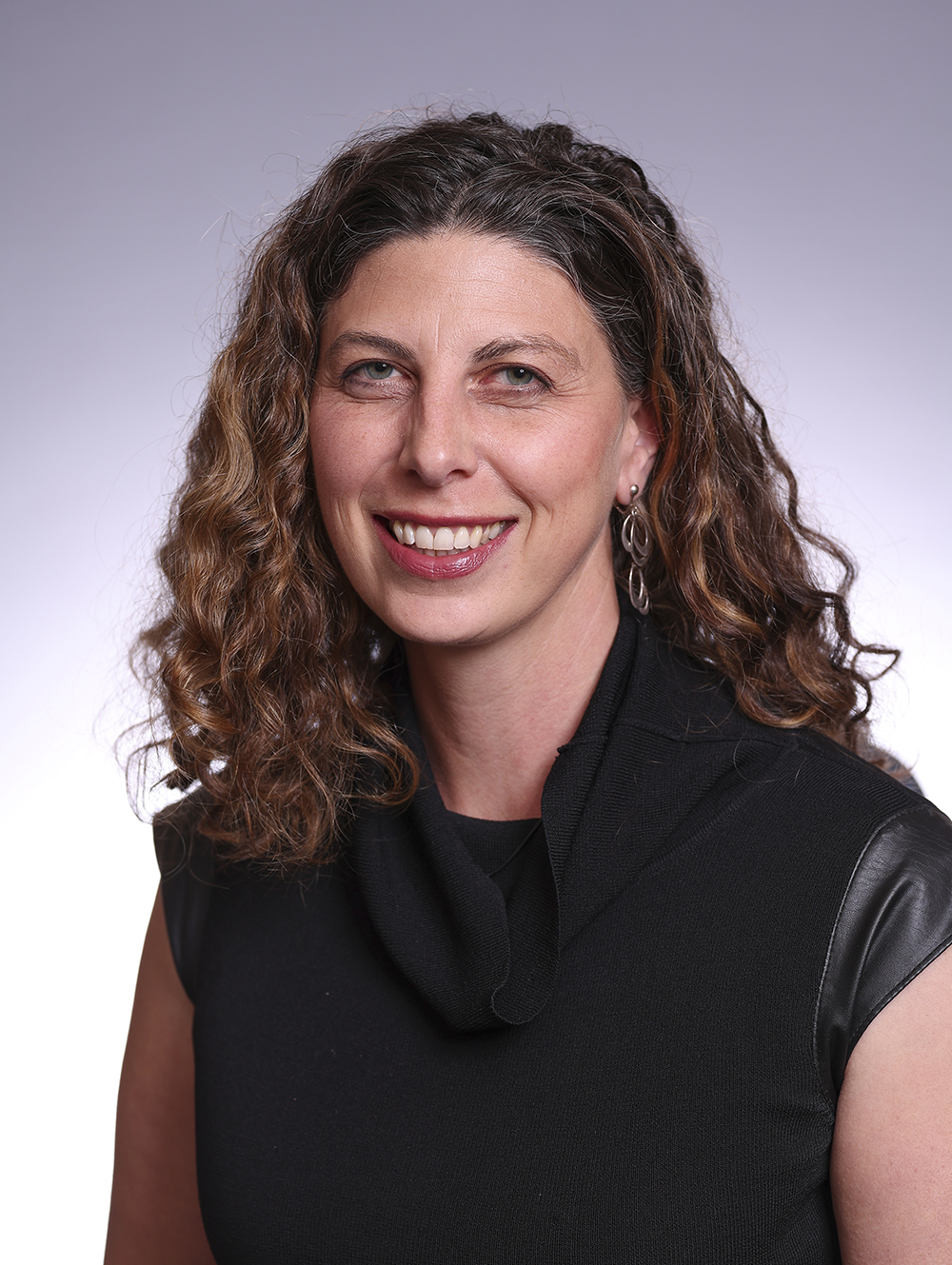
Senior Fellow, Democracy, Conflict, and Governance Program
Rachel Kleinfeld is a senior fellow in Carnegie’s Democracy, Conflict, and Governance Program, where she focuses on issues of rule of law, security, and governance in democracies experiencing polarization, violence, and other governance problems.
Recent Work
Renée DiResta, Rachel Kleinfeld, Margot Treadwell
Political Violence Researchers, Rachel Kleinfeld, ed., Dalya Berkowitz, ed.
Carnegie does not take institutional positions on public policy issues; the views represented herein are those of the author(s) and do not necessarily reflect the views of Carnegie, its staff, or its trustees.

Trump has promised Belarus a massive potash deal. But Minsk is seeking something greater: restored Western transit and greater room for maneuver from Russia.

Balázs Jarábik

The European far right might fail to steer EU policy in the direction Russia wants, but they will create enough chaos inside Europe to benefit the Kremlin.

Dimitar Bechev

Minsk clearly expected the dialogue with Washington to yield more results, in particular the lifting of EU sanctions and permission to export potash.

Artyom Shraibman

If the Russian-speaking community in Latvia cannot articulate their interests without being seen as disloyal, they could end up embracing a pro-Kremlin agenda.

Sergejs Potapkins

Russia’s ruling party would have benefited from Putin appearing as its distant patron, but as an active frontman imposing his views on the public, he has done nothing but harm both the party’s election campaign and the ruling system overall.

Andrey Pertsev