• Research
  • Politika
  • About
Carnegie Russia Eurasia center logoCarnegie lettermark logo
  • Donate
{
  "authors": [
    "Mikhail Troitskiy"
  ],
  "type": "commentary",
  "centerAffiliationAll": "",
  "centers": [
    "Carnegie Endowment for International Peace",
    "Carnegie Russia Eurasia Center"
  ],
  "collections": [],
  "englishNewsletterAll": "",
  "nonEnglishNewsletterAll": "",
  "primaryCenter": "Carnegie Endowment for International Peace",
  "programAffiliation": "",
  "programs": [],
  "projects": [],
  "regions": [
    "North America",
    "United States",
    "Russia"
  ],
  "topics": [
    "Foreign Policy",
    "Nuclear Policy",
    "Arms Control"
  ]
}

Source: Getty

Commentary

A Crisis of U.S.-Russian Arms Control?

The dispute between Moscow and Washington about Russia’s new missile allegedly breaching the INF Treaty might signify the rising risk of a breakdown of arms control arrangements between the United States and Russia.

Link Copied
By Mikhail Troitskiy
Published on Feb 3, 2014

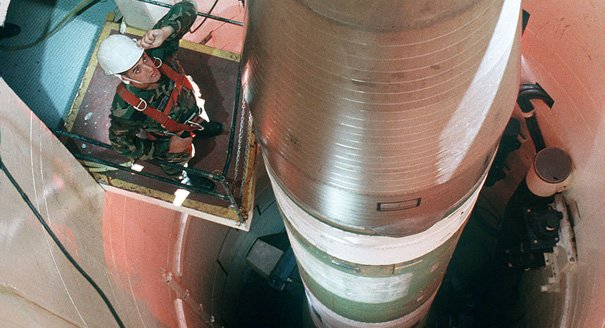
In the run-up to the Munich Security Conference, new details of the dispute between Moscow and Washington about Russia's new missile allegedly breaching the Intermediate Nuclear Forces (INF) Treaty became available to the media. U.S. officials shared their concerns with NATO allies in mid-January. On January 30, U.S. State Department admitted the existence of a potential INF compliance issue but emphasized that it was still under inter-agency review. News about the Russian missile initially broke last fall when the source of the contradiction was said to be the Russian RS-26 missile. However, as was immediately noticed by pundits, RS-26 had been tested, at least once, at an intercontinental range which exempts it from the INF Treaty limits. Citing intelligence sources, Washington has now explained that the problem is posed by a new Russian ground-launched cruise missile (GLCM) that has been undergoing tests in Russia over the last several years. In the absence of formal complaints from the American side, Russia has so far refused officially to comment on U.S. claims and hinted that the United States might itself be guilty of violating the treaty.

Some U.S. analysts reacted to the news by arguing that because GLCM requires a multi-year development cycle, Moscow made the decision to circumvent INF a while ago which shows that Russia is unreliable as a counterpart in arms control treaties. Another influential expert opined that Moscow is simply not interested in any further arms control treaties.

Both sides can still choose reassurance over politicization of the dispute. The United States is interested in Russia's support in negotiations with Iran and in the smooth functioning of the New START verification regime. For these and several other reasons, Washington may choose not to up the ante by releasing more details about the missile in question.

And yet the GLCM showdown might signify something worse than a short-lived misunderstanding—the rising risk of a breakdown of arms control arrangements between the United States and Russia. After Washington announced the deployment of new naval missile defense capabilities in Europe on February 1st, Moscow recalled the possibility of walking out of the New START. If the coincidence in time of bickering over GLCM and missile defense was not accidental, we may be in for a major inflammation in the U.S.-Russia relationships. Mutual recriminations over Ukraine will not help to resolve the outstanding arms control issues, so diplomatic tension between Moscow and Washington can easily wind up to a new high.

Mikhail Troitskiy is an associate professor at the Moscow State Institute of International Relations. His Twitter account is @MikhailTroitski.

About the Author

Mikhail Troitskiy

Mikhail Troitskiy
Foreign PolicyNuclear PolicyArms ControlNorth AmericaUnited StatesRussia

Carnegie does not take institutional positions on public policy issues; the views represented herein are those of the author(s) and do not necessarily reflect the views of Carnegie, its staff, or its trustees.

More Work from Carnegie Russia Eurasia Center

  • Commentary
    Carnegie Politika
    What Does Nuclear Proliferation in East Asia Mean for Russia?

    Troubled by the growing salience of nuclear debates in East Asia, Moscow has responded in its usual way: with condemnation and threats. But by exacerbating insecurity, Russia is forcing South Korea and Japan to consider radical security options.

      James D.J. Brown

  • Commentary
    Carnegie Politika
    Who Is Responsible for the Demise of the Russian Internet?

    The Russian state has opted for complete ideological control of the internet and is prepared to bear the associated costs.

      Maria Kolomychenko

  • Commentary
    Carnegie Politika
    Russia’s Coal Industry Is Running on Borrowed Time

    Powerful lobbyists and inertia led to Russia’s coal-mining sector missing an excellent opportunity to solve its structural problems.

      Alexey Gusev

  • Commentary
    Carnegie Politika
    Is Opposition to Online Restrictions an Inflection Point for the Russian Regime?

    After four years of war, there is no one who can stand up to the security establishment, and President Vladimir Putin is increasingly passive. 

      Tatiana Stanovaya

  • Commentary
    Carnegie Politika
    What’s Having More Impact on Russian Oil Export Revenues: Ukrainian Strikes or Rising Prices?

    Although Ukrainian strikes have led to a noticeable decline in the physical volume of Russian oil exports, the rise in prices has more than made up for it.

      • Sergey Vakulenko

      Sergey Vakulenko

Get more news and analysis from
Carnegie Russia Eurasia Center
Carnegie Russia Eurasia logo, white
  • Research
  • Politika
  • About
  • Experts
  • Events
  • Contact
  • Privacy
  • For Media
Get more news and analysis from
Carnegie Russia Eurasia Center
© 2026 Carnegie Endowment for International Peace. All rights reserved.