

Commentary
Maria Lipman
{
  "authors": [
    "Maria Lipman"
  ],
  "type": "commentary",
  "centerAffiliationAll": "",
  "centers": [
    "Carnegie Endowment for International Peace",
    "Carnegie Russia Eurasia Center"
  ],
  "collections": [],
  "englishNewsletterAll": "",
  "nonEnglishNewsletterAll": "",
  "primaryCenter": "Carnegie Russia Eurasia Center",
  "programAffiliation": "",
  "programs": [],
  "projects": [],
  "regions": [
    "Russia"
  ],
  "topics": [
    "Political Reform",
    "Economy"
  ]
}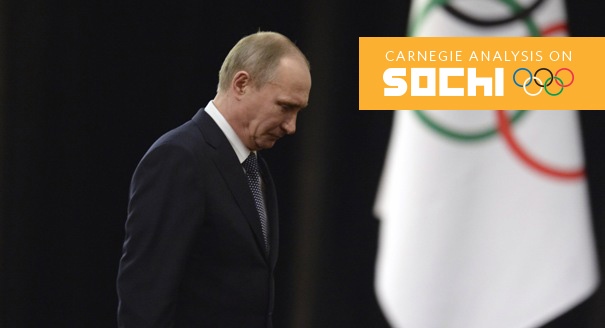
Source: Getty
Just as any grand event, the Sochi Olympics will soon be over and Russia will remain with itself. Its prospects are uncertain since the economic growth has dropped and the Kremlin’s policy has shifted toward social conservatism.
In his pre-Olympic interview with international media President Vladimir Putin wished that “the participants, fans, journalists and all those who watch the Games on TV and follow them through the media [would] see a new Russia, see its face and its possibilities, and take a fresh and unbiased look at the country. ” Putin’s wish will hardly be fully fulfilled, but at least one week into Sochi Olympics the stream of negative publicity in the foreign media has subsided. Media reports have focused more on the actual sports and less on the Russian corruption, the “anti-gay” legislation and human rights in general, terrorism and tight security measures or the complaints about stuck doors, yellow water and imperfect toilets. “Putin’s Games,” as they are commonly referred to are in full swing, and sports fans—even those resentful of Putin’s policies—are having fun.
But just as any grand event Sochi Games will soon be over, Russia will move out of the international limelight and remain with itself. This week Putin met with his Cabinet to talk about the national economy and its future prospects and he did not sound upbeat. He said that the resource economy can no longer drive the national economic growth. Putin was admitting the obvious: the growth has dropped to a bit over one percent down from seven or eight percent just a few years ago. Even back then the far-sighted experts had said that the Russian economy was dangerously dependent on the (rising) price of oil and therefore its growth was not sustainable. But the Kremlin, awash in cash thanks to the abundant oil revenues, would not listen. The economic pattern remained the same, and the dependence on the resource exports grew even higher instead of lower. According to a recent report by Bloomberg, “the government receives about half of its budget revenue from oil and gas exports.” And as Bloomberg reports, Russia’s “growth has decelerated or remained unchanged every quarter since Putin won a new term as president in March 2013.”
Over his years in power Putin has significantly expanded state control over the economy. In 2013, Bloomberg report says, “state-owned enterprises accounted for more than 50 percent of Russia’s gross domestic product, up from 30 percent in 1999.” The remaining private business owners did not have full discretion over their holdings: at any moment the government can interfere and tell them what to buy or not to buy, who to sell to or where to invest. In politics the controls were so tight that the parties, forces, or figures the Kremlin deemed unwelcome had no chance of entering the political stage. The institutions of public participation were radically eviscerated. Big business is constrained and intimidated; since the law and justice are also at the discretion of the powers that be and the private property rights are not protected by the law, Russian entrepreneurs refrain from investing at home and prefers to take the capital out of Russia. Bloomberg report cites a central bank estimate: 420.6 billion dollars was pulled out of Russia since 2008 to the end of 2013.
Putin’s immense stroke of luck—the high and rising oil prices—enabled him to significantly raise budget-drawn salaries and pensions; during his leadership the political turmoil of the 1990s gave way to the stability of noncompetitive politics. Although the people of Russia were by no means oblivious to the corruption, inequality and injustice, they were easily lulled into passivity and acquiescence.
Putin consistently deepened the habitual paternalistic pattern in which the government is dominant over the people and autonomous public initiative is discouraged. Back in 2011 when a modernized minority abandoned acquiescence and staged anti-Putin protests, the Kremlin responded with a crackdown and a shift toward social conservatism thereby radically alienating Russia’s most urbanized, modernized and creative constituencies.
Today, since Putin’s luck is ebbing and the oil exports are no longer driving economic growth, Russia is anxious to find alternative sources of growth. An obvious option would be to unleash the creative energies of the people, give a boost to private entrepreneurship and work toward establishing a rule of law. But such steps would run counter to Putin’s mode of governance—a combination of tight government control and unquestioning public loyalty. Since his capacity to buy people’s loyalty is now reduced due to the economic slowdown, he can be expected to increasingly draw on coercion.
Over 20 percent of the Russian people, most of them of them urban, educated and young, say in public opinion surveys that they are considering leaving Russia altogether and moving to another country. Of course only a tiniest fraction actually emigrates. But such an outspoken desire to leave Russia means that these people do not see themselves as stakeholders in their country’s future. And this is a grave hurdle to the national development.
Former Scholar in Residence, Society and Regions Program, Editor in Chief, Pro et Contra, Moscow Center
Lipman was the editor in chief of the Pro et Contra journal, published by the Carnegie Moscow Center. She was also the expert of the Carnegie Moscow Center’s Society and Regions Program.
Recent Work
Maria Lipman
Maria Lipman
Carnegie does not take institutional positions on public policy issues; the views represented herein are those of the author(s) and do not necessarily reflect the views of Carnegie, its staff, or its trustees.
A leak of Russian gas price data helps establish that China is paying Russia far less than Central Asian countries and Gazprom’s former European customers.

Sergey Vakulenko

Japan’s long-term security policy is driven by concerns about China, and there is little appetite for (or interest in) pursuing a confrontation with Moscow.

James D.J. Brown
The truth of the strategic situation is that Europe and Russia are extremely unlikely to be able to “turn the page” on their confrontation within the next two decades.
Arkady Moshes
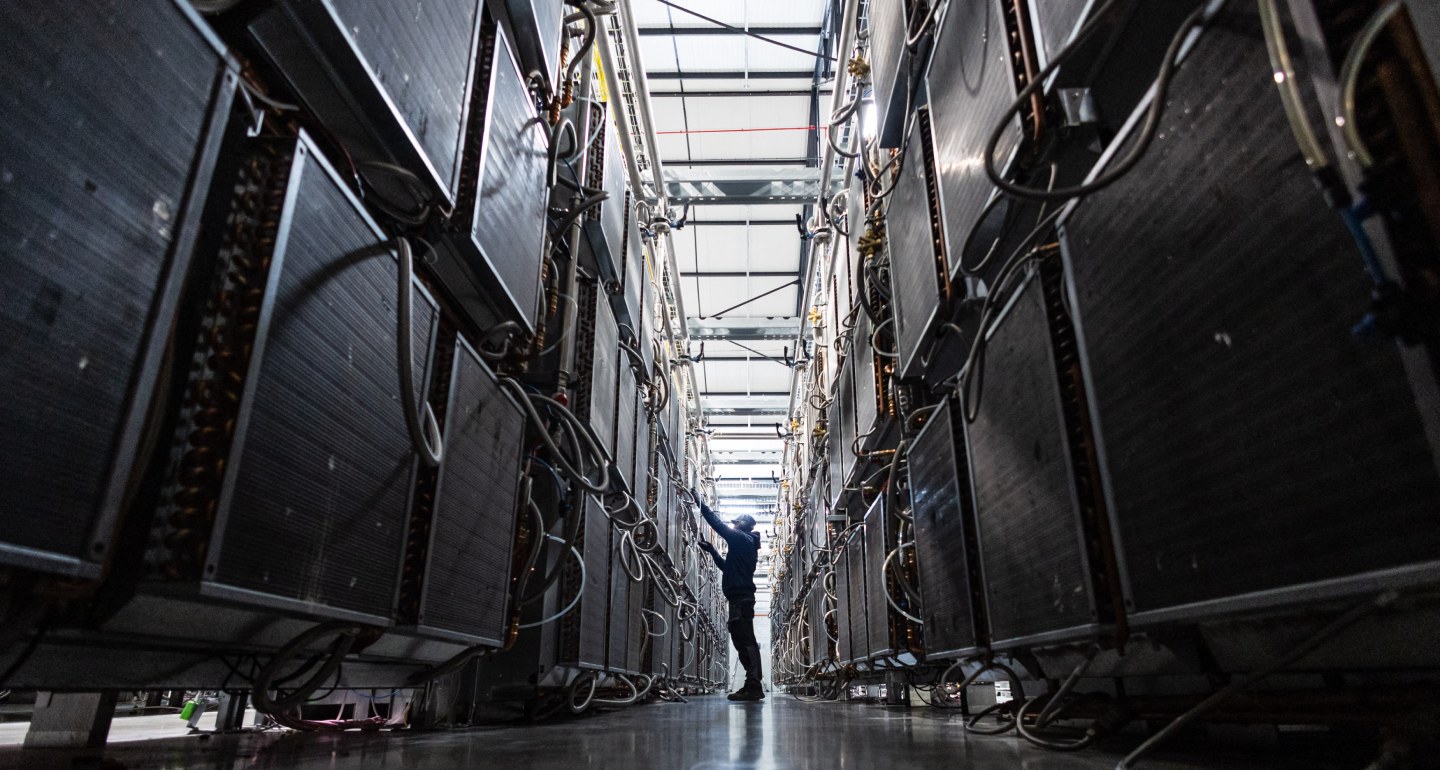
Russia spent years building a “sovereign internet,” concentrating web infrastructure exclusively within Russian territory. Ukrainian drone attacks have shown how vulnerable that approach has left the Russian internet.

Maria Kolomychenko

Putin’s conservative staffing policies and search for ever greater control have cemented parliament’s transformation into a bureaucratic appendage of the executive branch.

Andrey Pertsev