

Commentary
Dmitri Trenin
{
  "authors": [
    "Dmitri Trenin"
  ],
  "type": "commentary",
  "centerAffiliationAll": "",
  "centers": [
    "Carnegie Endowment for International Peace",
    "Carnegie Russia Eurasia Center"
  ],
  "collections": [],
  "englishNewsletterAll": "",
  "nonEnglishNewsletterAll": "",
  "primaryCenter": "Carnegie Russia Eurasia Center",
  "programAffiliation": "",
  "programs": [],
  "projects": [],
  "regions": [
    "North America",
    "United States",
    "Russia",
    "Eastern Europe",
    "Ukraine",
    "Moldova"
  ],
  "topics": [
    "Political Reform",
    "Foreign Policy"
  ]
}
Source: Getty
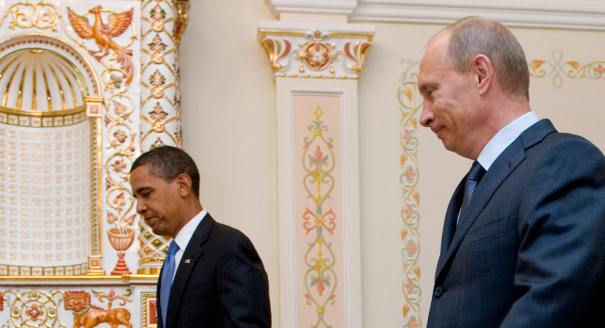
For the U.S. public and its political establishment, Russia is back as an adversary. Having taken on U.S. power, the Russian state will need to be very smart—and very good—to withstand the confrontation.
Russian officials (for example, Foreign Minister Sergey Lavrov or Deputy Prime Minister Dmitry Rogozin) and official commentators (such as Mikhail Leontiev) sound as if the present cold spell in Russia's relations with the West is a transient phenomenon. "We have been there, seen that, and it will pass," they are essentially saying, with reference to the 2008 Russian-Georgian war. Indeed, that conflict was succeeded less than six months later by President Barack Obama famously—now infamously, to some—"resetting" relations with Moscow. Russian officials also refer to the deep reluctance of a number of U.S. allies to go beyond the so far largely symbolic sanctions against Russia. All for a good reason: the trade between the EU and Russia amounts to roughly a billion euros a day, and Europe's dependence on Russian energy imports is well-known.
Don't bet on it. The issue is bigger than Crimea. Ukraine's future is highly uncertain, guaranteeing Russia's and the West's continued—and competitive—involvement. With Transnistria looking for a way to exercise its own "Crimea option," and the Gagauz region also looking east, Moldova's fate, or maybe even its existence as a sovereign state, is literally hanging in a balance. The Baltic States, Poland and Romania are already pressing for a more robust military posture vis-a-vis Russia. The U.S. defense budget will again grow, as will U.S. military presence in Europe. For the U.S. public and its political establishment, Russia is back as an adversary. Even some of the liberals who supported Obama's reset and pleaded for partnership with Moscow are now calling for a policy of containment, including with military power, in order to "stop Putin."
In the next few months, the stakes are the highest for Ukraine and Moldova. In the next few years, they will be the highest for Russia. Having taken on U.S. power, the Russian state will need to be very smart—and very good—to withstand the confrontation. It will need to be able to ease its dependence on oil and gas revenues, to curtail and reduce corruption and unchain the small and medium-sized business, to make sure that the Russian economy starts producing manufactured goods, to upgrade the nation's science and technology and attract its best and brightest to stay in the country. The "must do" list is long, but all its boxes need to be checked if Russia is to perform the so far unheard of feat of modernizing in confrontation with the United States. A failure to modernize would be fatal. The alternative, of course, is simply tightening the screws and imposing the discipline of a "besieged fortress," in the hope of "muddling through." This, however, is a high-risk proposition. If Russia were to break down, it will break up.
Former Director, Carnegie Moscow Center
Trenin was director of the Carnegie Moscow Center from 2008 to early 2022.
Recent Work
Dmitri Trenin
Dmitri Trenin
Carnegie does not take institutional positions on public policy issues; the views represented herein are those of the author(s) and do not necessarily reflect the views of Carnegie, its staff, or its trustees.
The current U.S. indifference to human rights means Astana no longer has any incentive to refuse extradition requests from its authoritarian neighbors—including Russia.

Temur Umarov
Most of Moscow’s military resources are tied up in Ukraine, while Beijing’s foreign policy prioritizes economic ties and avoids direct conflict.

Alexander Gabuev, Temur Umarov
With the White House only interested in economic dealmaking, Georgia finds itself eclipsed by what Armenia and Azerbaijan can offer.

Bashir Kitachaev
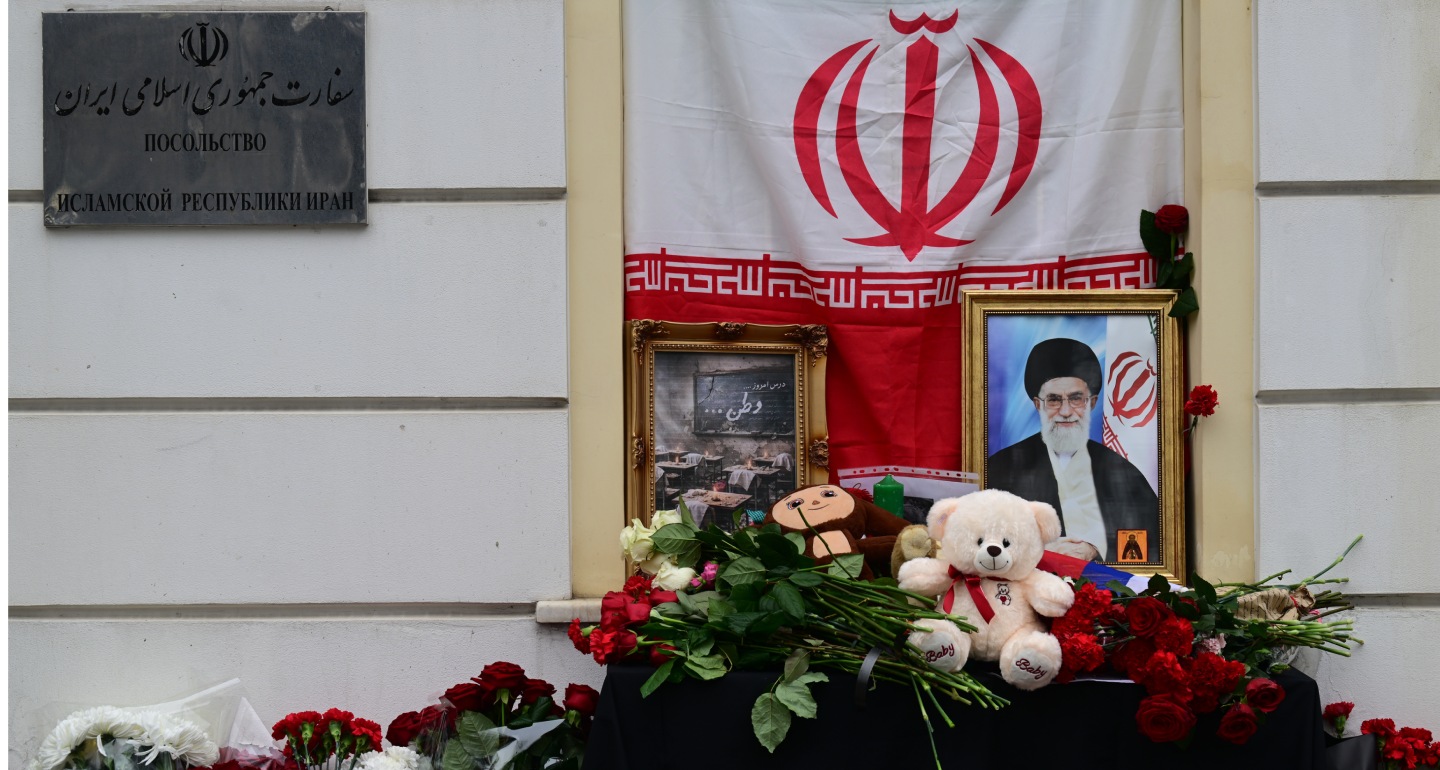
If the regime in Tehran survives, it could be obliged to hand Moscow significant political influence in exchange for supplies of weapons and humanitarian aid.

Nikita Smagin
The interventions in Iran and Venezuela are in keeping with Trump’s strategy of containing China, but also strengthen Russia’s position.

Mikhail Korostikov