

Research
- +10
Rosa Balfour, Frances Z. Brown, Yasmine Farouk, …
{
  "authors": [
    "Moisés Naím"
  ],
  "type": "legacyinthemedia",
  "centerAffiliationAll": "",
  "centers": [
    "Carnegie Endowment for International Peace"
  ],
  "collections": [],
  "englishNewsletterAll": "",
  "nonEnglishNewsletterAll": "",
  "primaryCenter": "Carnegie Endowment for International Peace",
  "programAffiliation": "",
  "programs": [],
  "projects": [],
  "regions": [
    "North America"
  ],
  "topics": [
    "Economy"
  ]
}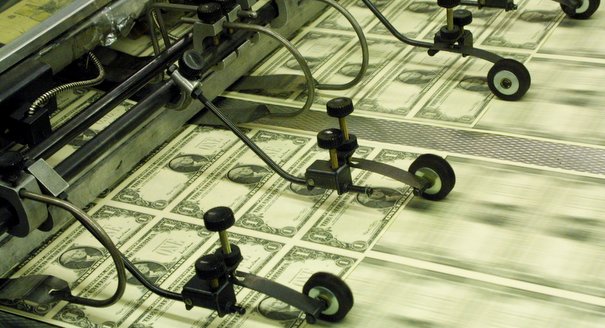
Source: Getty
As financial products become more diverse, complex, and widespread, and more people join the middle class, fighting the world’s financial illiteracy will become even more of a priority.
Source: Atlantic
Do you understand money? Let’s see how well you do with the following questions.
How did you do? Did you respond correctly to all three questions? If you did, then you belong to a surprisingly small global minority.
In Russia, 96 percent of those surveyed could not answer the three questions correctly. While that might be expected of a post-communist nation, the mecca of capitalism didn’t exactly yield glowing results—only 30 percent of Americans aced the quiz. The best-performing respondents were the Germans (53 percent got a perfect score) and the Swiss (50 percent), but this still leaves almost half of each country’s population without a basic understanding of financial matters. In countries with relatively strong economies, the numbers are sobering: 79 percent of Swedes, 75 percent of Italians, 73 percent of Japanese, and 69 percent of French could not respond correctly to all three questions.
These findings were recently published by two economists, Annamaria Lusardi and Olivia Mitchell, and the results reveal startling levels of financial illiteracy across the world. They call attention to a perilous paradox: Financial ignorance is widespread even as the world has changed in ways that make such ignorance more dangerous than ever before. They write, "Financial markets around the world have become increasingly accessible to the ‘small investor,’ as new products and financial services grow widespread. At the onset of the recent financial crisis, consumer credit and mortgage borrowing had burgeoned. People who had credit cards or subprime mortgages were in the historically unusual position of being able to decide how much they wanted to borrow. Alternative financial services including payday loans, pawn shops, auto title loans, tax refund loans, and rent-to-own shops have also become widespread. At the same time, changes in the pension landscape are increasingly thrusting responsibility for saving, investing, and decumulating wealth onto workers and retirees…. [Today], Baby Boomers mainly have defined contribution (DC) plans and Individual Retirement Accounts (IRAs) during their working years. This trend toward disintermediation is increasingly requiring people to decide how much to save and where to invest and, during retirement, to take on responsibility for careful decumulation so as not to outlive their assets while meeting their needs."
The heightened danger of financial ignorance underlies all these transactions—and more. For a large and fast-growing number of people, personal bankruptcy is just one bad decision away. This threat will become more critical as the global middle class continues to expand. The newfound prosperity of millions of families in the developing world could be shattered if they mismanage expenses, acquire large and expensive debts, fail to adequately protect their savings, or don’t know how to identify a tempting but catastrophically risky investment. The truth is, these problems are everywhere, and all countries stand to benefit from programs that encourage greater consumer knowledge. Lusardi and Mitchell found that providing financial knowledge to people with low levels of formal education boosts their economic situation by an amount equivalent to 82 percent of their initial wealth, while the equivalent value for college graduates is a substantial 56 percent.
Good news, right? On the basis of these results, one might presume that demand for financial education is very strong. It is not. And that’s mostly because people are prone to overestimate how much they know about money. Asked to rank their financial knowledge on a scale of 1 (very low) to 7 (very high), 70 percent of the Americans surveyed by Lusardi and Mitchell ranked themselves at level 4 or higher. Yet only 30 percent of them got all three questions in the finance quiz right. The same pattern was apparent in Germany and the Netherlands.
The research also found that women, the poor, and the elderly are the groups with the lowest levels of financial literacy. Ironically for the elderly, confidence in one’s money-managing prowess seems to grow with age, widening the gap between perceived and actual knowledge. Men seem to better grasp the subject than women, independent of age and education, but women—to their credit—are more aware of their shortcomings. While men outperformed women on the finance quiz, greater numbers of women responded that they “don’t know,” a result that held true all over the world. The upshot is that women, more conscious of their limitations, are more likely to be interested in financial-education programs.
As financial products become more diverse, complex, and widespread, and more people join the middle class, fighting the world’s financial illiteracy will become even more of a priority. Practical and accessible education programs should be offered to the millions of people whose economic well-being would improve if they only knew more about managing their incomes and savings, however meager they may be.

Distinguished Fellow
Moisés Naím is a distinguished fellow at the Carnegie Endowment for International Peace, a best-selling author, and an internationally syndicated columnist.
Recent Work



Rosa Balfour, Frances Z. Brown, Yasmine Farouk, …
Moisés Naím
Carnegie does not take institutional positions on public policy issues; the views represented herein are those of the author(s) and do not necessarily reflect the views of Carnegie, its staff, or its trustees.

For every ruble allocated to social policy, health, and education in 2027, double that amount is earmarked for the army, the police, and the security services.

Alexandra Prokopenko

Depleted financial reserves and a shrinking tax base mean it is no longer possible to simultaneously deliver high defense spending, price stability, and economic growth.
Alexandra Prokopenko
A much-discussed disagreement over internet restrictions in Russia was never an existential threat for Putin: It was about elite groups protecting their interests.
Alexandra Prokopenko

The demands of the Kremlin’s war in Ukraine, demographic problems, and public hostility toward Central Asians mean Russia does not have enough workers.
Salavat Abylkalikov

Minsk’s faith in the future of its larger neighbor’s economy is fading as Belarusian firms in Russia see record losses.

Olga Loiko