

In The Media
Lilia Shevtsova
{
  "authors": [
    "Lilia Shevtsova"
  ],
  "type": "legacyinthemedia",
  "centerAffiliationAll": "",
  "centers": [
    "Carnegie Endowment for International Peace",
    "Carnegie Russia Eurasia Center"
  ],
  "collections": [],
  "englishNewsletterAll": "",
  "nonEnglishNewsletterAll": "",
  "primaryCenter": "Carnegie Russia Eurasia Center",
  "programAffiliation": "",
  "programs": [],
  "projects": [],
  "regions": [
    "Russia",
    "Eastern Europe",
    "Ukraine"
  ],
  "topics": [
    "Foreign Policy",
    "Global Governance"
  ]
}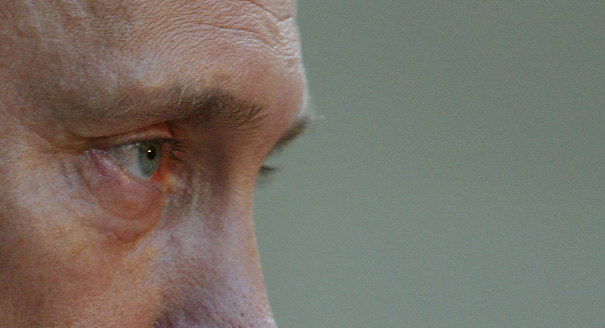
Source: Getty
Putin not only seeks to revisit the results of the end of the Cold War, he also wants a final say in establishing the new world order and Western consent to his interpretation of the rules of the game.
Source: Washington Post
The post-Cold War order that emerged from the breakup of the Soviet Union was doomed to fail because it rested on a belief that post-Soviet Russia was no longer a problem. Even when Western leaders realized that Russia under Vladimir Putin was becoming a problem, they exchanged political acquiescence with the Kremlin for economic benefits. Liberal democracies agreed to play a game of “let’s pretend,” in which they viewed Russia as a “normal country” while the Russian elite became integrated into the West — and corrupted the Western system from within.
That trade-off, many Western observers hoped, would keep Moscow from stirring up trouble beyond Russia’s borders. How could people whose ill-gotten gains are kept in Western banks and whose children attend Western schools be ill-disposed toward the West?
Putin’s invasion of Ukraine made it clear that he has stopped pretending. The Kremlin will not limit itself to cracking down on opposition within Russia’s borders.The survival of Putin’s system is based on a permanent search for internal and external enemies. Ukraine has become the testing ground for a Kremlin that seeks to eliminate the very idea of revolution — not only in Russia but also in the former Soviet bloc — and to force the West to accept its right to do so.
The dismemberment of Ukraine also exposes the mechanism of the Russian matrix, in which foreign policy is the main instrument of domestic agenda. Those worrying only about Russian imperialism are wrong: Land-grabbing and “defending” the Russian-speaking population in other countries are the means to turn Russia into a state at war, making Putin a wartime president and strengthening his position at home.
Putin not only seeks to revisit the results of the end of the Cold War; he also wants a final say in establishing the new world order. Briefly, the Kremlin offers a new trade-off: In return for continued economic benefits for the West, Russia wants Western consent to its interpretation of the rules of the game.
This does not only undermine the Western vision of Kantian perpetual peace. It also creates new traps — for both sides.
On Russia’s side, the Kremlin has appropriated liberal rhetoric to legitimize its intervention in Ukraine. It demands that Kiev reform the Ukrainian constitution and allow for regional referendums on the right to secession and federalization. Meanwhile, however, Russian citizens do not have such rights; advocating for them, in fact, can land one in jail.
So the Kremlin’s external rhetoric is undermining the legitimacy of the Russian regime. There will come a time when Russia’s Tatars will say, “Why can’t we have a right to self-determination?” There will come a time when Russians will ask, “Why can’t we have a right to a referendum and a right to oppose the authorities?” In other words, we are witnessing a situation in which the Kremlin’s bid for survival is turning into a suicidal marathon.
The liberal democracies are not doing much better. Caught off-guard by Putin’s maneuvering, liberal democracies tell the Kremlin that if it stops further aggression, the West just might accept the new status quo. In fact, the April 17 Geneva agreement among the United States, European Union and Russia revealed the West’s inability to stop Russia’s efforts to destabilize Ukraine. Western demands for “de-escalation,” demarcated with fuzzy “red lines,” only provoked Moscow into moving further. By refusing to offer Ukraine real prospects for joining the Euro-Atlantic community through either European Union and/or NATO membership, the West is leaving Ukraine in a gray zone of uncertainty, vulnerable to falling into the Russian orbit.
While the Western sanctions that have been imposed so far have started to bite, they paradoxically strengthen Putin’s “besieged fortress” logic of survival. The Russian leader’s call this week for pro-Russian separatists in Donetsk to put their independence referendum on hold was not a surrender; it is an invitation to Kiev to accommodate the Kremlin’s interests, this time through “dialogue.”
This call for dialogue by a leader who has limited political life in Russia to his own monologue sounds like cognitive dissonance. However, the Kremlin’s goal is more likely pragmatic: to switch to the role of peacemaker and strike a new Faustian bargain with the West, persuading it to agree to Ukrainian limited sovereignty and the right of external forces to teach Ukrainians what is right and what is wrong.
I’ll bet that Western leaders, tired of their Ukrainian headache, might agree with the bargain. And the Kremlin will join the Ukrainian “round table” moderators. Instead of an invader, Putin will be seen as the architect of the new postmodern reality.
Isn’t it hilarious?
This article was originally published in the Washington Post.
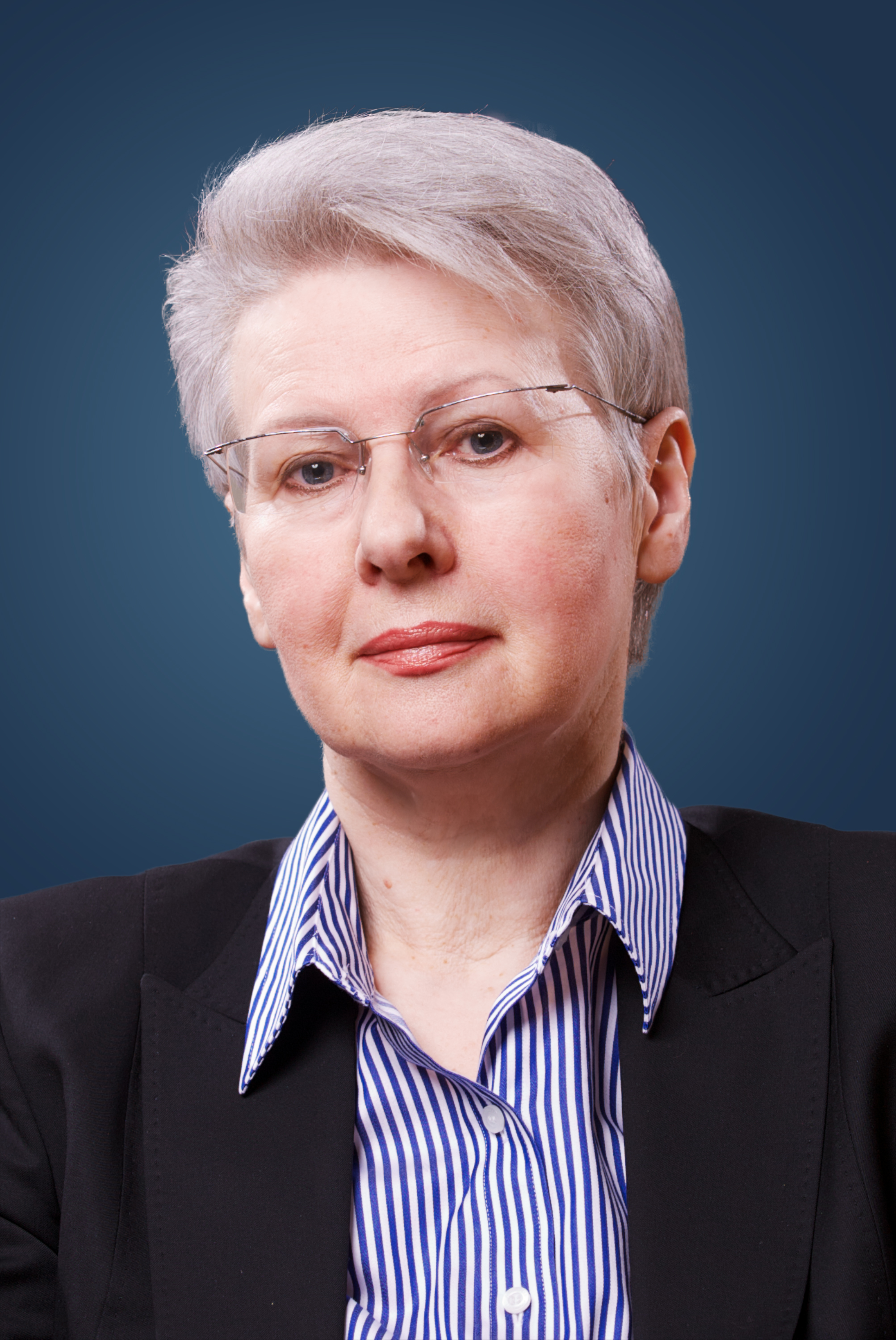
Former Senior Associate, Russian Domestic Politics and Political Institutions Program, Moscow Center
Shevtsova chaired the Russian Domestic Politics and Political Institutions Program at the Carnegie Moscow Center, dividing her time between Carnegie’s offices in Washington, DC, and Moscow. She had been with Carnegie since 1995.
Recent Work
Lilia Shevtsova
Lilia Shevtsova
Carnegie does not take institutional positions on public policy issues; the views represented herein are those of the author(s) and do not necessarily reflect the views of Carnegie, its staff, or its trustees.

Minsk clearly expected the dialogue with Washington to yield more results, in particular the lifting of EU sanctions and permission to export potash.

Artyom Shraibman

If the Russian-speaking community in Latvia cannot articulate their interests without being seen as disloyal, they could end up embracing a pro-Kremlin agenda.

Sergejs Potapkins

Russia’s ruling party would have benefited from Putin appearing as its distant patron, but as an active frontman imposing his views on the public, he has done nothing but harm both the party’s election campaign and the ruling system overall.

Andrey Pertsev

Depleted financial reserves and a shrinking tax base mean it is no longer possible to simultaneously deliver high defense spending, price stability, and economic growth.

Alexandra Prokopenko
Blurring the line between humans and animals is a long-standing tradition in social utopian prose. In his latest novel, Leonid Bershidsky reminds us that in social experiments, people are often treated no differently than animals.

Alexander Baunov