• Research
  • Politika
  • About
Carnegie Russia Eurasia center logoCarnegie lettermark logo
  • Donate
{
  "authors": [
    "George Volski"
  ],
  "type": "commentary",
  "centerAffiliationAll": "",
  "centers": [
    "Carnegie Endowment for International Peace",
    "Carnegie Russia Eurasia Center"
  ],
  "collections": [],
  "englishNewsletterAll": "",
  "nonEnglishNewsletterAll": "",
  "primaryCenter": "Carnegie Endowment for International Peace",
  "programAffiliation": "",
  "programs": [],
  "projects": [],
  "regions": [
    "Caucasus",
    "Russia",
    "Georgia"
  ],
  "topics": [
    "Security",
    "Military",
    "Foreign Policy"
  ]
}

Source: Getty

Commentary

Georgia-Russia: Six Years After the War

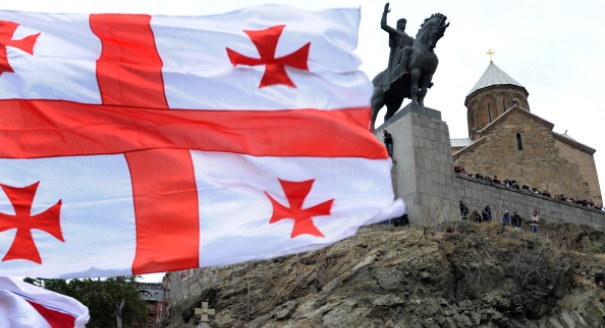
It has been six years since the end of the Russia-Georgia war, but its effects still pervade political debates between the Georgian Dream coalition and the once powerful Mikheil Saakashvili’s United National Movement (UNM).

Link Copied
By George Volski
Published on Aug 15, 2014

It has been six years since the end of the Russia-Georgia war, but its aftershocks are still felt in Georgia’s tense political life. They pervade television and parliamentary debates between the representatives of the ruling Georgian Dream coalition and the once powerful United National Movement (UNM), which has now joined the ranks of the opposition. Besides, the details of the 2008 war are still discussed by international experts and politicians in various countries and forums.

The political standoff revolves around the approaches to Georgia’s policy on Russia, which has occupied a significant part of  Georgian territory. Having clearly marked the red lines of its strategic vital interests, the new government started negotiating with Moscow on some economic and trade issues in an attempt to lay a foundation for political negotiations. Such a foundation had existed before – in fact, influential international organizations, as well as European states and the United States had worked hard to create it—but it crumbled long before the August war. As early as July 2006, the Saakashvili government effectively rejected an OSCE and UN-backed roadmap to resolving the conflict in Abkhazia and South Ossetia/Tskhinvali Region, instead choosing the path of confrontation with the de facto governments of these unrecognized regions. This choice was made as EU and U.S. participation in the conflict resolution had actually risen to the level that would have enabled Georgia to have balanced relations with Moscow and create an atmosphere of trust between the parties, leading to political negotiations.

Analytical publications in the Western media and statements made by certain politicians, testify to the fact that the PR tactics utilized by the UNM, as well as the information network it created, are still alive and well. By distorting the facts and combining truth and falsehood, Saakashvili’s party is not only shielding itself from responsibility for systemic irregularities and sometimes outright criminal acts, but is also trying to launch a massive PR attack against the government.

Saakashvili’s goal is clear: by accusing the new government of pro-Russian policies, he is out to besmirch its reputation and disparage the palpable changes that have occurred in the country in the sphere of democratization of its political life, social and economic reforms, as well as the progress toward European and Euro-Atlantic integration.

For the most part, Georgians are critical of these tactics and the actions of the former government in general. There is a multitude of reasons for this, but massive human rights violations that brought about the UNM defeat during the October 2012 parliamentary elections tops the list.

Incidentally, some political parties that gained political clout after the 2014 local elections are in fact exploiting the issue of bringing criminal charges against Saakashvili and his associates. The same parties criticize the government for dragging its feet, and “suspicious” tolerance of those who enriched themselves and came to power illegally by sacrificing national interests for “Western values.”

Naturally, the government is not expected to put everyone behind bars as radicals suggest. Nevertheless, justice shall prevail and such a position is not politically motivated at all. In fact, it is Saakashvili and his UNM party that seek to evade responsibility by labeling any claim investigators have against them as “Putin’s order.”

Saakashvili’s strategy to present himself as the defender of Ukrainian interests and ignore the question of what prompted Russia to attack and occupy Georgian territory, should be seen through the same lens. After all, it is his ill-conceived, ludicrous, and, frankly, shady policies that allowed Russia to anchor itself in the South Caucasus.

Most Georgians have every reason to doubt both Saakashvili’s innocence and his commitment to genuine Western values. Besides, his friends’ efforts to shelter him from prosecution benefit those trying to play the anti-Western card.

George Volski is a head of the Georgian Dream Faction Parliament of Georgia.

About the Author

George Volski

George Volski
SecurityMilitaryForeign PolicyCaucasusRussiaGeorgia

Carnegie does not take institutional positions on public policy issues; the views represented herein are those of the author(s) and do not necessarily reflect the views of Carnegie, its staff, or its trustees.

More Work from Carnegie Russia Eurasia Center

  • Commentary
    Carnegie Politika
    “Mr. Nobody Against Putin”: A Deep Dive Into Russian Propaganda

    Talankin and Borenstein’s documentary is a unique inside look at a regime that threatens the world and has killed thousands of people in its neighboring country. And many critics and general viewers alike draw parallels between the Putin regime and their own governments.

      Ekaterina Barabash

  • Paper
    A Tight Spot: Challenges Facing the Russian Oil Sector Through 2035

    Russian oil production is remarkably resilient to significant price changes, but significant political headwinds may lead to a drop regardless of economics.

      • Sergey Vakulenko

      Sergey Vakulenko

  • Commentary
    Carnegie Politika
    Why Did Messaging App Telegram Fall From Grace in Russia?

    The history of Telegram’s relations with the Russian state offers a salutary lesson for international platforms that believe they can reach a compromise with the Kremlin.

      Maria Kolomychenko

  • Commentary
    Carnegie Politika
    The Nuances of Oscar-Winning Film “Mr. Nobody Against Putin”

    It’s disingenuous to criticize a film for simplifying Russia’s complexities when Russia is waging a brutally simple war of aggression against its neighbor.

      Alexander Baunov

  • Commentary
    Carnegie Politika
    Why Has Kazakhstan Started Deporting Political Activists?

    The current U.S. indifference to human rights means Astana no longer has any incentive to refuse extradition requests from its authoritarian neighbors—including Russia.

      Temur Umarov

Get more news and analysis from
Carnegie Russia Eurasia Center
Carnegie Russia Eurasia logo, white
  • Research
  • Politika
  • About
  • Experts
  • Events
  • Contact
  • Privacy
Get more news and analysis from
Carnegie Russia Eurasia Center
© 2026 Carnegie Endowment for International Peace. All rights reserved.