

Commentary
Dmitri Trenin
{
  "authors": [
    "Dmitri Trenin"
  ],
  "type": "commentary",
  "centerAffiliationAll": "",
  "centers": [
    "Carnegie Endowment for International Peace",
    "Carnegie Russia Eurasia Center"
  ],
  "collections": [],
  "englishNewsletterAll": "",
  "nonEnglishNewsletterAll": "",
  "primaryCenter": "Carnegie Russia Eurasia Center",
  "programAffiliation": "",
  "programs": [],
  "projects": [],
  "regions": [
    "Russia",
    "Eastern Europe",
    "Ukraine"
  ],
  "topics": [
    "Foreign Policy"
  ]
}
Source: Getty
While Kiev is desperate to achieve a full military victory almost at any cost, Moscow is reaching out with humanitarian aid, confusing and confounding its opponents. As to the war there, it still continues.
In his wide-ranging remarks to the members of the Russian State Duma in Yalta on August 14, President Vladimir Putin only mentioned Ukraine briefly. Russia, he said, would do all it can to bring an end to the bloodletting there. Even as Putin was talking, the Russian humanitarian convoy was slowly making its way from Moscow to the Ukrainian border.
Meanwhile, at Yalta, an interesting exchange followed. Vladimir Zhirinovsky, Deputy Speaker of the Russian parliament, who spoke after Putin, ostensibly criticized the president' "softness." The last tsar, Zhirinovsky said, when faced with a crisis in the Balkans, did not bother about sending humanitarian relief to the Serbs, but extended military aid to them. "This was a mistake," Zhirinovsky quickly added. Putin, responding to this fake rebuke, said that he proposed to learn from others' mistakes rather than to make some of his own.
By sending the convoy, Vladimir Putin sought to switch the international attention from the fighting in Eastern Ukraine to the human suffering there, and to present Russia as the one country that cared about the people of Donbass. Putin was also clearly responding to the calls in Russia—parodied by Zhirinovsky—to "do something" in the face of the Kievan forces' continuing assault on the rebel strongholds. That "something," however, in Putin's view, did not have to be reckless and leading to catastrophic consequences—just as the Russian emperor's fateful moves in 1914.
Russia, of course, may yet intervene in force—if, for example, the Ukrainian government's efforts to restore Donbass to its control result in a massive loss of civilian life, way above the dozen or so people who are reported killed on a daily basis now. Absent that, Moscow's strategy will focus on helping the rebels to fight Kiev's forces to a standstill—and negotiating a ceasefire making the rebels a party to an agreement.
The sudden departure recently of the top rebel leaders in both Donetsk and Lugansk suggests that Moscow seeks to field a more authentic and presentable group for eventual future talks. While Kiev is desperate to achieve a full military victory almost at any cost, Moscow is reaching out with humanitarian aid, confusing and confounding its opponents. At the foreign ministers' meeting in Berlin on Sunday, a measure of progress was achieved on the issue of the Russian humanitarian aid to Donbass. As to the war there, it still continues.
Former Director, Carnegie Moscow Center
Trenin was director of the Carnegie Moscow Center from 2008 to early 2022.
Recent Work
Dmitri Trenin
Dmitri Trenin
Carnegie does not take institutional positions on public policy issues; the views represented herein are those of the author(s) and do not necessarily reflect the views of Carnegie, its staff, or its trustees.
Blurring the line between humans and animals is a long-standing tradition in social utopian prose. In his latest novel, Leonid Bershidsky reminds us that in social experiments, people are often treated no differently than animals.

Alexander Baunov
While France and Australia are seeking to establish the legal obligations of messaging apps like Telegram, Russia wants total subordination.

Maria Kolomychenko
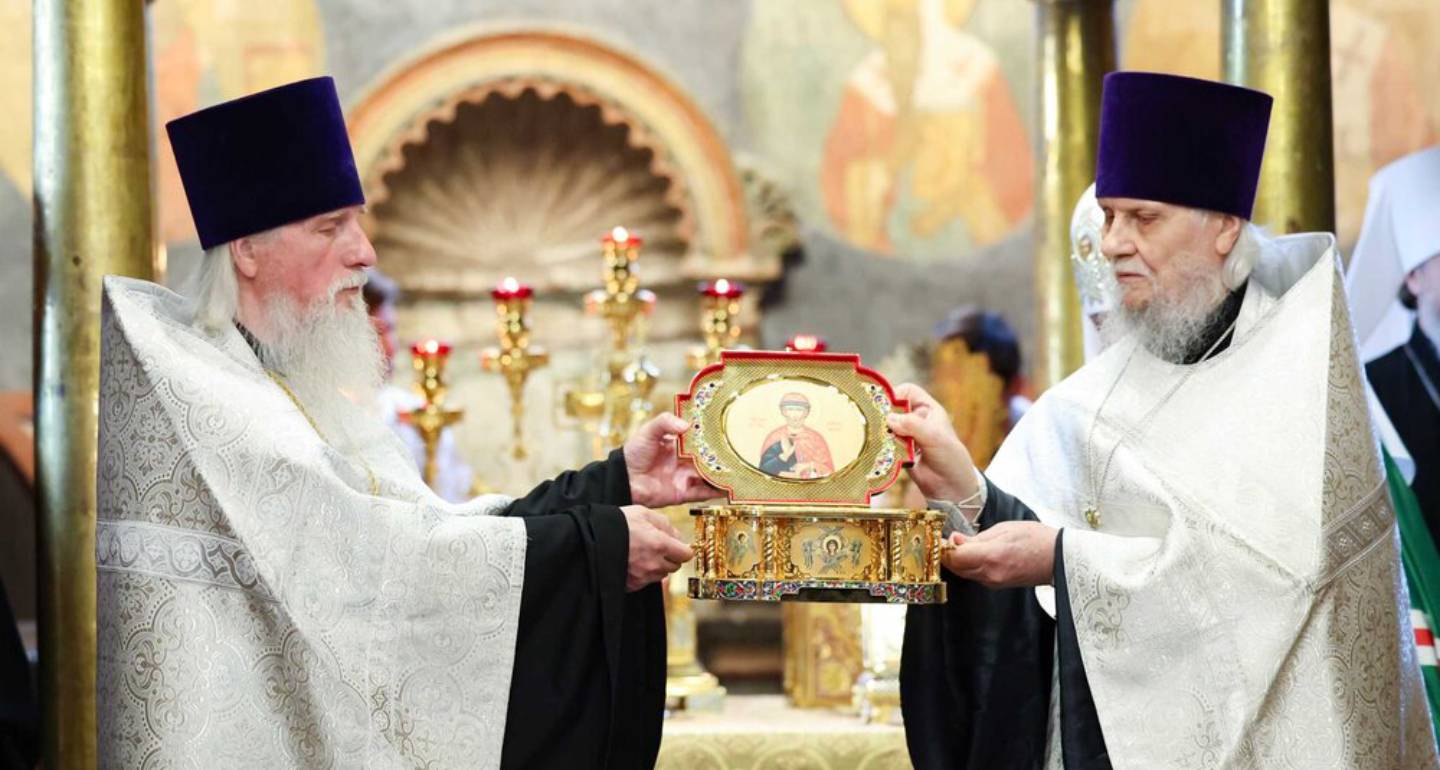
The recent uncovering of Dmitry Donskoy’s relics in the Cathedral of the Archangel is yet another attempt by the Russian Orthodox Church to help the state solve its problems. However, parroting the state’s version of Russian history leaves the Church with no message except “patriotism.”
Alexander Zanemonets

With the growth in points of friction between the great powers, organizations like the SCO will continue to play a role in the strategic adaptation of the smaller powers caught between them.

Temur Umarov

The war in Ukraine and a change in ownership led VK to neglect its commercial ventures in favor of implementing the Kremlin’s online agenda. Now it’s been sanctioned by the EU.
Maria Kolomychenko