

Commentary
Alexey Malashenko
{
  "authors": [
    "Alexey Malashenko"
  ],
  "type": "commentary",
  "centerAffiliationAll": "",
  "centers": [
    "Carnegie Endowment for International Peace",
    "Carnegie Russia Eurasia Center"
  ],
  "collections": [
    "Inside Russia"
  ],
  "englishNewsletterAll": "",
  "nonEnglishNewsletterAll": "",
  "primaryCenter": "Carnegie Russia Eurasia Center",
  "programAffiliation": "",
  "programs": [],
  "projects": [],
  "regions": [
    "Caucasus",
    "Russia"
  ],
  "topics": [
    "Political Reform",
    "Security",
    "Foreign Policy",
    "Religion",
    "Economy"
  ]
}
Source: Getty
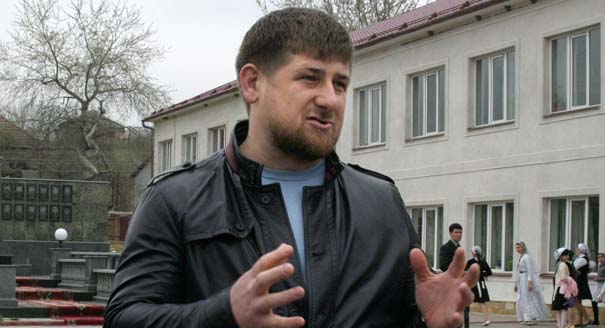
Ramzan Kadyrov, head of the Chechen Republic in the North Caucasus, is now firmly entrenched in Russian politics at the federal-level, and it appears that he is there to stay, because Putin and Kadyrov really need each other.
Ramzan Kadyrov, head of the small North Caucasian republic of Chechnya, which has a population of slightly over one million, has become a firm fixture in the Russian establishment.
Traditionally, three regional politicians have been counted among the top hundred Russian politicians and were considered “federal-level.” These were the mayors of Moscow and Saint Petersburg, and the president of Tatarstan from 1991 to 2010, Mintimer Shaimiev. The first two were in this club by virtue of being the heads of Russia’s two capitals. Shaimiev was included because he headed a region that exerted a deep influence on the relationship between Russia’s center and its peripheries, thus affecting the development of Russian federalism.
First, Kadyrov was able to restore order to Chechnya and eliminate all rivals, including those with support from Moscow politicians and representatives of the security services. He built a political system, his personal “power vertical,” by occasionally resorting to heavy-handed methods. Such methods ought to appeal to Russian President Vladimir Putin, to whom Kadyrov constantly pledges his loyalty—sometimes in quite extravagant ways. For instance, Kadyrov has, on a number of occasions, called for Putin to stay in office for life. And, according to the Chechen Interior Ministry, Kadyrov hosted a 100,000-strong rally in Grozny in October to celebrate the Russian president’s birthday. Incidentally, 52 percent of Russians say they will support Putin’s continued presidency, which indicates that Kadyrov’s views and actions are quite mainstream in today’s Russia.
Both Putin and Kadyrov are ready to take personal responsibility for their states—the Russian Federation, in the first case, and its subject, the Chechen Republic, in the second. Both tend to engage in micromanagement, although in this Kadyrov clearly has an easier task, as he is dealing with much smaller Chechnya.
To the Kremlin, the Chechen leader appears to be more successful than other North Caucasian executives. Some Russian politicians even lament the fact that Kadyrov’s practices cannot be applied to the entire North Caucasus and, to an extent, to the rest of the country.
Finally, Kadyrov’s strength in many ways hinges on his personal relationship with Putin, which developed after the killing of his father Ahmad in 2004, when Ramzan, dressed in a gym suit, literally burst into Putin’s office to inform the president of his misfortune (some believe that this episode was skillfully staged). From that point on, Putin and Kadyrov have enjoyed a certain informality in their relations. The Russian president is known to highly prize personal relations with his partners, be they Nursultan Nazarbayev, Angela Merkel… or Ramzan Kadyrov. This personal relationship between the two politicians to a large extent determines the relations between the federal center and its Chechen subject.
Second, Kadyrov’s status in Russian politics got an unexpected boost thanks to his active role in the Russian Muslim community and his claim to be its leader.
In Chechnya, Kadyrov has asserted himself as both a secular and religious leader. He promotes the all-around application of sharia law, the establishment of Islamic behavioral norms, and the adherence to sharia-law prohibitions. In fact, this campaign is being pursued quite openly. As of today, Chechnya is the most Islamicized subject of the Russian Federation. Thanks to Kadyrov’s efforts, the republic now boasts an almost full-fledged “Islamic space” with all of its respective attributes. His popular appeal, especially among the youth, is both political and religious.
In addition, Kadyrov has recently extended his reach to Muslim communities across the entire country. He personally participates in numerous religious events in a role on par with that of the clergy; he also finances the construction, repair, and upkeep of mosques in a host of Russian cities, including in Yekaterinburg and Moscow. He has been in close contact with Russia’s Muslim leaders, including the head of the Central Muslim Spiritual Directorate, Taglat Tadzhuddin, and the chair of Russia’s Mufti Council, Rawil Gaynetdin.
It is telling that in his comments on the January killings of the Charlie Hebdo staffers, Kadyrov did not simply emphasize the provocative nature of the cartoons published in the magazine—no other reaction could, in fact, be expected of him—but also portrayed himself as speaking on behalf of all Russian Muslims and the entire Muslim world. How else can Kadyrov’s statement that he is prepared to “raise millions of Muslims for protest rallies” be interpreted? While this statement sounds excessively dramatic and even infantile, it allows us to clearly discern the almost global ambitions of the young Chechen leader currently constrained by the narrow limits of his republic. It is also telling that, after Mikhail Khodorkovsky called for the European press to reprint cartoons featuring Muhammad, Kadyrov named him as his personal enemy. In this, he spoke both as a Muslim and as a supporter of the Russian regime.
Third, Kadyrov has long been a participant in Russia’s foreign policy and makes much more frequent and sharp statements in this regard than other regional politicians. He actively endorses Putin’s policy in Ukraine and attempts to support his words with actions. He has reportedly said that “74,000 Chechens are awaiting the go-ahead to restore order in Ukraine.” It’s also worth remembering that dozens of natives of the Caucasus have already taken part in combat operations in Donbas. (One poster commenting on a discussion on LifeNews’ website correctly pointed out that “Ramzan does not mince his words.”)
Kadyrov completely embraces the Kremlin’s anti-Western ideology and blames the West both for provoking the Ukraine crisis and for supporting ISIS, which, in his opinion, was created and is being financed by Western intelligence services. In his critique of the West, Kadyrov sheds the euphemistic rhetoric occasionally used by more diplomatically-minded Kremlin politicians.
What’s next? What’s in store for the Russian politician Ramzan Kadyrov? Under the current conditions, Kadyrov is typical for the Russian political system, with the caveat that he is from the Caucasus and a Muslim. The Kremlin will continue to rely on him and might even call on him more than ever before, if the situation in the country deteriorates. With Putin’s reign to be extended indefinitely, Kadyrov most likely will not have to worry about his future.
On the other hand, as a federal-level politician, Kadyrov tarnishes Putin’s reputation with his blunt statements and risky actions. This is true, however, only of reactions in the West, which the Russian president demonstratively ignores.
However, Kadyrov also faces problems inside the country. He is disliked by some in the Russian establishment, especially in the security services, which often fail to control his actions. He also has quite a few enemies in Chechnya, who are ready to settle scores with him, and avenge the deaths of their loved ones.
Thus, having risen to an impressive point in his career, Ramzan Kadyrov is now firmly entrenched in Russian politics at the federal-level. It appears that, barring any unforeseen circumstances, he is there to stay. Vladimir Putin and Ramzan Kadyrov really need each other.
Former Scholar in Residence, Religion, Society, and Security Program
Malashenko is a former chair of the Carnegie Moscow Center’s Religion, Society, and Security Program.
Recent Work
Alexey Malashenko
Alexey Malashenko
Carnegie does not take institutional positions on public policy issues; the views represented herein are those of the author(s) and do not necessarily reflect the views of Carnegie, its staff, or its trustees.

Russian strikes are weakening the economy sustaining Ukraine’s war effort. Closing the growing funding gap will require more European support and politically contentious reforms in Kyiv.

Balázs Jarábik

Ex-president Gurbanguly Berdimuhamedov remains interested in politics, but his son Serdar, Turkmenistan’s current president, is becoming increasingly independent and willing to break with his father’s legacy. If their covert rivalry goes too far, both risk losing power.

Galiya Ibragimova

Despite a new textbook, an influx of Russian teachers and managers, and an end to the teaching of Ukrainian, the Kremlin is unlikely to have “reprogrammed” locals.

Konstantin Skorkin

For every ruble allocated to social policy, health, and education in 2027, double that amount is earmarked for the army, the police, and the security services.

Alexandra Prokopenko

Cargo traffic through Russia’s Northern Sea Route has increased because of the disruption caused by the conflict in the Middle East, the Ukraine war, and U.S.-China tensions.

Mikhail Korostikov