

Paper
James M. Acton, Ankit Panda
{
  "authors": [
    "James M. Acton"
  ],
  "type": "legacyinthemedia",
  "centerAffiliationAll": "dc",
  "centers": [
    "Carnegie Endowment for International Peace",
    "Malcolm H. Kerr Carnegie Middle East Center"
  ],
  "collections": [
    "Iranian Proliferation",
    "U.S. Nuclear Policy"
  ],
  "englishNewsletterAll": "ctw",
  "nonEnglishNewsletterAll": "",
  "primaryCenter": "Carnegie Endowment for International Peace",
  "programAffiliation": "NPP",
  "programs": [
    "Nuclear Policy"
  ],
  "projects": [],
  "regions": [
    "North America",
    "United States",
    "Middle East",
    "Iran"
  ],
  "topics": [
    "Political Reform",
    "Security",
    "Nuclear Policy",
    "Arms Control"
  ]
}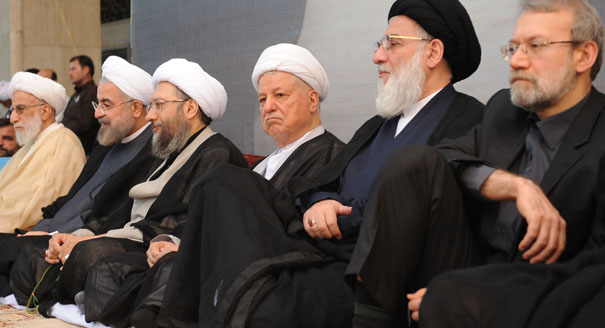
Source: Getty
The big unknown at this point in the negotiations is how much Iran is willing to concede in its enrichment program in order to get sanctions relief. While Iran wishes to remove all sanctions immediately, the United States and its allies would like to see the sanctions removed gradually.
Source: Bloomberg News
Carnegie’s James Acton discussed Iran’s nuclear talks and trade sanctions on Bloomberg News’ Bottom Line. Acton told Bloomberg News that the big unknown at this point is how much Iran is willing to concede in its enrichment program in order to get sanctions relief. While Iran wishes to remove all sanctions immediately, the United States and its allies would like to see the sanctions removed gradually.
“There are stories coming out of the negotiations that the number of centrifuges that Iran would be permitted to operate has been agreed,” Acton said. “It’s also been reported that one of the big undecideds is the pace at which Iran demands sanctions relief," he added.
Another component to the negotiations is that many members of Congress, along with Israel, do not trust the Iranians. “Trust but verify is exactly the policy that the Obama administration is adopting for this negotiation,” Acton told Bloomberg News. “In major parts of any agreement—should one be reached—would be intrusive inspections on Iran’s program that go above and beyond additional standards,” he added.
“The Obama administration firmly believes that Iran should not be allowed to get nuclear weapons. The question is how to prevent that from happening, and [Israeli Prime Minister] Netanyahu’s proposal is completely divorced from reality in terms of any likelihood it will work," Acton concluded.

Jessica T. Mathews Chair, Co-director, Nuclear Policy Program
Acton holds the Jessica T. Mathews Chair and is co-director of the Nuclear Policy Program at the Carnegie Endowment for International Peace.
Recent Work
James M. Acton, Ankit Panda
James M. Acton
Carnegie does not take institutional positions on public policy issues; the views represented herein are those of the author(s) and do not necessarily reflect the views of Carnegie, its staff, or its trustees.
Ultimately, Zelensky sided neither with the reform camp nor with the military establishment as such, but with political control.

Balázs Jarábik
Tokayev’s predecessor, Nursultan Nazarbayev, outlined arrangements for a power transition too soon and in too much detail, ultimately losing control over the process. Tokayev is determined not to meet the same fate.

Temur Umarov

Andrey Melnichenko’s essay offers no answer to the fundamental question of how, under any kind of negotiated settlement, Europe can protect itself from the Russian ressentiment that is inevitable in all scenarios except for an outright victory for Putin.

Leonid Bershidsky

Despite unhappiness on the ground, Moscow is determined to use both carrot and stick to ensure there is record support for United Russia in occupied Ukraine.

Konstantin Skorkin
Whether PAS can refocus on the unfinished business of state-building may ultimately prove more consequential for Moldova’s European future than the pace of its accession negotiations.
Balázs Jarábik