

Commentary
Andrei Kolesnikov
{
  "authors": [
    "Andrei Kolesnikov"
  ],
  "type": "legacyinthemedia",
  "centerAffiliationAll": "",
  "centers": [
    "Carnegie Endowment for International Peace",
    "Carnegie Russia Eurasia Center"
  ],
  "collections": [
    "Inside Russia"
  ],
  "englishNewsletterAll": "",
  "nonEnglishNewsletterAll": "",
  "primaryCenter": "Carnegie Endowment for International Peace",
  "programAffiliation": "",
  "programs": [],
  "projects": [],
  "regions": [
    "Russia"
  ],
  "topics": [
    "Political Reform",
    "Democracy",
    "Civil Society"
  ]
}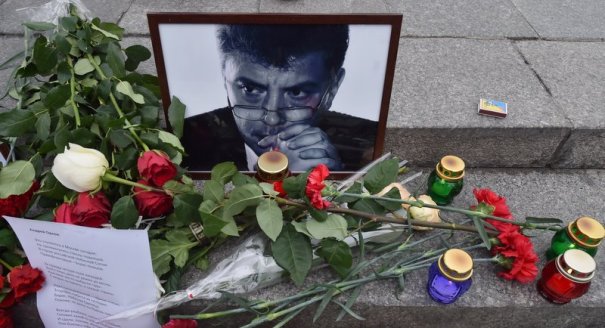
Source: Getty
Russians who support democratic views are in a state of despair after Boris Nemtsov’s murder. No one is likely to be able to replace Nemtsov.
Source: Deutsche Welle
Russians opposed to President Vladimir Putin are in a state of despair after Boris Nemtsov's murder, says Andrei Kolesnikov of the Carnegie Moscow Center. He can see no one stepping in to fill the Kremlin critic's shoes.
Will this opposition consolidate, for example? I think no, because it [Sunday's march] was only a moral reaction, not a political reaction at all. It was a quiet and sad manifestation. So there will not be any kind of political consequences. We must understand that modern Russian society is very indifferent to any serious events. People are surviving. People are supporting, in their compromised way, but they are supporting the authorities, Putin as well, so they didn't feel some deep notions concerning some very important events around them. Here we face the core problem of modern Russian society, the indifference to such events.
Nobody was calling for change. It was a call from the Russian opposition, but we can't even call it an opposition, something systematical with a tough structure. Opposition in modern Russia is more a notional category than a political category. So nobody will change anything from the side of the authorities and nobody can influence these changes from the side of the opposition. It's a very sad situation, but you must understand that it is so in modern Russia, there is such an atmosphere.
The opposition is in a great depression, it seems to me. I think the opposition will not be consolidated; it will have some attempts to consolidate people but it's impossible when all activity is absolutely blocked by the authorities and blocked by the legal trials against some people who participated in opposition actions.
The opposition must be thinking about the future maybe, developing some programs, some civil initiatives. They must think about the future, they must have some people who can be popular, because after the death of Nemtsov we can see that we have maybe only Alexei Navalny, no one else, who can be the political fighter. But Navalny is blocked absolutely by the authorities.
In some sense, nobody can because he was some kind of mediator between the authorities and the opposition. He was close to a lot of people; he was some kind of a tie between the people. Because of that, even Navalny can't substitute for him in that sense. I don't know who can replace him.
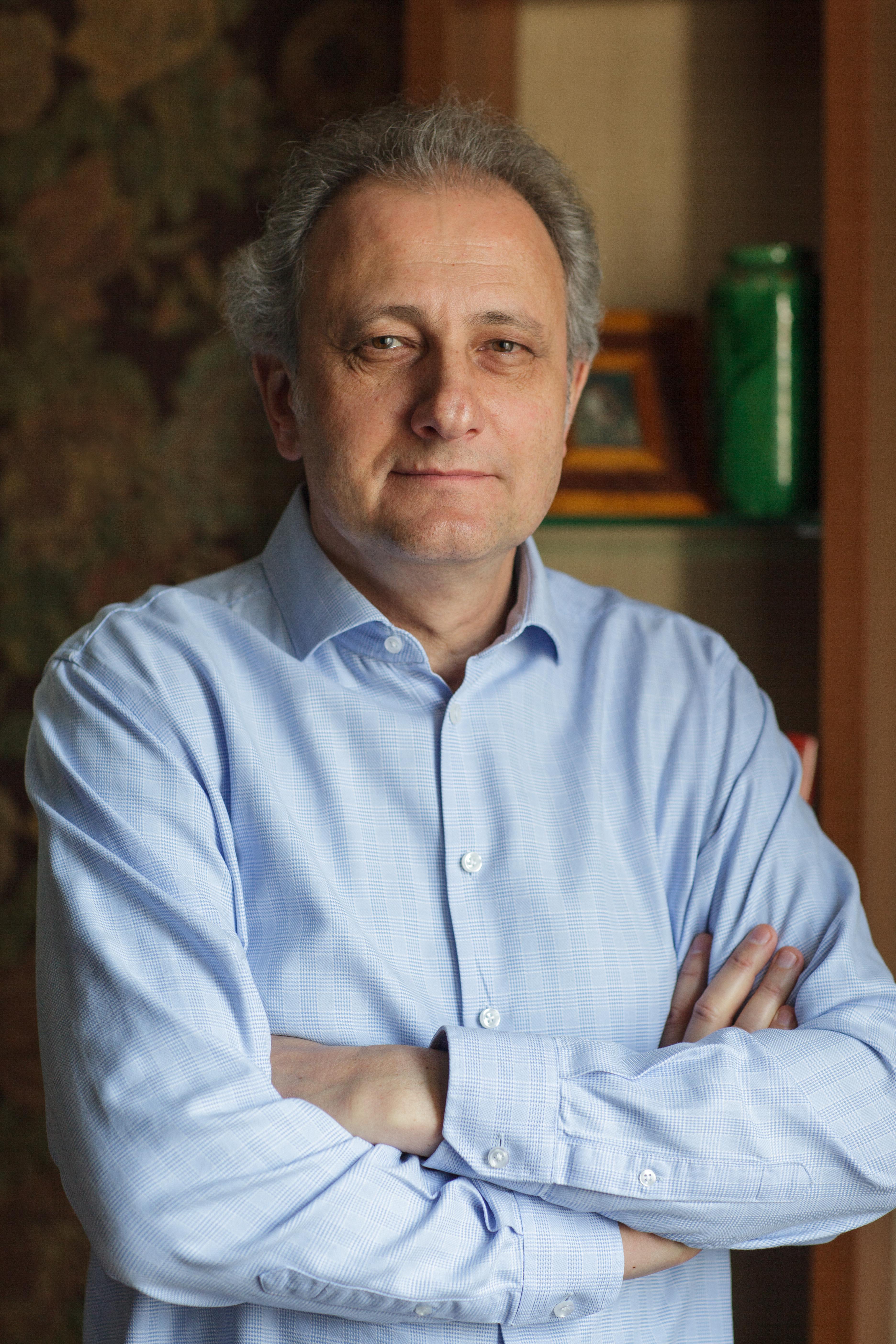
Former Senior Fellow, Carnegie Russia Eurasia Center
Kolesnikov was a senior fellow at the Carnegie Russia Eurasia Center.
Recent Work
Andrei Kolesnikov
Andrei Kolesnikov
Carnegie does not take institutional positions on public policy issues; the views represented herein are those of the author(s) and do not necessarily reflect the views of Carnegie, its staff, or its trustees.

If the Russian-speaking community in Latvia cannot articulate their interests without being seen as disloyal, they could end up embracing a pro-Kremlin agenda.

Sergejs Potapkins

Russia’s ruling party would have benefited from Putin appearing as its distant patron, but as an active frontman imposing his views on the public, he has done nothing but harm both the party’s election campaign and the ruling system overall.

Andrey Pertsev

Depleted financial reserves and a shrinking tax base mean it is no longer possible to simultaneously deliver high defense spending, price stability, and economic growth.

Alexandra Prokopenko
Blurring the line between humans and animals is a long-standing tradition in social utopian prose. In his latest novel, Leonid Bershidsky reminds us that in social experiments, people are often treated no differently than animals.

Alexander Baunov

In the tenth year of his presidency, President Mirziyoyev’s system is becoming even more personalized than that of his predecessor Karimov.

Galiya Ibragimova