

Q&A
Suzanne Maloney, Aaron David Miller, Karim Sadjadpour
{
  "authors": [
    "Karim Sadjadpour"
  ],
  "type": "legacyinthemedia",
  "centerAffiliationAll": "dc",
  "centers": [
    "Carnegie Endowment for International Peace",
    "Malcolm H. Kerr Carnegie Middle East Center"
  ],
  "collections": [
    "Iranian Proliferation"
  ],
  "englishNewsletterAll": "menaTransitions",
  "nonEnglishNewsletterAll": "",
  "primaryCenter": "Carnegie Endowment for International Peace",
  "programAffiliation": "MEP",
  "programs": [
    "Middle East"
  ],
  "projects": [],
  "regions": [
    "Middle East",
    "Iran"
  ],
  "topics": [
    "Political Reform",
    "Foreign Policy",
    "Nuclear Policy"
  ]
}
Source: Getty
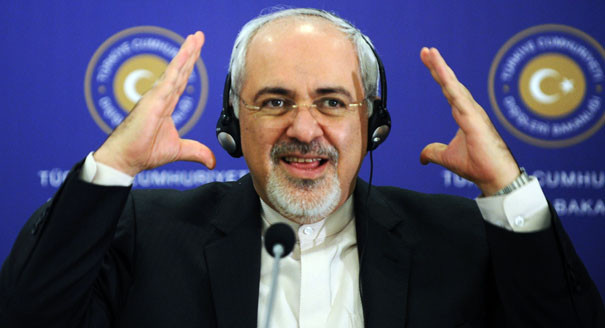
The Iran deal reached last week has created a moment of cautious optimism. The agreement exceeded expectations, but a final deal has yet to be reached.
Source: France 24 English
Speaking on Franceh 24 English, Carnegie’s Karim Sadjadpour said that the Iranian deal reached last week has created is a moment of cautious optimism. The deal is not yet finalized and many details still need to be figured out. There is also still a question about whether the Iranians are working from the exact same document as that announced by the United States.
The agreement exceeds expectations in both the concreteness of the document and in terms of the duration, Sadjadpour continued. So it certainly did exceed expectations of cynics but it’s still unclear whether the Iranians see this deal exactly the same way as Washington does. He added that there is concern about Iran’s transparency and its seeming unwillingness to open up its program and come clean about its past “flirtations” with nuclear weapons experiments. But, he said, one can understand the Iranian perspective—they don’t want to incriminate themselves. And in a negotiated agreement it is not possible to have “perfection.” This is a very solid deal from the P5+1 perspective, Sadjadpour concluded, and finally for the first time in many years the Iranian people are a winner here as well.In ten to fifteen years, once the verifications in the deal end, there could be dramatic change within Iran, Sadjadpour added. The Iranian supreme leader is 75-years-old; in fifteen years he is going to be 90, if he is still alive. The top generation of revolutionaries will increasingly be out of the scene and Iran will have a population three-quarters, if not eighty percent, of which will have been born after the 1979 revolution. So what is going to happen after verifications end in 15 years should not constitute a major concern now, Sadjadpour asserted.
Sadjadpour added that the Iranian people were celebrating after the deal was announced and this is understandable. Iranian society has been hit hard from two sides. They have been crushed by a repressive regime and crushed by onerous international sanctions. But at the same time the leadership in Iran should manage popular expectations, he warned. The deal is not going to bring about economic deliverance anytime soon. Only a framework was agreed on and not a final deal. But inevitably even if the deal is signed there is going to be disillusionment amongst people who say it did not deliver what they hoped for.

Senior Fellow, Middle East Program
Karim Sadjadpour is a senior fellow at the Carnegie Endowment for International Peace, where he focuses on Iran and U.S. foreign policy toward the Middle East.
Recent Work


Suzanne Maloney, Aaron David Miller, Karim Sadjadpour

Aaron David Miller, Karim Sadjadpour, Robin Wright
Carnegie does not take institutional positions on public policy issues; the views represented herein are those of the author(s) and do not necessarily reflect the views of Carnegie, its staff, or its trustees.

Ex-president Gurbanguly Berdimuhamedov remains interested in politics, but his son Serdar, Turkmenistan’s current president, is becoming increasingly independent and willing to break with his father’s legacy. If their covert rivalry goes too far, both risk losing power.

Galiya Ibragimova

Despite a new textbook, an influx of Russian teachers and managers, and an end to the teaching of Ukrainian, the Kremlin is unlikely to have “reprogrammed” locals.

Konstantin Skorkin

Cargo traffic through Russia’s Northern Sea Route has increased because of the disruption caused by the conflict in the Middle East, the Ukraine war, and U.S.-China tensions.

Mikhail Korostikov

Sergei Kiriyenko used Russia’s parliamentary vote to further hone his strategy of corporate mobilization that is designed to maximize votes for United Russia.

Andrey Pertsev

The European far right might fail to steer EU policy in the direction Russia wants, but they will create enough chaos inside Europe to benefit the Kremlin.

Dimitar Bechev