

Research
- +4
Milan Vaishnav, Rahul Verma, Rukmini S., …
{
  "authors": [
    "Christophe Jaffrelot"
  ],
  "type": "legacyinthemedia",
  "centerAffiliationAll": "dc",
  "centers": [
    "Carnegie Endowment for International Peace"
  ],
  "collections": [],
  "englishNewsletterAll": "ctw",
  "nonEnglishNewsletterAll": "",
  "primaryCenter": "Carnegie Endowment for International Peace",
  "programAffiliation": "SAP",
  "programs": [
    "South Asia"
  ],
  "projects": [],
  "regions": [
    "South Asia",
    "India",
    "Pakistan"
  ],
  "topics": [
    "Security",
    "Foreign Policy"
  ]
}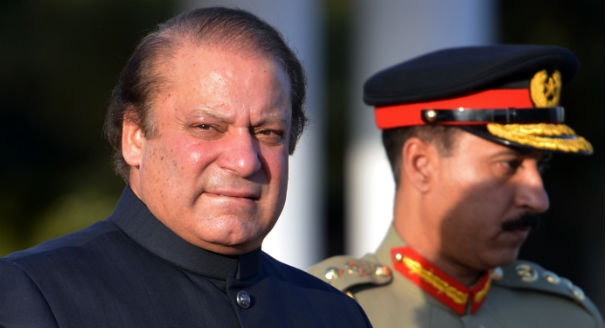
Source: Getty
The Indian government cannot ignore Pakistan, given its size, its military capability, its history of conflict, and its connection to China.
Source: Economic Times
The shift to Pakistan for me is not that recent. I did a book on Pakistan in 1999, at that time, I wanted to see why these two countries with the same historical roots diverged after partition. We can control the historical variable, but chart a different trajectory. Then I realised that they do not, in fact, have the same history. The Punjab, the North West Frontier Province, did not experience the kind of democratisation that the rest of India had during the Raj, I include Bengal in the rest of India, by the way. On the other hand, there are converging dynamics. For instance, in many ways the politics at the local levels was almost the same, at least till the rise of Islamism in the 1980s in Pakistan and the rise of the OBCs in India in the 1990s. Biradaris politics was very similar to the clientelism brand of the « Congress system ». There are other affinities. For instance there are resilient democrats in Pakistan.
The most dangerous contradiction is the question on which kind of Islam will prevail. Not only because you have the old tension between those who are from "Muslimhood", a la Jinnah as opposed to fundamentalists, but also because of the increased conflict between Shias and Sunnis. This is posing an existential threat to Pakistan, making it the virtual battleground for a proxy war between Saudi Arabia and Iran.
Yes, that's probably because to take the Saudi side would have exacerbated sectarianism, but also because of the Army which thought that this war was badly thought out tactically and that the military was already over stretched. They have soldiers in North Waziristan, Balochistan and they don't want to go into another war. How long they can withstand Saudi pressure if Riyad critically needs Pakistan to balance Iran? It is difficult to say but if Pakistan gives in to pressure from Saudis it will have societal implications too, as the Saudi version of Islam is against the south Asian traditions.
Yes and no. If Obama is engaging Iran at any cost to put his name down in history books with a deal, and if this deal allows Iran to become nuclear, the repercussions for the region will be overwhelming. You can imagine what the Saudis will do. In the 1970s Zulfikar Bhutto said "we may eat grass, but we will get the bomb", well the Saudis will not need to eat grass to get the bomb probably.
I agree with this paradox. It is very difficult for a civilian government, fully in control (by the way I don't think that will ever happen) in Pakistan, and a Congress or a Third Front government, like under Gujral to broker peace, as you end up looking weak and the BJP gets after you as the Army does in Pakistan. So it's a bit like the French decolonisation, only De Gaulle could do it. If the Left had tried to do it, the nationalists would have been after them. But when a nationalistic government does it....
There's been somewhat an evolution. During the first few months of the new dispensation, there's been the Love Jihad and Ghar Vapsi campaigns, riots in Delhi, attacks on Christian churches and religious figures... In the last few months we haven't heard anything of the sort. But can the BJP dilute its ideology further? Can the RSS accept a full BJP term without any of their core issues being addressed? If that happens, it will be an interesting landmark in India.
Former Nonresident Scholar, South Asia Program
Jaffrelot’s core research focuses on theories of nationalism and democracy, mobilization of the lower castes and Dalits (ex-untouchables) in India, the Hindu nationalist movement, and ethnic conflicts in Pakistan.
Recent Work

Milan Vaishnav, Rahul Verma, Rukmini S., …
Christophe Jaffrelot
Carnegie does not take institutional positions on public policy issues; the views represented herein are those of the author(s) and do not necessarily reflect the views of Carnegie, its staff, or its trustees.

With the growth in points of friction between the great powers, organizations like the SCO will continue to play a role in the strategic adaptation of the smaller powers caught between them.

Temur Umarov

When faced with fuel shortages in the past, Central Asian governments could always count on additional supplies from Moscow. That safety net no longer exists.

Galiya Ibragimova

Two divergent trends—Putin’s hardline vision of how to prosecute the war in Ukraine, and a growing desire for change in Russia—could tear the regime apart.

Tatiana Stanovaya

Andrey Melnichenko’s essay offers no answer to the fundamental question of how, under any kind of negotiated settlement, Europe can protect itself from the Russian ressentiment that is inevitable in all scenarios except for an outright victory for Putin.

Leonid Bershidsky

Despite unhappiness on the ground, Moscow is determined to use both carrot and stick to ensure there is record support for United Russia in occupied Ukraine.

Konstantin Skorkin