

Commentary
Andrei Kolesnikov
{
  "authors": [
    "Andrei Kolesnikov"
  ],
  "type": "legacyinthemedia",
  "centerAffiliationAll": "",
  "centers": [
    "Carnegie Endowment for International Peace",
    "Carnegie Russia Eurasia Center"
  ],
  "collections": [
    "Inside Russia"
  ],
  "englishNewsletterAll": "",
  "nonEnglishNewsletterAll": "",
  "primaryCenter": "Carnegie Endowment for International Peace",
  "programAffiliation": "",
  "programs": [],
  "projects": [],
  "regions": [
    "Russia",
    "Caucasus"
  ],
  "topics": [
    "Political Reform",
    "Democracy"
  ]
}
Source: Getty
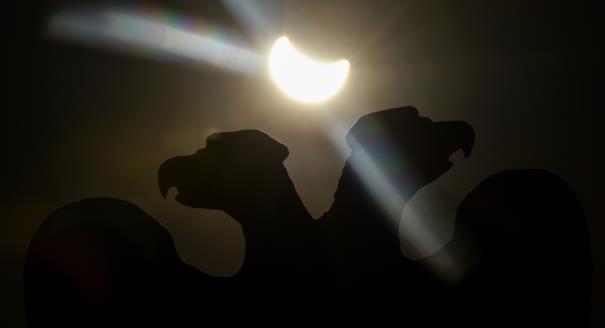
Under totalitarian regimes, the state is the only force that shapes the condition of society. Vladimir Putin may not be there yet, but he certainly is moving in that direction.
Source: Project Syndicate
In his 1970 treatise Exit, Voice, and Loyalty, Albert Hirschman considered the three options that people have for responding to dissatisfaction with organizations, firms, and states: they can leave, demand change, or concede. In the 45 years since the publication of his book, Hirschman’s framework has been usefully applied in an extremely broad array of contexts. Likewise, using it to understand current Russian politics yields important insights.
In 2011-2012, many of Russia’s well-educated, and relatively well off, citizens took to the streets to demand real democracy, hoping to use their “voice” to change the system from within. But Vladimir Putin, who had received an overwhelming electoral mandate to return to the presidency for a third term, was not listening; instead, he intensified repression.
So, when Putin invaded and annexed Crimea last year, open or latent dissenters had two options left: “exit” (by emigrating or withdrawing into private life) or express “loyalty” (through active or passive displays of acquiescence). With Putin’s approval ratings routinely exceeding 80%, it seems that most Russians have chosen the latter option.But, just like in the Soviet Union, this “loyal” majority includes a large share of cynics – not to mention people who prefer to withdraw from civic life – who are left to debate politics at the kitchen table or in discussion clubs. Meanwhile, some economic and political experts create informal communities to develop roadmaps for possible reforms, in case the current regime collapses.
Other similarities to Soviet times are also emerging. Increasingly, passive support for Putin and his policies is no longer enough; the regime demands expressions of wholehearted approval, while imposing rules for government-approved behavior.
This recalls the American political scientist Zbigniew Brzezinski’s observation in the 1950s that totalitarian regimes (in contrast to authoritarian ones) impose both prohibitions and imperatives on citizens. Ellendea Proffer Teasley echoes this view in her bestselling Russian-language memoir Brodsky Among Us, remarking that totalitarian systems require not only obedience, but also participation.
What does this imperative mean in contemporary Russia? Your car – say, a Mercedes, for the relatively well off – must sport a St. George’s ribbon, a newly minted symbol of Russia’s victory in World War II. Anyone in the military, special services, or law enforcement must not travel outside the country, while professors at several public universities must request permission to attend seminars and conferences overseas. Teachers must put Crimea on the map of Russia, and employees of state-run companies are obliged to participate in pro-government rallies.
Refusing to conform to such demands could have serious consequences, just as it did in the Soviet era. As Proffer observes, Brodsky attempted to “revolt against the culture of ‘we,’” believing that “a man who does not think for himself, a man who goes along with the group, is part of the evil structure” of totalitarianism – and was exiled from the Soviet Union in 1972. Putin is not likely to be any more accommodating.
Fifteen years ago, when I was a columnist for Izvestia, Russia’s leading newspaper at the time, I wrote an article comparing the political order that was emerging under Putin to Mussolini’s regime in Italy. The article was not printed – the editor thought the parallels I drew were too harsh. Unfortunately, my prediction has been borne out: Putin has built a modernized version of the corporatist state, adhering almost perfectly to Mussolini’s formula: “everything within the state; nothing outside the state; nothing against the state.”
Although Russia’s constitution equips its political system with all the features of democracy, Putin’s regime manipulates and distorts them almost beyond recognition to consolidate its power. It uses media as a propaganda tool, driving what few independent outlets remain to the brink of extinction. It controls most civil-society organizations, while labeling those it does not control as “foreign agents.”
Perhaps most blatant, the Russian state under Putin compels citizens’ political mobilization, by interpreting non-participation as resistance to the regime. In this context, Hirschman’s “exit” option – at least in the form of “inner emigration” – may not be as readily available as it might seem; it would, after all, be easy to construe such a move as resistance.
To be sure, Russian citizens do retain the freedom to leave the country, meaning that Putin has not built a fully totalitarian state – at least not yet. But the regime’s ambitions cannot be denied. Perhaps the current regime’s approach can best be described as “hybrid totalitarianism.”
The political theorist Hannah Arendt wrote that, under totalitarian regimes, the state is the only force that shapes the condition of society. Putin may not be there yet, but he certainly is moving in that direction. And history provides good reason to be wary of a country in which loyalty is the only option.
Former Senior Fellow, Carnegie Russia Eurasia Center
Kolesnikov was a senior fellow at the Carnegie Russia Eurasia Center.
Recent Work
Andrei Kolesnikov
Andrei Kolesnikov
Carnegie does not take institutional positions on public policy issues; the views represented herein are those of the author(s) and do not necessarily reflect the views of Carnegie, its staff, or its trustees.

Cargo traffic through Russia’s Northern Sea Route has increased because of the disruption caused by the conflict in the Middle East, the Ukraine war, and U.S.-China tensions.

Mikhail Korostikov
An analysis of traffic accident data suggests that Ukrainian drone attacks caused a material but not disastrous fall in Russian gasoline consumption over the summer.

Sergey Vakulenko

Sergei Kiriyenko used Russia’s parliamentary vote to further hone his strategy of corporate mobilization that is designed to maximize votes for United Russia.

Andrey Pertsev

The European far right might fail to steer EU policy in the direction Russia wants, but they will create enough chaos inside Europe to benefit the Kremlin.

Dimitar Bechev

If the Russian-speaking community in Latvia cannot articulate their interests without being seen as disloyal, they could end up embracing a pro-Kremlin agenda.

Sergejs Potapkins