

Article
C. Raja Mohan, Darshana M. Baruah
{
  "authors": [
    "C. Raja Mohan"
  ],
  "type": "legacyinthemedia",
  "centerAffiliationAll": "dc",
  "centers": [
    "Carnegie Endowment for International Peace",
    "Carnegie India"
  ],
  "collections": [],
  "englishNewsletterAll": "ctw",
  "nonEnglishNewsletterAll": "",
  "primaryCenter": "Carnegie India",
  "programAffiliation": "SAP",
  "programs": [
    "South Asia"
  ],
  "projects": [],
  "regions": [
    "South Asia",
    "Pakistan",
    "India"
  ],
  "topics": [
    "Foreign Policy",
    "Security"
  ]
}
Source: Getty
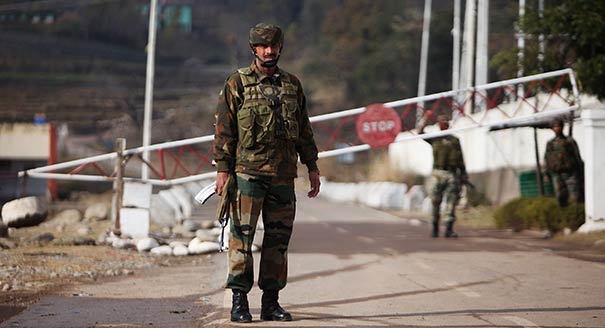
The consequences of a breakdown in dialogue between India and Pakistan might be unpredictable and could well push bilateral relations, as well as the situation in Kashmir, into uncharted waters.
Source: Indian Express
This is not the first time nor will it be the last that a much-vaunted dialogue between India and Pakistan is breaking down before it has begun. The impasse is very much part of a pattern: since the early 1990s, the India-Pakistan peace process is on one day, off the next.
In recent years, for example, every major terror incident in India was followed by a suspension of the dialogue by Delhi and its resumption after a decent interval. A little earlier, it was Pakistan that often called off the talks citing one reason or another.
This time around, though, the consequences of the breakdown might be unpredictable and could well push relations between India and Pakistan as well as the situation in Kashmir into uncharted waters.One immediate reason for the crisis is Pakistan’s reluctance to abide by the terms of the dialogue that Prime Minister Narendra Modi and Premier Nawaz Sharif had agreed when they met on the margins of a multilateral gathering last month in Ufa, Russia. The other is the disagreement over the role of Kashmiri separatists in the talks between Delhi and Islamabad. After years of accepting the practice of Pakistan leaders meeting with the Hurriyat leaders, India now insists that the table is only for two.
Together, these developments have made it near impossible to resume any kind of dialogue, let alone a productive one.
The roadmap for renewed engagement in the joint statement issued at Ufa called for a series of immediate steps, starting with a discussion on terrorism between among the national security advisers. Delhi believes that under pressure from the Army, the civilian government led by Sharif has sought to expand the agenda of the dialogue to include Kashmir. India, however, insisted that the NSA talks must focus only on terrorism.
Arguments about agreed statements and their interpretation are common between nations. So is the difficulty of sequencing between different elements of the agenda between adversaries. These kinds of difficulties have been sorted out in the past between India and Pakistan.
The real significance of the current crisis lies in the fact that the Modi government is trying to restructure the framework of the dialogue with Pakistan.
Modi’s predecessors, including Atal Bihari Vajpayee of the BJP and Manmohan Singh of the Congress, accepted, willy nilly, that sustained engagement with Pakistan is necessary despite frequent incidents of cross-border terrorism. Modi, in contrast, is insisting that talks and terror can’t go together.
The PM insists that Pakistan must demonstrate some good faith in addressing India’s concerns on cross-border terrorism before the broader dialogue begins. Modi has also demonstrated that India’s response to Pakistan’s ceasefire violations on the Line of Control will be ferocious.
To the surprise of many in Pakistan and India, Delhi has declared that it will no longer acquiesce in Islamabad’s claim that the Hurriyat is the legitimate representative of the Kashmiri people and an important stakeholder in the peace process.
Modi’s three policy propositions are based on the premise that the balance of forces in the region and beyond are now turning in India’s favour and that Delhi can be more assertive on cross-border terrorism and Kashmir.
Sceptics, however, suggest the shift in the balance is not large enough to let India unilaterally change the terms of engagement with Pakistan. But the die may have been cast, especially on Kashmir.
Modi’s bold move against Hurriyat is bound to have immediate consequences. For one, Pakistan is likely to respond by demonstrating its capacity for trouble-making in Kashmir. Queering the pitch in Kashmir and raising tensions on the Line of Control will be part of a more intensive effort by Islamabad to mobilise political intervention by major powers and nudge India back to the negotiating table.
The Modi government might be betting that a stronger India can cope with these familiar possibilities and come out a winner. It also seems to calculate that the Pakistan army can’t afford a high-stakes confrontation with India when its western frontiers with Afghanistan are in trouble. If this bold gamble fails, the costs to the Modi government and the nation could be immeasurable.
This article was originally published in the Indian Express.
Former Nonresident Senior Fellow, Carnegie India
A leading analyst of India’s foreign policy, Mohan is also an expert on South Asian security, great-power relations in Asia, and arms control.
Recent Work

C. Raja Mohan, Darshana M. Baruah


Alexander Gabuev, Paul Haenle, C. Raja Mohan, …
Carnegie does not take institutional positions on public policy issues; the views represented herein are those of the author(s) and do not necessarily reflect the views of Carnegie, its staff, or its trustees.
Central Asia’s digital ambitions are achievable, but only if policy is aligned with the region’s physical constraints.

Aruzhan Meirkhanova
Not only does the fighting jeopardize regional security, it undermines Russian attempts to promote alternatives to the Western-dominated world order.

Ruslan Suleymanov
Moldova’s reintegration plan was drawn up to demonstrate to Brussels that Chișinău is serious about the Transnistria issue—and to get the West to react.

Vladimir Solovyov
Lukashenko is willing to make big sacrifices for an invitation to Mar-a-Lago or the White House. He also knows that the clock is ticking: he must squeeze as much out of the Trump administration as he can before congressional elections in November leave Trump hamstrung or distracted.

Artyom Shraibman
The future trajectory of the U.S.-Iran war remains uncertain, but its impact on global energy trade flows and ties will be far-reaching. Moscow is likely to become a key beneficiary of these changes; the crisis in the Gulf also strengthens Russia’s hand in its relationships with China and India, where advantages might prove more durable.

Sergey Vakulenko