

Article
Deborah Gordon, Stephen D. Ziman
{
  "authors": [
    "Deborah Gordon"
  ],
  "type": "legacyinthemedia",
  "centerAffiliationAll": "dc",
  "centers": [
    "Carnegie Endowment for International Peace"
  ],
  "collections": [],
  "englishNewsletterAll": "ctw",
  "nonEnglishNewsletterAll": "",
  "primaryCenter": "Carnegie Endowment for International Peace",
  "programAffiliation": "SCP",
  "programs": [
    "Sustainability, Climate, and Geopolitics"
  ],
  "projects": [
    "Carnegie Oil Initiative"
  ],
  "regions": [
    "North America",
    "United States",
    "Middle East",
    "Iran",
    "Russia"
  ],
  "topics": [
    "Economy",
    "Climate Change"
  ]
}
Source: Getty
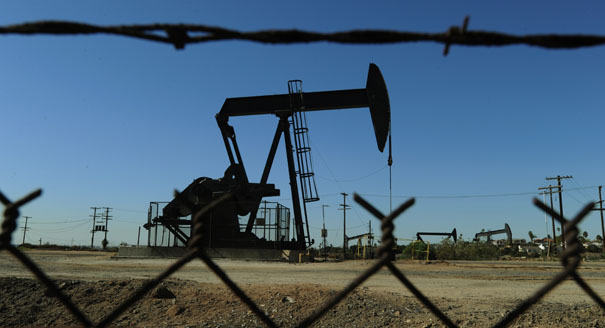
Three pillars underpin the machinations in tomorrow’s global oil markets: economics, geopolitics, and the environment.
Source: Cipher Brief
Global oil markets are in flux. Significant price swings—from triple digits to double digits, back and forth, over the past decade—are an indication of a systemic imbalance. In a sector with few ready substitutes, this introduces new risks and heightens security concerns, with ramifications worldwide for the oil industry, oil exporting nations, new energy finance actors, manufacturers, policymakers, and the public.
Three pillars underpin the machinations in tomorrow’s global oil markets: economics, geopolitics, and the environment. Oil supplies will have a hard time reconciling when any of these is out of kilter. In a global marketplace that trades on large volumes and operates amid significant opacity, accurately predicting global oil supply trends is dicey business.In a perfect market, oil supply would readily respond to demand. When oil demand fluctuates in response to high economic growth periods and global recessions, oil supply response often lags. Why are oil supply and demand so disconnected? Oil markets are imperfect. Insufficient information due to the lack of transparency, barriers to entry and exit, incentives to profit from others’ losses, a supply-side oligopoly, and numerous societal externalities skew market balance. If prices are high enough, significant global oil supplies are technically recoverable. While at low prices, many new oils will likely stay in the ground. The vagaries of the market will continue to challenge the long-term oil market equilibrium.
The geopolitics of oil supply is analyzed more than perhaps any other global commodity. Spurred by back-to-back Middle East oil crises in the 1970s, Western democracies have long been consumed by the political behavior of those nations with substantial oil endowments. Many of the world's leading oil producing countries have historically been either politically unstable or at serious odds with other nations. Today, it is estimated that one in five barrels of global oil supplies is in the hands of states that sponsor terrorism or are under U.S. or UN sanctions. Imposing or lifting sanctions, such as on Russia or Iran, introduces a new dynamic in oil supplies. OPEC and non-OPEC nations continue to struggle to bring order to oil markets as new unconventional hydrocarbon resources are vying to replace conventional oil.
Petroleum dependence has a large societal footprint. Oil’s contribution to climate change, water degradation, air pollution, and other impacts take its toll on global and local environments. Forays into new oils are expected to impose even greater costs. This raises questions about the oil industry’s social license to operate and the need for greater governance and oversight. If oil’s externalities were fully accounted for, cleaner alternatives would compete more fairly with oil. This tension between oil and its alternatives, and the need to mitigate environmental damages from oil, will become more pressing in a warming, drought-prone world that is increasingly urbanizing and becoming wealthier.
Triangulating the three pillars can help chart a course to better navigate global oil markets. Burning questions remain: Will market disequilibrium be the new normal? And how will oil supplies respond to market uncertainty? Sooner or later, oil’s mounting trade-offs will likely force a transition as economic, geopolitical, and environmental factors align.

Former Director and Senior Fellow, Energy and Climate Program
Gordon was director of Carnegie’s Energy and Climate Program, where her research focuses on oil and climate change issues in North America and globally.
Recent Work
Deborah Gordon, Stephen D. Ziman
Deborah Gordon, Smriti Kumble, David Livingston
Carnegie does not take institutional positions on public policy issues; the views represented herein are those of the author(s) and do not necessarily reflect the views of Carnegie, its staff, or its trustees.

Russia’s ruling party would have benefited from Putin appearing as its distant patron, but as an active frontman imposing his views on the public, he has done nothing but harm both the party’s election campaign and the ruling system overall.

Andrey Pertsev

Depleted financial reserves and a shrinking tax base mean it is no longer possible to simultaneously deliver high defense spending, price stability, and economic growth.

Alexandra Prokopenko

Blurring the line between humans and animals is a long-standing tradition in social utopian prose. In his latest novel, Leonid Bershidsky reminds us that in social experiments, people are often treated no differently than animals.

Alexander Baunov

While France and Australia are seeking to establish the legal obligations of messaging apps like Telegram, Russia wants total subordination.

Maria Kolomychenko

The recent uncovering of Dmitry Donskoy’s relics in the Cathedral of the Archangel is yet another attempt by the Russian Orthodox Church to help the state solve its problems. However, parroting the state’s version of Russian history leaves the Church with no message except “patriotism.”

Alexander Zanemonets