

Commentary
Official discussions about mini oil refineries are unlikely to come to anything—but the mere fact they’re happening reveals the regime is failing to deliver a functioning economy.
Sergey Vakulenko
{
  "authors": [
    "Vadim Dubnov"
  ],
  "type": "commentary",
  "centerAffiliationAll": "",
  "centers": [
    "Carnegie Endowment for International Peace",
    "Carnegie Russia Eurasia Center"
  ],
  "collections": [],
  "englishNewsletterAll": "",
  "nonEnglishNewsletterAll": "",
  "primaryCenter": "Carnegie Endowment for International Peace",
  "programAffiliation": "",
  "programs": [],
  "projects": [],
  "regions": [
    "Caucasus",
    "Russia",
    "Azerbaijan",
    "Armenia"
  ],
  "topics": [
    "Security",
    "Military",
    "Foreign Policy"
  ]
}
Source: Getty
Even as confrontation deepens between Russia and the West in other parts of the post-Soviet space, the Karabakh conflict has its own logic and still compels the geopolitical rivals to work together.
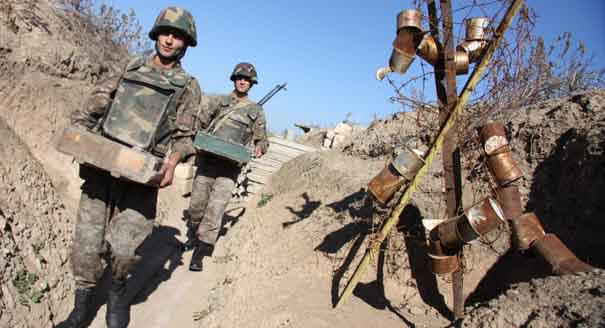
Despite all the convulsions in the international system, in Nagorny Karabakh it feels like business as usual. In a hotel in Stepanakert just 20 kilometers from where Armenian and Azerbaijani soldiers face each other across the Line of Contact, travel-savvy foreigners sip coffee. Reports from each side of violations of the 1994 ceasefire line are almost identical.
If war should start here again with the Azerbaijanis, every Armenian in Karabakh says he knows what to do—"March on Baku." But, curiously, there is less of a feeling of anxiety about a new war here than there is in Moscow or Washington.
Karabakh is different from the other post-Soviet conflicts in that Moscow does not have the final say. Even the most creative Russian geopolitical experts are hard-pressed to assign any strategic importance to it.
The post-war situation has become normal. Since the Armenians won a victory on the ground in 1994 and took control of Karabakh, the territory, while declaring its de facto independence, has effectively been turned into a more or less regular region of the Republic of Armenia.
There is no peace settlement between the Armenians and Azerbaijanis because the status quo suits everyone, despite the periodic updating by the Minsk Group of the OSCE of their peace plan known as the "Minsk Principles," first devised in 2007.
It is almost impossible to imagine Nagorny Karabakh being part of Azerbaijan again. The real discussion is about the return of the seven Azerbaijani districts outside Karabakh that Armenian forces captured in the conflict of the early 1990s.
But even here there is not much hope of progress. The last article of the constitution of the Nagorny Karabakh Republic declares that these regions are under its jurisdiction until the "clarification of borders." Armenians who fled Baku have settled in the Jebrail district of Azerbaijan.
Soldiers have been killed on the Line of Contact ever since the truce was signed more than 20 years ago. The main cause used to be sniper fire; more recently, heavier weapons have been used and incursions made across the line. In the summer of 2014, a series of raids launched by the Azerbaijani side almost triggered a full-scale war. A few months later, Armenia responded by holding large-scale military exercises right next to the Line of Contact. The Azerbaijani military shot down an Armenian helicopter that was flying very close to its positions.
This year there were more bouts of fighting, which then abruptly stopped. On July 24 both sides issued unconfirmed reports about fierce clashes, but that did not halt preparations for a meeting between Presidents Ilham Aliev and Serzh Sargsyan, announced by the U.S. co-chair of the OSCE Minsk Group, James Warlick.
Observers in Karabakh say all this proves that, despite the clashes and the bravado, neither side wants to go back to a full-scale war. The status quo has solidified.
Conspiracy theorists argue that either Baku or Yerevan could start a war for domestic purposes, or Russia could switch its allegiance from Armenia to Azerbaijan to lure Azerbaijan into the Eurasian Union project.
The latest geopolitical changes certainly make everyone jittery. Moscow seems ready to play these games and to show itself off as a big player on the world stage.
Yet, Moscow also knows not to cross a line here—and there is no reason to do so.
Unlike in South Ossetia, Crimea, or Donbas, Moscow does not have a monopoly of interest in the Karabakh issue. The Russian authorities understand that it would be much too risky to send "little green men" here, even if they wanted to. If they were to get Azerbaijan to join the Eurasian Union, then Karabakh would effectively be joining Russia. But in the way there would be the not inconsiderable issue of Georgia, while they would also be treading on the interests of Iran, which directly borders the Karabakh conflict zone.
Russia can certainly scare the rest of the world. It can even encourage the parties to the conflict to exchange fire and then demonstrate its importance by bringing them together to make peace in Sochi—as Vladimir Putin did last summer. One can play with fire, but who can guarantee that the fire stays under control? That is why Moscow gladly welcomed President Francois Hollande's mediation initiative when he invited the two presidents to Paris last October.
Russia also supports Ambassador Warlick, who is planning another Armenian-Azerbaijani presidential summit before the end of this year. It is noticeable that as Russia is denouncing any initiative where the Americans take a lead, no Russian is voicing any serious objection to the work of the three-country Minsk Group and its U.S. co-chair.
In some places you throw your weight around, in others you share the burden. That is the logic of the Kremlin, which needs peace in Karabakh just as much as its geopolitical opponents do. It is easier to preserve the peace when working together, especially when attempts are being made to sabotage it on the ground.
After the 2008 Georgia-Russia war and the Crimea crisis, there was precious little belief in the efficacy of the Minsk Group. But the group may now be acquiring a different kind of value. Even if there is little to say on Karabakh itself, why not use the Minsk Group format as a forum to discuss other far more important issues for Moscow, Paris, and Washington, now that there are almost no other structures left where there can be informal and quiet discussion?
Vadim Dubnov is an independent journalist and expert on the Caucasus.

Vadim Dubnov
Carnegie does not take institutional positions on public policy issues; the views represented herein are those of the author(s) and do not necessarily reflect the views of Carnegie, its staff, or its trustees.
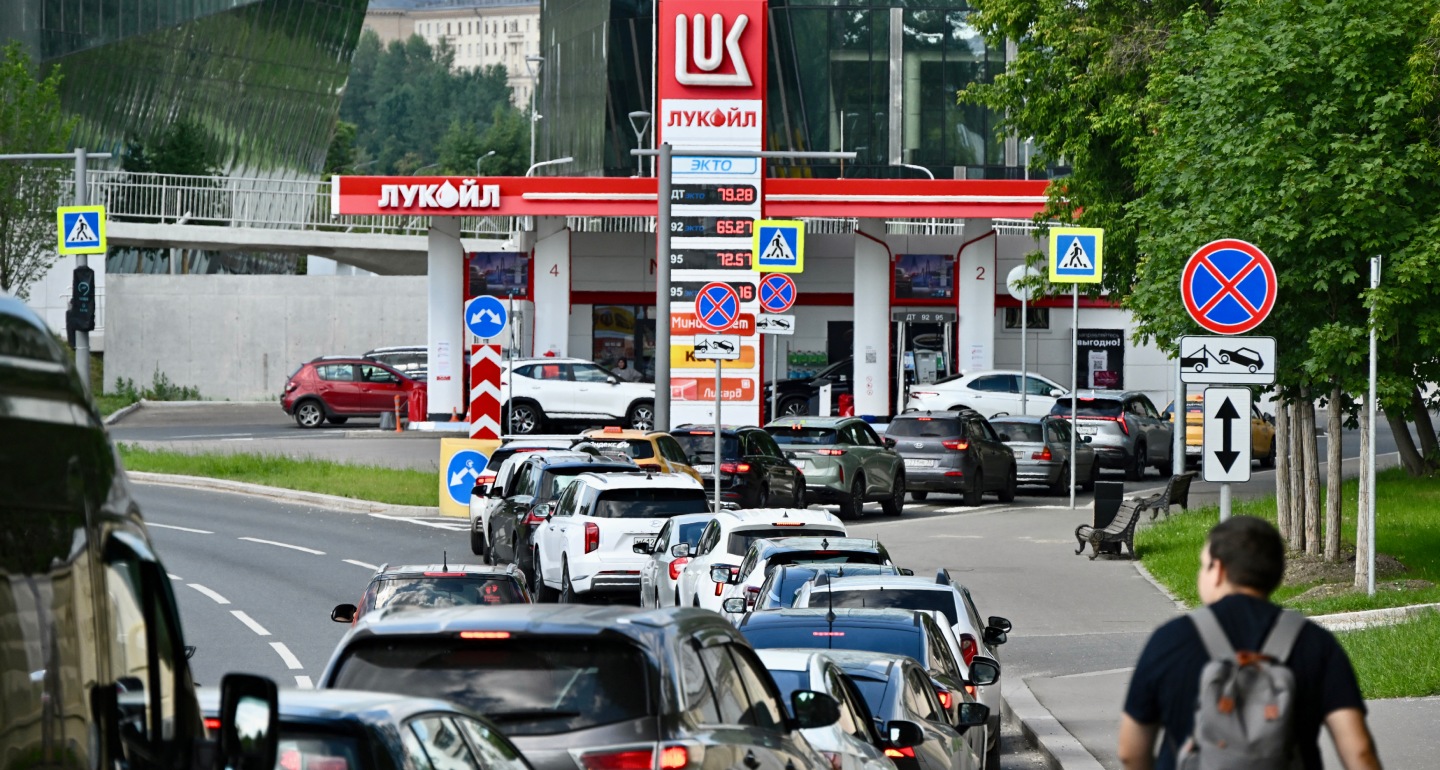
Official discussions about mini oil refineries are unlikely to come to anything—but the mere fact they’re happening reveals the regime is failing to deliver a functioning economy.

Sergey Vakulenko
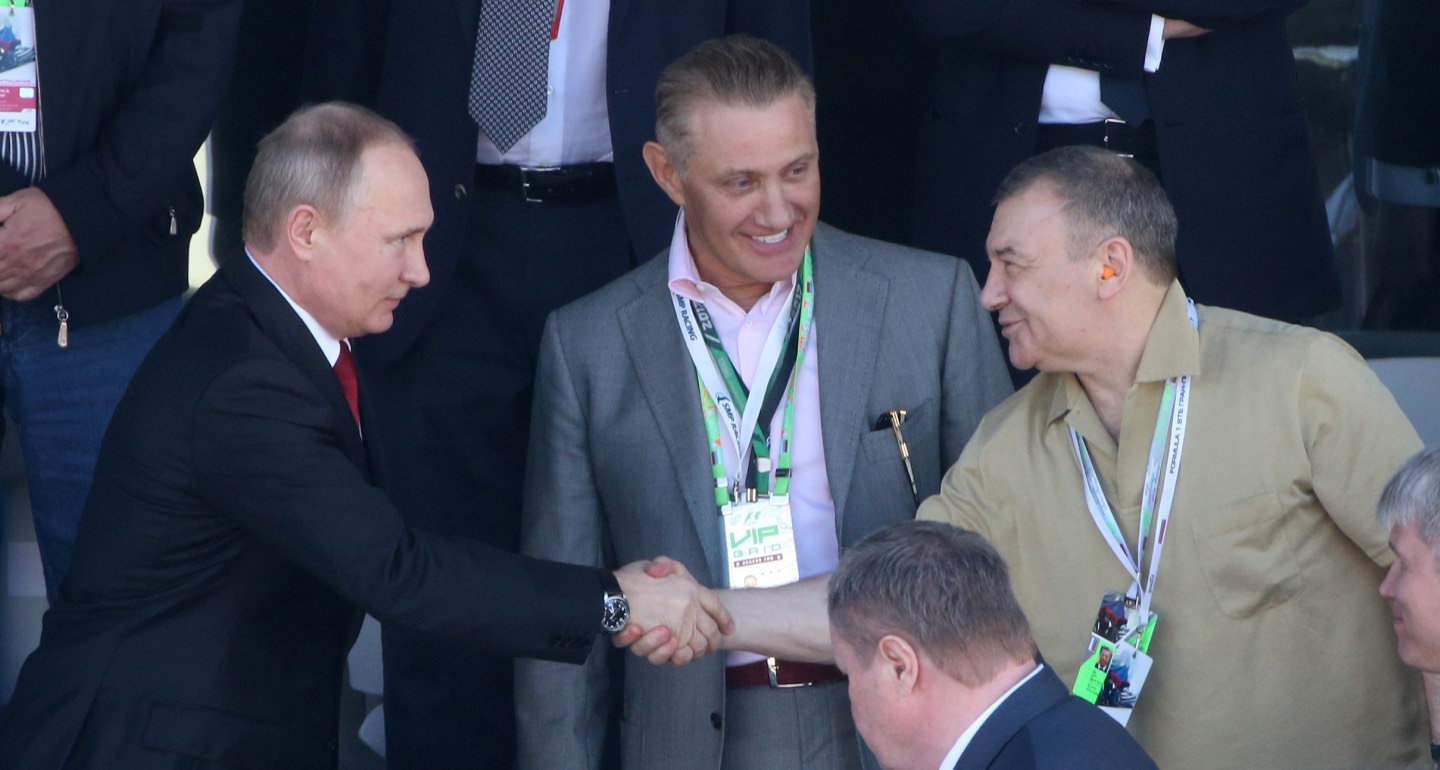
The security forces are targeting Arkady and Boris Rotenberg’s patronage network—and in Putin’s Russia, it’s extremely hard to stop a purge once it’s under way.

Mikhail Komin

Andrey Melnichenko’s essay offers no answer to the fundamental question of how, under any kind of negotiated settlement, Europe can protect itself from the Russian ressentiment that is inevitable in all scenarios except for an outright victory for Putin.

Leonid Bershidsky

Despite unhappiness on the ground, Moscow is determined to use both carrot and stick to ensure there is record support for United Russia in occupied Ukraine.

Konstantin Skorkin
Medvedev’s defeat in the battle for the position of speaker appears to signal that the long process of his marginalization in Russian politics has passed the point of no return.

Andrey Pertsev