

Other
- +18
James M. Acton, Saskia Brechenmacher, Cecily Brewer, …
{
  "authors": [
    "James M. Acton"
  ],
  "type": "other",
  "centerAffiliationAll": "dc",
  "centers": [
    "Carnegie Endowment for International Peace"
  ],
  "collections": [
    "U.S. Nuclear Policy"
  ],
  "englishNewsletterAll": "ctw",
  "nonEnglishNewsletterAll": "",
  "primaryCenter": "Carnegie Endowment for International Peace",
  "programAffiliation": "NPP",
  "programs": [
    "Nuclear Policy"
  ],
  "projects": [],
  "regions": [
    "North America",
    "United States"
  ],
  "topics": [
    "Nuclear Policy"
  ]
}
Source: Getty
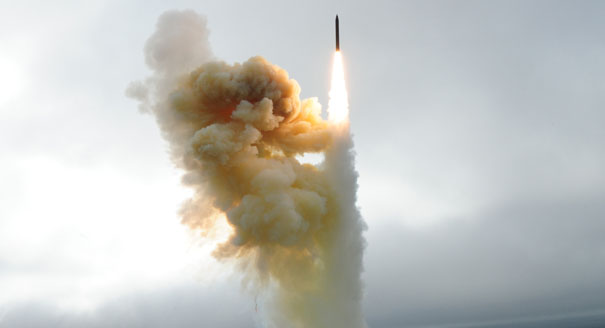
U.S. missile defense policy has been remarkably stable since the end of the Cold War. This consensus represents an equilibrium between external threats, domestic politics, and technological and financial realities.
Source: Regional Missile Defense from a Global Perspective
In its February 2010 Ballistic Missile Defense Review Report, the administration of President Barack Obama identified two fundamental policy goals:
First, the United States will continue to defend the homeland from limited ballistic missile attack. These efforts are focused on protecting the homeland from a ballistic missile attack by a regional actor such as North Korea or Iran. . . . Second, the United States will defend U.S. deployed forces from regional missile threats while also protecting our allies and partners and enabling them to defend themselves.1
Since the collapse of the Soviet Union, every U.S. administration has articulated similar objectives. This continuity may seem unremarkable. But it stands in stark contrast to the Cold War, which saw the United States adopt almost every policy on ballistic missile defense (BMD) imaginable, ranging from not having a policy to outright opposition to complete support to the qualified endorsement of limited defenses.This post–Cold War consensus has not been absolute. Inevitably, each administration has created its own distinctive policy formulation, and some differences in basic goals have emerged—most notably over the right balance between homeland defense and forward defense (in particular, for much of his time in office President William Clinton opposed the deployment of homeland defenses). But these policy changes have been modest compared to those during the Cold War, and the shifts in missile defense technology pursued by different administrations are largely reflective of disagreements over means, not ends.
This consensus represents an equilibrium between three different forces: external threats, domestic politics, and technological and financial realities. The first two forces have tended to put “upward pressure” on BMD programs (even if the magnitude of this pressure has ebbed and flowed over time). The scale of U.S. ambitions has, however, been kept in check by the cost and technical complexity of developing and deploying defenses....
1 U.S. Department of Defense, Ballistic Missile Defense Review Report, February 2010, 11.
The chapter “U.S. National Missile Defense Policy” was originally published in the book Regional Missile Defense from a Global Perspective. More information about the book can be found here.

Jessica T. Mathews Chair, Co-director, Nuclear Policy Program
Acton holds the Jessica T. Mathews Chair and is co-director of the Nuclear Policy Program at the Carnegie Endowment for International Peace.
Recent Work


James M. Acton, Saskia Brechenmacher, Cecily Brewer, …
James M. Acton
Carnegie does not take institutional positions on public policy issues; the views represented herein are those of the author(s) and do not necessarily reflect the views of Carnegie, its staff, or its trustees.

Lukashenko is willing to make big sacrifices for an invitation to Mar-a-Lago or the White House. He also knows that the clock is ticking: he must squeeze as much out of the Trump administration as he can before congressional elections in November leave Trump hamstrung or distracted.

Artyom Shraibman

The Kremlin expects to not only profit from rising fertilizer prices but also exact revenge for the collapse of the 2023 grain deal.

Alexandra Prokopenko
Arms supplies from Russia to Iran will not only continue, but could grow significantly if Russia gets the opportunity.

Nikita Smagin
For Putin, upgrading Russia’s nuclear forces was a secondary goal. The main aim was to gain an advantage over the West, including by strengthening the nuclear threat on all fronts. That made growth in missile arsenals and a new arms race inevitable.

Maxim Starchak

The supposed threats from China and Russia pose far less of a danger to both Greenland and the Arctic than the prospect of an unscrupulous takeover of the island.

Andrei Dagaev