

Commentary
A leak of Russian gas price data helps establish that China is paying Russia far less than Central Asian countries and Gazprom’s former European customers.
Sergey Vakulenko
{
  "authors": [
    "David Livingston",
    "Deborah Gordon",
    "Rob Barnett",
    "Brandon Barnes",
    "Cheryl Wilson"
  ],
  "type": "other",
  "centerAffiliationAll": "dc",
  "centers": [
    "Carnegie Endowment for International Peace"
  ],
  "collections": [],
  "englishNewsletterAll": "ctw",
  "nonEnglishNewsletterAll": "",
  "primaryCenter": "Carnegie Endowment for International Peace",
  "programAffiliation": "SCP",
  "programs": [
    "Sustainability, Climate, and Geopolitics"
  ],
  "projects": [],
  "regions": [
    "North America",
    "United States",
    "East Asia",
    "China",
    "Western Europe"
  ],
  "topics": [
    "Climate Change"
  ]
}
Source: Getty
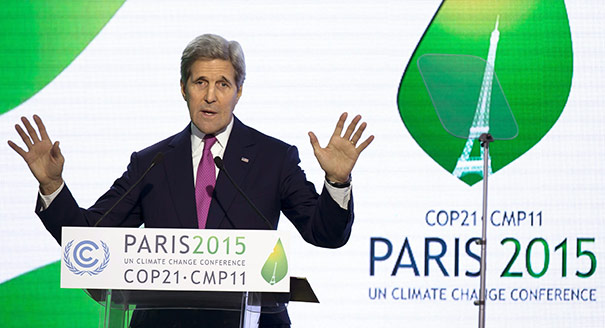
An analysis of the outcomes of the Paris climate talks, as well as the opportunities and challenges ahead for addressing emissions.
Source: Bloomberg Intelligence Webinar
In the run-up to international climate talks being held in Paris, lawmakers from various countries put their chips on the table. Rather than a top down approach, each country offered its unique approach for tackling greenhouse gas emissions. In the United States, for instance, the Clean Power Plan is the cornerstone for cutting emissions from the power sector. And the Chinese government recently announced plans for a cap-and-trade program that will begin in 2017.
After the Paris talks conclude, experts from Bloomberg Intelligence and the Carnegie Endowment came together to discuss:
Former Associate Fellow, Energy and Climate Program
Livingston was an associate fellow in Carnegie’s Energy and Climate Program, where his research focuses on emerging markets, technologies, and risks.

Former Director and Senior Fellow, Energy and Climate Program
Gordon was director of Carnegie’s Energy and Climate Program, where her research focuses on oil and climate change issues in North America and globally.
Rob Barnett
Bloomberg Intelligence
Rob Barnett is a senior energy economist with Bloomberg Government, specializes in energy-sector economics, environmental policy and strategy, and EPA regulations.
Brandon Barnes
Bloomberg Intelligence
Cheryl Wilson
Bloomberg Intelligence
Carnegie does not take institutional positions on public policy issues; the views represented herein are those of the author(s) and do not necessarily reflect the views of Carnegie, its staff, or its trustees.
A leak of Russian gas price data helps establish that China is paying Russia far less than Central Asian countries and Gazprom’s former European customers.

Sergey Vakulenko

Without a ceasefire with Ukraine on attacking each other’s energy infrastructure—to which the Kremlin is unlikely to agree—the diesel agreement between Putin and Trump is largely for show, rather than representing a genuine increase in the volumes of Russian diesel on the global market.
Sergey Vakulenko

Trump has promised Belarus a massive potash deal. But Minsk is seeking something greater: restored Western transit and greater room for maneuver from Russia.

Balázs Jarábik

Minsk clearly expected the dialogue with Washington to yield more results, in particular the lifting of EU sanctions and permission to export potash.

Artyom Shraibman

With the growth in points of friction between the great powers, organizations like the SCO will continue to play a role in the strategic adaptation of the smaller powers caught between them.

Temur Umarov