

Article
Thomas de Waal, Areg Kochinyan, Zaur Shiriyev
{
  "authors": [
    "Thomas de Waal"
  ],
  "type": "legacyinthemedia",
  "centerAffiliationAll": "dc",
  "centers": [
    "Carnegie Endowment for International Peace",
    "Carnegie Europe"
  ],
  "collections": [
    "Europe’s Eastern Neighborhood"
  ],
  "englishNewsletterAll": "ctw",
  "nonEnglishNewsletterAll": "",
  "primaryCenter": "Carnegie Europe",
  "programAffiliation": "EP",
  "programs": [
    "Europe"
  ],
  "projects": [],
  "regions": [
    "Russia",
    "Eastern Europe",
    "Caucasus",
    "Azerbaijan",
    "Armenia",
    "Iran"
  ],
  "topics": [
    "Foreign Policy",
    "Security"
  ]
}
Source: Getty
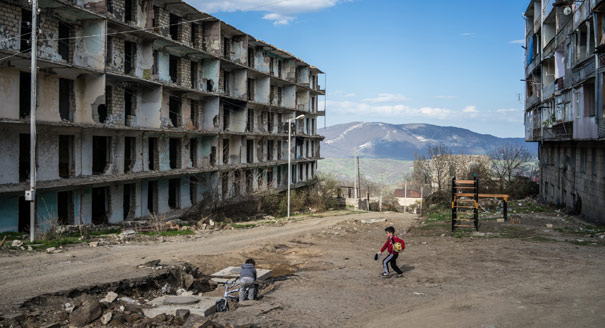
The unresolved conflict between Armenians and Azerbaijanis has again shown itself to be a tinderbox that can ignite to disastrous effect. The world cannot continue to ignore it.
Source: BBC
Of all the unresolved conflicts that erupted as the Soviet Union broke up, the one between Armenians and Azerbaijanis over Nagorno-Karabakh has always been the most menacing.
Now Armenians, Azerbaijanis and the wider world have been reminded that this conflict is a tinderbox that can still ignite to disastrous effect. The 1994 ceasefire has been shattered. The main victims amongst several dozen dead are the young conscripts who serve in the armed forces on either side.
The way the conflict of the 1990s ended made for an inherently unstable situation. The 1994 truce left behind a ceasefire line that cut across Azerbaijani territory with no international peacekeepers on the ground.
The traumatic war and hatred of the other is fundamental to the two independent nations of Armenia and Azerbaijan.
There is little will for compromise. For Azerbaijan - which in the conflict lost not just the Armenian-majority region of Karabakh itself but, wholly or partially, seven other regions of its country - anti-Armenian bellicosity is especially strong.
What's more, the external pressure from the three international mediators - France, Russia and the United States - to resolve the conflict has always been weaker than the resistance from Armenia and Azerbaijan to the idea of compromise.In the last few years it has got worse. Gone are the days when young soldiers would sit in quiet trenches in the mountains and take occasional pot-shots across the line.
Azerbaijan has spent billions of dollars of revenues from its Caspian Sea oil wealth on new weaponry. The so-called Line of Contact between the two sides became the most militarised zone in the wider Europe, bristling with tanks and heavy artillery.
Add to that a breakdown in trust between the West and Russia, who are supposed to be mediating the dispute, and you had a real cocktail of potential conflict.
It is hard to see through the fog of war to understand clearly what happened in the last two days.
There is a widespread tendency to see here the "hand of Russia" in this, an attempt by Moscow to manufacture a situation where it can intervene and deploy Russian peacekeepers on the ground. For sure, Russian Foreign Minister Sergei Lavrov has been working hard recently on a new plan to resolve the conflict that would make Russia the guarantor of a peace.
Russia certainly has strong interests on both sides, including a longstanding military alliance with Armenia.
Yet, though influential, Russia is not in the driving seat of this conflict. Armenia and Azerbaijan are. Russia has no presence on the ground in Karabakh, having failed in its plan to have Russian peacekeepers deployed to the region in 1994.
Several peace plans authored or co-authored by Moscow have been rejected by one or both sides.
There are two scenarios that are more likely than others. Either there was an accidental breakdown of the ceasefire, started by either side, that was allowed to escalate before both sides suffered heavy losses and decided to stop.
Or, Azerbaijan decided to try to launch a small military operation to try to "change the facts on the ground" that would tilt the situation more in its favour and recapture lost lands - and Azerbaijan is indeed saying it captured some small pieces of territory.
This kind of operation would have the additional benefit of distracting the Azerbaijani population from the economic woes caused by falling oil prices.
Both the Armenian and Azerbaijani publics, who have good reason to be critical of their leaders, have indeed rallied round the nationalist flag in the last two days and forgotten about domestic problems.
There is now a new truce - declared unilaterally by Azerbaijan - but a fragile one and fighting is reported to continue. Emotions are high and the mood for revenge will be strong. This is not a conflict that the world can continue to ignore.

Senior Fellow, Carnegie Europe
Thomas de Waal is a senior fellow at Carnegie Europe, specializing in Eastern Europe and the Caucasus.
Recent Work
Thomas de Waal, Areg Kochinyan, Zaur Shiriyev
Thomas de Waal
Carnegie does not take institutional positions on public policy issues; the views represented herein are those of the author(s) and do not necessarily reflect the views of Carnegie, its staff, or its trustees.
After four years of war, there is no one who can stand up to the security establishment, and President Vladimir Putin is increasingly passive.

Tatiana Stanovaya
Although Ukrainian strikes have led to a noticeable decline in the physical volume of Russian oil exports, the rise in prices has more than made up for it.

Sergey Vakulenko
The Russian leadership wants to avoid a dangerous precedent in which it is squeezed out of Iran by the United States and Israel—and left powerless to respond in any meaningful way.

Nikita Smagin
It’s true that many Armenians would vote for anyone just to be rid of Pashinyan, whom they blame for the loss of Nagorno-Karabakh, but the pro-Russia opposition is unlikely to be able to channel that frustration into an electoral victory.
Mikayel Zolyan
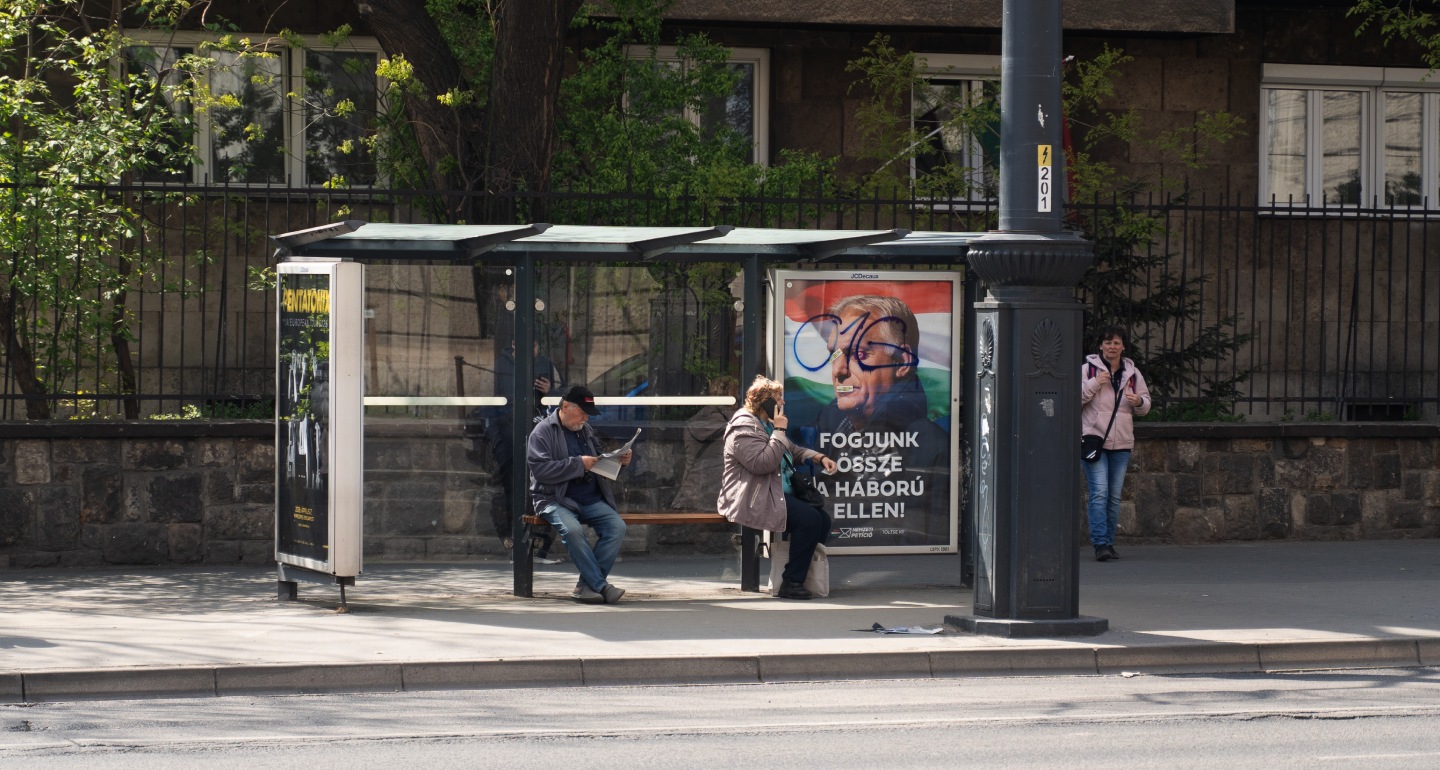
Orbán created an image for himself as virtually the only opponent of aid to Ukraine in the entire EU. But in reality, he was simply willing to use his veto to absorb all the backlash, allowing other opponents to remain in the shadows.
Maksim Samorukov