

Commentary
Russia’s AI-driven propaganda campaigns operate in a fragmented, chaotic, and often illogical manner. That’s not necessarily a problem for the Kremlin, though: It’s much easier to mimic genuine public debate that way.
Ilya Klishin
{
  "authors": [
    "Perry Cammack",
    "Hussein Ibish"
  ],
  "type": "legacyinthemedia",
  "centerAffiliationAll": "dc",
  "centers": [
    "Carnegie Endowment for International Peace"
  ],
  "collections": [],
  "englishNewsletterAll": "menaTransitions",
  "nonEnglishNewsletterAll": "",
  "primaryCenter": "Carnegie Endowment for International Peace",
  "programAffiliation": "MEP",
  "programs": [
    "Middle East"
  ],
  "projects": [],
  "regions": [
    "North America",
    "United States",
    "Middle East",
    "North Africa",
    "Saudi Arabia"
  ],
  "topics": [
    "Political Reform",
    "Security",
    "Foreign Policy",
    "Civil Society"
  ]
}
Source: Getty
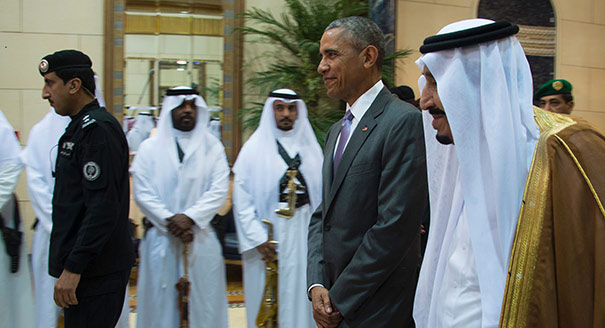
President Obama’s recent trip to Saudi Arabia has come at a time of strained ties, raising questions about the state of U.S. relationships in the region.
Source: Voice of America
Speaking with Voice of America’s Carol Castiel, Perry Cammack discussed President Obama’s recent trip to Saudi Arabia to meet with Gulf leaders and the state of the U.S.-Saudi relationship.
Former Nonresident Fellow, Middle East Program
Perry Cammack was a nonresident fellow in the Middle East Program at the Carnegie Endowment for International Peace, where he focuses on long-term regional trends and their implications for American foreign policy.

Hussein Ibish
Hussein Ibish is a senior resident scholar at the Arab Gulf States Institute in Washington. He is a weekly columnist for The National (UAE), former columnist for Bloomberg, regular contributor to The New York Times and The Daily Beast, and frequent contributor to many other U.S. and Middle Eastern publications. He has made thousands of radio and television appearances and was the Washington, DC correspondent for the Daily Star (Beirut). Many of Ibish’s articles are archived on his Ibish blog website.
Carnegie does not take institutional positions on public policy issues; the views represented herein are those of the author(s) and do not necessarily reflect the views of Carnegie, its staff, or its trustees.

Russia’s AI-driven propaganda campaigns operate in a fragmented, chaotic, and often illogical manner. That’s not necessarily a problem for the Kremlin, though: It’s much easier to mimic genuine public debate that way.

Ilya Klishin

Without a ceasefire with Ukraine on attacking each other’s energy infrastructure—to which the Kremlin is unlikely to agree—the diesel agreement between Putin and Trump is largely for show, rather than representing a genuine increase in the volumes of Russian diesel on the global market.

Sergey Vakulenko

Russian strikes are weakening the economy sustaining Ukraine’s war effort. Closing the growing funding gap will require more European support and politically contentious reforms in Kyiv.

Balázs Jarábik

Ex-president Gurbanguly Berdimuhamedov remains interested in politics, but his son Serdar, Turkmenistan’s current president, is becoming increasingly independent and willing to break with his father’s legacy. If their covert rivalry goes too far, both risk losing power.

Galiya Ibragimova

Despite a new textbook, an influx of Russian teachers and managers, and an end to the teaching of Ukrainian, the Kremlin is unlikely to have “reprogrammed” locals.

Konstantin Skorkin