

Paper
Yezid Sayigh
{
  "authors": [
    "Yezid Sayigh"
  ],
  "type": "legacyinthemedia",
  "centerAffiliationAll": "dc",
  "centers": [
    "Carnegie Endowment for International Peace",
    "Malcolm H. Kerr Carnegie Middle East Center"
  ],
  "collections": [],
  "englishNewsletterAll": "menaTransitions",
  "nonEnglishNewsletterAll": "",
  "primaryCenter": "Malcolm H. Kerr Carnegie Middle East Center",
  "programAffiliation": "MEP",
  "programs": [
    "Middle East"
  ],
  "projects": [],
  "regions": [
    "Levant",
    "Syria",
    "Middle East"
  ],
  "topics": [
    "Political Reform",
    "Security"
  ]
}
Source: Getty
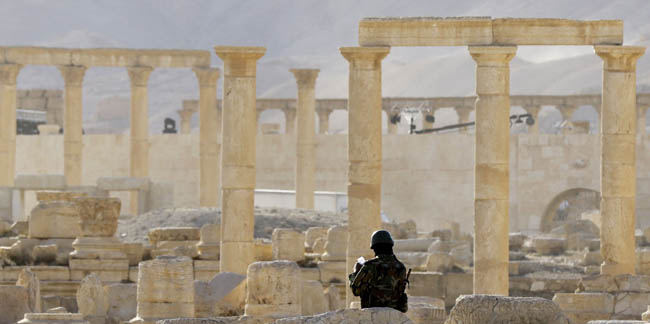
The conflict in Syria is a complex one with different world powers and the Syrian opposition playing different roles that have changed over time.
Source: RT
Yezid Sayigh discussed Russia’s strategy in Syria in an interview with Oksana Boyko on the Worlds Apart program on Russia Today. He elaborated on the degree of Russia’s leverage over the Assad regime, its interaction with the West, and future prospects for a potential political settlement.
Sayigh argued that the regime is unwilling and unable to change, so it resorted to a military confrontation. The regime did not accept Russia’s proposal for a political settlement, which was the most realistic one. Sayigh pointed out that it does not have enough leverage to force the regime in accepting the proposal.
In the case of the Syrian opposition, Sayigh clearly stated its mistakes at the beginning of the conflict. He pointed out that the opposition should have considered several steps to be taken before demanding Assad to step-down.
On the US- Russian military collaboration to fight the Islamic State, Sayigh explains that the US has come to terms that Syria is a Russian battlefield. The new administration will eventually adopt a similar approach to Obama with less involvement and effective Russian collaboration.

Senior Fellow, Malcolm H. Kerr Carnegie Middle East Center
Yezid Sayigh is a senior fellow at the Malcolm H. Kerr Carnegie Middle East Center in Beirut, where he leads the program on Civil-Military Relations in Arab States (CMRAS). His work focuses on the comparative political and economic roles of Arab armed forces, the impact of war on states and societies, the politics of postconflict reconstruction and security sector transformation in Arab transitions, and authoritarian resurgence.
Recent Work
Yezid Sayigh
Yezid Sayigh
Carnegie does not take institutional positions on public policy issues; the views represented herein are those of the author(s) and do not necessarily reflect the views of Carnegie, its staff, or its trustees.

If the Russian-speaking community in Latvia cannot articulate their interests without being seen as disloyal, they could end up embracing a pro-Kremlin agenda.

Sergejs Potapkins

Russia’s ruling party would have benefited from Putin appearing as its distant patron, but as an active frontman imposing his views on the public, he has done nothing but harm both the party’s election campaign and the ruling system overall.

Andrey Pertsev

In the tenth year of his presidency, President Mirziyoyev’s system is becoming even more personalized than that of his predecessor Karimov.

Galiya Ibragimova

With the growth in points of friction between the great powers, organizations like the SCO will continue to play a role in the strategic adaptation of the smaller powers caught between them.

Temur Umarov
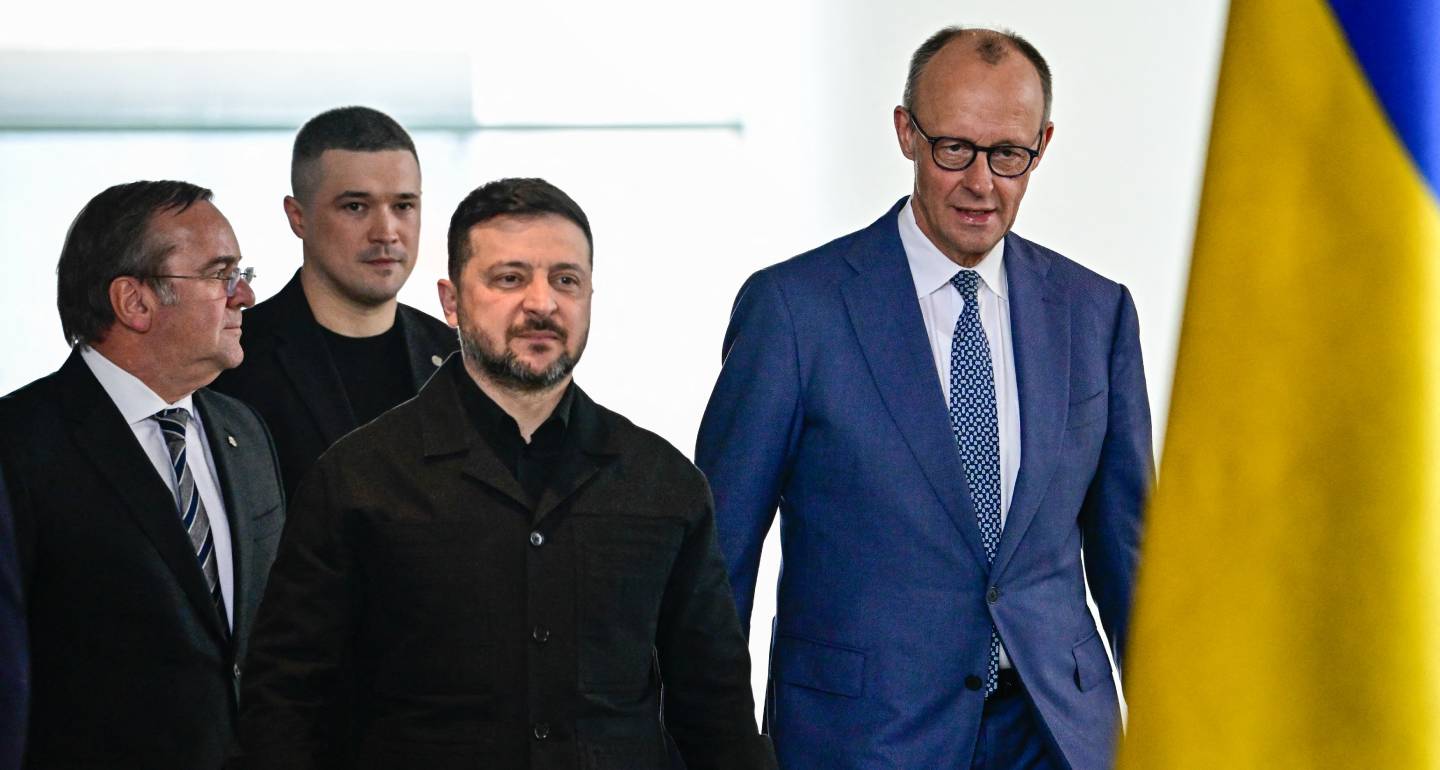
The greater threat to Zelensky comes not from Fedorov alone, but from the convergence between the former defense minister’s political campaign and the anti-corruption investigations moving ever closer to the presidential administration.

Balázs Jarábik