

Paper
Christopher S. Chivvis, Rohan Mukherjee, Milan Vaishnav
{
  "authors": [
    "Milan Vaishnav"
  ],
  "type": "legacyinthemedia",
  "centerAffiliationAll": "dc",
  "centers": [
    "Carnegie Endowment for International Peace",
    "Carnegie India"
  ],
  "collections": [],
  "englishNewsletterAll": "ctw",
  "nonEnglishNewsletterAll": "",
  "primaryCenter": "Carnegie Endowment for International Peace",
  "programAffiliation": "SAP",
  "programs": [
    "South Asia"
  ],
  "projects": [],
  "regions": [
    "North America",
    "United States",
    "South Asia",
    "India"
  ],
  "topics": [
    "Democracy",
    "Domestic Politics"
  ]
}
Source: Getty
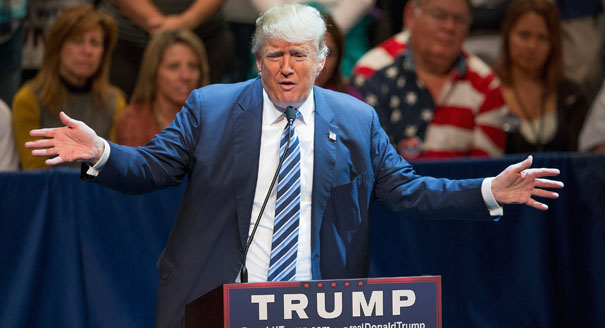
In India, distrust of government and social cleavages encourage voters to support those who bend the rules to defend their communities. Similar conditions in the United States contributed to Trump’s election.
Source: Diplomat
An outsider runs for political office in a hotly contested election. He has a closet full of skeletons the conventional wisdom views as a liability, but he regards as an asset. He preys on distrust of the government, vowing to obliterate “politics as usual.” Against a backdrop of demographic change and economic disruption, the candidate exploits a once-dominant group’s fears of being left behind. His behavior may be unorthodox, but it is authentic and even reassuring to his base.
The United States, the world’s oldest democracy, has just watched this political story unfold, but it has played out many times before — including in the world’s largest democracy, India. For the past several years, I have been researching a book on politicians in India, where as many as one-third of national politicians won office in 2014’s general election despite being named in at least one ongoing criminal case. Rather than experience rejection at the ballot box, these non-traditional politicians have been richly rewarded. And their playbook is strikingly similar to the one Donald Trump executed with aplomb to win the 2016 U.S. presidential election.

Director and Senior Fellow, South Asia Program
Milan Vaishnav is a senior fellow and director of the South Asia Program and the host of the Grand Tamasha podcast at the Carnegie Endowment for International Peace. His primary research focus is the political economy of India, and he examines issues such as corruption and governance, state capacity, federalism, and electoral behavior. He also conducts research on the Indian diaspora.
Recent Work
Christopher S. Chivvis, Rohan Mukherjee, Milan Vaishnav


Sophia Besch, Eric Ciaramella, Steve Feldstein, …
Carnegie does not take institutional positions on public policy issues; the views represented herein are those of the author(s) and do not necessarily reflect the views of Carnegie, its staff, or its trustees.

Russia spent years building a “sovereign internet,” concentrating web infrastructure exclusively within Russian territory. Ukrainian drone attacks have shown how vulnerable that approach has left the Russian internet.

Maria Kolomychenko

Putin’s conservative staffing policies and search for ever greater control have cemented parliament’s transformation into a bureaucratic appendage of the executive branch.

Andrey Pertsev

Ex-president Gurbanguly Berdimuhamedov remains interested in politics, but his son Serdar, Turkmenistan’s current president, is becoming increasingly independent and willing to break with his father’s legacy. If their covert rivalry goes too far, both risk losing power.

Galiya Ibragimova

For every ruble allocated to social policy, health, and education in 2027, double that amount is earmarked for the army, the police, and the security services.

Alexandra Prokopenko
An analysis of traffic accident data suggests that Ukrainian drone attacks caused a material but not disastrous fall in Russian gasoline consumption over the summer.

Sergey Vakulenko