

Commentary
Japan’s long-term security policy is driven by concerns about China, and there is little appetite for (or interest in) pursuing a confrontation with Moscow.
James D.J. Brown
{
  "authors": [
    "Jon Wolfsthal",
    "Laura S. H. Holgate"
  ],
  "type": "legacyinthemedia",
  "centerAffiliationAll": "dc",
  "centers": [
    "Carnegie Endowment for International Peace"
  ],
  "collections": [
    "U.S. Nuclear Policy"
  ],
  "englishNewsletterAll": "ctw",
  "nonEnglishNewsletterAll": "",
  "primaryCenter": "Carnegie Endowment for International Peace",
  "programAffiliation": "NPP",
  "programs": [
    "Nuclear Policy"
  ],
  "projects": [],
  "regions": [
    "North America",
    "United States"
  ],
  "topics": [
    "Security",
    "Foreign Policy",
    "Nuclear Policy"
  ]
}
Source: Getty
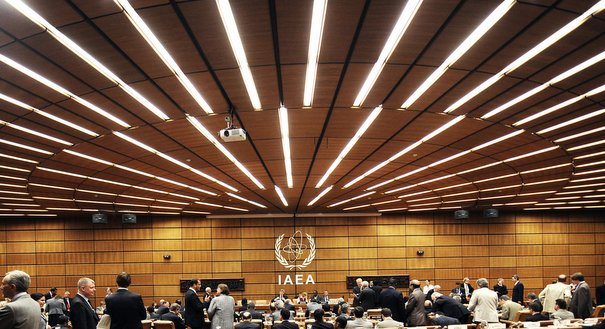
A closer look at what the IAEA does helps make clear why cutting its funding is short sighted, risks U.S. security, and should be rejected by even a thrifty Congress.
Source: Foreign Policy
It’s not hard to start an argument these days in Washington. President Donald Trump’s newly released budget will surely spark thousands of them, as analysts, partisans, Big Bird, and eventually members of Congress debate both sides of every issue. But there are some things to which most reasonable people can and should agree. Chief among these is that the United States has a long-standing and continuing interest in preventing countries and terrorists from building nuclear weapons. Unfortunately, the only way to interpret Trump’s proposed budget cuts for the State Department and the international programs they fund is that he couldn’t care less.
One of the critical investments the State Department makes is funding our obligations, and then some, to the International Atomic Energy Agency (IAEA), a U.N.–affiliated agency the United States helped create in 1957. Yes, you heard a lot about the IAEA during the Iran nuclear agreement debate. You may also remember them from the lead up to the 2003 invasion of Iraq, when they correctly stated Iraq had no nuclear program — warnings ignored by the previous GOP administration.
Regardless of what you may have heard about the United Nations or the IAEA itself, the agency may be the greatest national security bargain the United States has. As the old cliché goes, if we didn’t have it, we have to invent it. Washington provides a significant percentage of the IAEA’s annual budget and, on top of that, additional resources known as voluntary contributions. This money ensures that the IAEA can handle its current responsibilities by having the tools, people, skills, and resources needed to do its job — which is, to put it bluntly, to help keep us and other countries safe and enable all to benefit from the peaceful benefits of nuclear technology.
So in plain English, what does that mean? IAEA inspectors are on the ground in Iran monitoring that Tehran fully complies with its obligations under the Joint Comprehensive Plan of Action. It helps monitor nuclear materials in over 50 countries to deter diversion and to certify that none have been syphoned off for illicit weapon programs. It helps ensure the safety of nuclear facilities all over the world. It’s increasingly on the front lines of preventing terrorists from acquiring nuclear weapons. Oh, and it’s also part of the fight against the Zika virus and other deadly insect-borne diseases (they nuke male insects so they can’t breed, poor guys).
In the face of these critical assignments, the Trump-proposed budget comes along and guts funding. Or, to put it a bit more generously, the White House is saying, “Sure, we know, it all seems important but our resources are not unlimited and somebody else will have to pick up the slack.”
If these efforts were costing us billions of dollars every year and came at the expense of maintaining a modern military, keeping our air and water clean, taking care of our veterans, they might have a point. The United States has to prioritize, but the sum total of our investment in the IAEA is less than $200 million per year — about half in dues and another half in voluntary contributions. That’s million with an “m.” By ignoring the IAEA experts, George W. Bush’s invasion of Iraq cost thousands of lives and trillions of dollars. Pick your expenditure of choice and see whether there is a better bargain anywhere?
Or look at it another way: If Trump were to cut back the proposed Mexican border wall by just 30 miles, he could fund the IAEA for a year. Each new B-21 bomber is going to cost over $500 million, enough to fund the IAEA for more than 2 years.
A closer look at what the IAEA does helps make clear why this approach is short sighted, risks our security, and should be rejected by even a thrifty Congress. Let’s look at what we get for this modest investment:
Inspecting every nook and cranny in Iran. Under the Joint Comprehensive Plan of Action, IAEA safeguards inspectors have unprecedented and invasive access to Iran’s nuclear infrastructure, including anytime-anywhere visits to clarify doubts or questions about Iran’s declarations or behavior. This visibility goes beyond anything Washington could gain based only on our “national technical means,” i.e., intelligence assets. When the IAEA declares Iran to be in compliance with their nuclear commitments under the deal, we can have confidence in that statement; should the IAEA find Iran is not in compliance, that statement provides confidence to other countries and audiences that a unilateral claim by the United States under President Trump would not.
Knowing peaceful nuclear activities are, in fact peaceful. Roughly 400 nuclear power plants, research reactors, and fuel-cycle facilities are located in scores of countries around the world, utilizing tons of uranium, plutonium, and other nuclear materials each year. But little sleep is lost over their proliferation potential because the IAEA employs what amounts to an atomic accounting department that keeps track of every fuel rod and every barrel of nuclear material. It is this level of knowledge and expertise that allows nuclear power plants to run, and for nuclear medicine to treat cancers all over the world. Without the IAEA providing this service, nuclear commerce and the peaceful benefits of nuclear power would come to a crashing halt, and cheaters could create weapons programs unchecked and likely undetected.
Keeping nukes out of terrorist hands. The IAEA develops and promotes guidelines for how to protect the materials terror groups need if they intend to go nuclear — and it sends expert teams when asked to judge how well those guidelines are being implemented. Last year, it conducted seven so-called International Physical Protection Advisory Service (IPPAS) missions, and 11 countries have requested IPPAS missions for the coming year. The IAEA maintains the global database for information about lost and stolen nuclear materials, which could make their way to terrorists. Last year, over 180 incidents were reported to the IAEA, 14 of which involved theft of nuclear material or radiological sources that were then offered for sale. Many of these incidents would not otherwise be known to the United States.
Preventing the next Fukushima. The IAEA develops and publishes nuclear safety standards and codes of conduct that states can apply to the construction and operation of their own nuclear facilities to minimize accidents and the potential for nuclear contamination. Since “an accident anywhere is an accident everywhere,” the United States benefits from safe operation of nuclear facilities all over the world.
Applying the atom to development. The IAEA helps the developing world use nuclear technology to improve crop yields, sterilize food, treat illness, purify water, all of which help lift communities out of poverty and reduce risks of conflict. The IAEA is developing techniques to reduce populations of the mosquitos that carry the Zika virus, and provided nuclear tools to diagnose Ebola. These contributions protect us against the spread of deadly infectious diseases.
Expanding clean energy. The IAEA is creating a fuel bank of low-enriched uranium to serve as a back-up supply to the global market for nuclear fuel. This insurance policy reduces the demand for new enrichment plants and the spread of technology that could be misused to make material for nuclear weapons, even as it supports growth of nuclear energy.
These are just a few examples to illustrate how the Trump team fails to understand the full nature of the threats facing America — and how programs developed over decades of careful investments and political commitment help make America safe. Yes, it takes money — but it’s a great bargain at the price. These programs are, in large part, why America is (or has been) looked to by the majority of countries for leadership and stability. Since the end of World War II, Washington has gone the extra mile and made the extra investment both because it makes the world safe and because it makes American prosperity and leadership possible. Without these investments, American won’t be great or first for long.

Former Nonresident Scholar, Nuclear Policy Program
Jon Wolfsthal was a nonresident scholar with the Nuclear Policy Program.
Laura S. H. Holgate
Carnegie does not take institutional positions on public policy issues; the views represented herein are those of the author(s) and do not necessarily reflect the views of Carnegie, its staff, or its trustees.

Japan’s long-term security policy is driven by concerns about China, and there is little appetite for (or interest in) pursuing a confrontation with Moscow.

James D.J. Brown

The truth of the strategic situation is that Europe and Russia are extremely unlikely to be able to “turn the page” on their confrontation within the next two decades.

Arkady Moshes

Russia’s AI-driven propaganda campaigns operate in a fragmented, chaotic, and often illogical manner. That’s not necessarily a problem for the Kremlin, though: It’s much easier to mimic genuine public debate that way.

Ilya Klishin

Without a ceasefire with Ukraine on attacking each other’s energy infrastructure—to which the Kremlin is unlikely to agree—the diesel agreement between Putin and Trump is largely for show, rather than representing a genuine increase in the volumes of Russian diesel on the global market.

Sergey Vakulenko

Russian strikes are weakening the economy sustaining Ukraine’s war effort. Closing the growing funding gap will require more European support and politically contentious reforms in Kyiv.

Balázs Jarábik