

Commentary
With the growth in points of friction between the great powers, organizations like the SCO will continue to play a role in the strategic adaptation of the smaller powers caught between them.
Temur Umarov
{
  "authors": [
    "Richard Sokolsky",
    "Aaron David Miller"
  ],
  "type": "legacyinthemedia",
  "centerAffiliationAll": "",
  "centers": [
    "Carnegie Endowment for International Peace"
  ],
  "collections": [],
  "englishNewsletterAll": "",
  "nonEnglishNewsletterAll": "",
  "primaryCenter": "Carnegie Endowment for International Peace",
  "programAffiliation": "",
  "programs": [],
  "projects": [],
  "regions": [
    "North America",
    "United States",
    "Middle East",
    "Iraq",
    "Syria"
  ],
  "topics": [
    "Security",
    "Foreign Policy"
  ]
}
Source: Getty
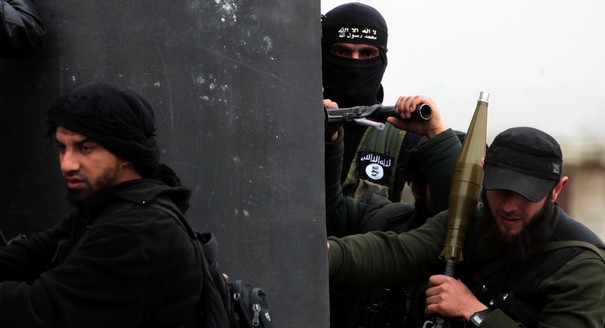
The so-called war on terror is bound to be a long one, unlikely to be won in any conventional sense. Unless Trump comes to understand this, he’s going to make a bad situation even worse.
Source: USA Today
Two recent events tell the sad tale of why President Trump cannot, as he promised, "totally obliterate ISIS."
On the same day that the vaunted anti-ISIS global coalition of 68 nations and international organizations met in Washington, a lone homegrown terrorist was wreaking havoc in downtown London with an SUV and a knife.
The contrast demonstrates the painful and politically inconvenient fact that the so-called war on terror is bound to be a long one, perhaps without end; and that the international community is unlikely to win it in any conventional sense. Unless Trump comes to understand this, he's going to make a bad situation even worse. And here's why.
Beware the Quick Fix: Politicians love declaring war on things. We have the war on poverty (now a half century old), drugs, mental illness, cancer and terror, to name a few. And now we have a president who has persistently claimed that he's going to do so much winning that Americans are going to get tired of it. But grandiose plans to solve systemic problems aren't really the dominant part of the American story. Instead it's more as Reinhold Niebuhr described it — proximate solutions to insoluble problems. It took us 150 years to even begin to deal with the problems race and racial inequality in America; and despite the progress we've made, by the looks of things, we're not there yet. It's been almost sixteen years since 9/11; despite the impressive gains made against ISIS and al-Qaeda, we are nowhere close to crushing the jihadis. Al-Qaeda is expanding in Syria; its affiliates plot against the United States in Yemen; and ISIS offshoots operate in Sinai, Libya, Afghanistan and east Africa.
A Hot House for Terror: One reason there can't be a quick fix to the global jihadi problem is that the Middle East will remain an incubator for jihadi terror for years to come. A witches' brew of bad governance, bleak economic opportunities, sectarian hatreds between Sunnis and Shiites and beleaguered Sunni communities in Iraq and Syria have created a pool of recruits and resentments on which the jihadis and their vicious ideology feed. Most Arab governments have yet to take ownership of the problem or the solutions. This broken, angry, and dysfunctional region cannot be put on a better trajectory without credible and accountable institutions, transparency, accountability, at least good enough governance, and wise leadership. And this struggle will last generations.
The Paradox of Success: The destruction of the Islamic State's caliphate and defeat on the battlefield may only make the challenge more complex. Battle hardened and well trained, financed and equipped ISIS fighters will disperse to the deserts of Syria and Iraq and swell the ranks of ISIS chapters in Libya, Yemen and Afghanistan; they will return to their homes in Europe determined to create havoc. The governments in Iraq and Syria and the U.S.-led anti-ISIS coalition do not have a viable strategy to either stabilize and reconstruct areas liberated from ISIS control or to defeat the Islamic State where it decamps. And neither does the United States.
The Real Threat to the US: Organized foreign jihadi groups pose a serious threat to the U.S., though since 9/11 there has not been a single successful terror attack planned and directed by a foreign terror organization here at home. But as the London attack demonstrates, homegrown jihadis influenced and inspired by jihadi propaganda and ideology — constitutes a more serious one. Indeed, in the U.S., of the 13 jihadi terrorists who were responsible for killing 94 Americans since 9/11, all were American citizens or legal residents and eight were native-born U.S. citizens, according to research by New America.
Presidential Dos and Don'ts: In the face of these sobering realities, the president needs to reframe the way he relates to this problem.
First, he should stop hyping the jihadi threat. It's serious but not existential, and exaggerating or misunderstanding it can lead to bold and disastrous responses. (See the second Iraq war.)
Second, he needs to be honest and level with the American people that this fight will likely go on for years.
Third, he has to stop stigmatizing and alienating the 3 million Americans of the Muslim faith who are a key ally in preempting and preventing radicalization at home.
With over 900 hundred open cases of domestic jihadi related activities, the FBI needs the cooperation and coordination of local Muslim communities to have any hope of countering violent extremism. The president's and his advisers' anti-Muslim rhetoric during the campaign and his clear desire to bar Muslims from entering this country have made law enforcement's work that much harder.
Finally, the president needs to speak out against extremism, prejudice and hatred in all of its forms. Securing the homeland at the expense of permanently undermining the values we stand for is neither a necessary or an acceptable trade-off. Indeed, those values aren't a liability but a critically important asset at home and abroad in what promises to be the long war against global jihad.
Nonresident Senior Fellow, Russia and Eurasia Program
Richard Sokolsky is a nonresident senior fellow in Carnegie’s Russia and Eurasia Program. His work focuses on U.S. policy toward Russia in the wake of the Ukraine crisis.

Senior Fellow, American Statecraft Program
Aaron David Miller is a senior fellow at the Carnegie Endowment for International Peace, focusing on U.S. foreign policy.
Carnegie does not take institutional positions on public policy issues; the views represented herein are those of the author(s) and do not necessarily reflect the views of Carnegie, its staff, or its trustees.

With the growth in points of friction between the great powers, organizations like the SCO will continue to play a role in the strategic adaptation of the smaller powers caught between them.

Temur Umarov

When faced with fuel shortages in the past, Central Asian governments could always count on additional supplies from Moscow. That safety net no longer exists.

Galiya Ibragimova

Two divergent trends—Putin’s hardline vision of how to prosecute the war in Ukraine, and a growing desire for change in Russia—could tear the regime apart.

Tatiana Stanovaya

Andrey Melnichenko’s essay offers no answer to the fundamental question of how, under any kind of negotiated settlement, Europe can protect itself from the Russian ressentiment that is inevitable in all scenarios except for an outright victory for Putin.

Leonid Bershidsky

Despite unhappiness on the ground, Moscow is determined to use both carrot and stick to ensure there is record support for United Russia in occupied Ukraine.

Konstantin Skorkin