

Paper
Douglas H. Paal
{
  "authors": [
    "Douglas H. Paal"
  ],
  "type": "legacyinthemedia",
  "centerAffiliationAll": "dc",
  "centers": [
    "Carnegie Endowment for International Peace"
  ],
  "collections": [],
  "englishNewsletterAll": "asia",
  "nonEnglishNewsletterAll": "",
  "primaryCenter": "Carnegie Endowment for International Peace",
  "programAffiliation": "AP",
  "programs": [
    "Asia"
  ],
  "projects": [],
  "regions": [
    "North America",
    "United States",
    "East Asia",
    "China"
  ],
  "topics": [
    "Foreign Policy"
  ]
}
Source: Getty
Trump has fallen short on delivering campaign promises in his first 100 days and fallen behind staffing his administration to address pressing concerns in the Asia-Pacific.
Source: South China Morning Post
Dates legally set for elections are real and must be observed. “Hundred-day reviews” are artificial and offer only limited insight into the new Trump administration, which will reach the milestone, however arbitrary, on Saturday.
This would normally blow over as but a blip in the media cycle, but for two things that should be somewhat embarrassing now. When campaigning for the US presidency, Donald Trump made a lot of what he would accomplish in his first 100 days, some of which he has done, and some conspicuously not done, such as naming China a currency manipulator on day one. The promised efficiency of an experienced businessman has morphed into awkward amateurism.
Second, despite desperate repetition that he is driving the agenda with the priorities he laid out in his campaign, he is plainly falling way behind schedule in the key function that will give his disruptive agenda a chance: staffing his administration with a range of competent and knowledgeable officials.
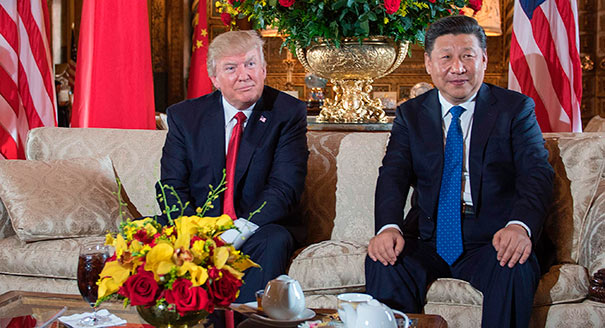
Trump boldly invited Chinese President Xi Jinping ( 習近平 ) for an early visit to the US to tackle two of his proclaimed priorities: reducing the bilateral trade deficit and “solving” the North Korean nuclear challenge. The two leaders then set another 100-day deadline to make progress on myriad trade, economic and other challenges.
But who will do the necessary work in those 100 days? There are literally only a handful of nominees in the confirmation pipeline, which itself usually takes months, to serve in thousands of policy positions subordinate to the concerned cabinet officers. The top cabinet members have worldwide responsibilities and demanding schedules and cannot be expected to do competent detailed negotiations.
Career non-political officials can stand in for now, but usually lack clear instructions, and are left to infer their guidance from the public pronouncements of their bosses.
Trump’s leading officers have convincingly recited their domestic priorities: reduce trade deficits, promote economic growth through tax reform and deregulation and repeal Obamacare, among others. These engage complex and conflicting interests in an era of partisanship. A hasty and failing effort to force votes on a health care bill has obscured the significant victory in winning confirmation for Justice Neil Gorsuch on the Supreme Court.
And in foreign policy, Trump has taken a real risk in his efforts to cajole China into pressurising North Korea to abandon its nuclear weapons programme. Dictator Kim Jong-un appears fixated on the how Muammar Gaddafi ended up dead after surrendering his weapons programmes. Chinese leaders are vexed and angered by Kim’s confrontational and provocative behaviour, but are still unwilling to risk a collapse of the North Korean regime on China’s border.
In the process, Trump doubled down on his bet that China will do the job for him, combining inducements such as relief from American trade sanctions against China with probably overblown threats of destabilising military action against the North.
If, in the end, China clearly squeezes the North—as it seems to be doing—but not enough to threaten the regime, Trump will have tough choices: take military action that could put at risk the populations of South Korea and Japan; climb down from demanding that North Korea denuclearise and seek instead to cap its programmes; and following through or climbing down on his economic threats against China. That is a heck of a roll of the dice on such consequential issues. It suggests improvisation and not strategy, nor forethought about the bad options North Korea offers.
Moreover, if it comes to increasing pressure on Beijing, authoritarian China is far better equipped to deal with Trump on economic and trade issues than the democratic US. On the positive side, if Trump needs Beijing to buy more American products, invest in the US, or restrain exports, they are well within Xi’s executive capacity.
On the negative, if Trump cites China for unfair market access, enacts countervailing duties for dumping products, and imposes tariffs to counter subsidies, Xi can respond tit for tat. This, by the way, is a good example of why it is a sound general rule not to tie trade and economic issues tightly to national security outcomes. They are apples and oranges.
Not all has been negative. Trump’s George W. Bush-like decision to retaliate against Syria for using chemical weapons did a lot to restore American credibility, after Barack Obama baulked at doing the same in 2013. China’s neighbours have noticed quietly.
But one can be sure that Beijing has also noticed that despite the promises of change, Washington remains mired in Middle East conflicts that sap American strength that might be redirected at China. The overwhelming tilt among national security cabinet officers towards military men with backgrounds almost exclusively in the Middle East, mostly in protracted and losing conflicts, will reinforce this perception. So, too, will the continued failure to appoint senior officials with real experience and knowledge of Asia or even experience in diplomacy.
This article originally appeared in the South China Morning Post.

Distinguished Fellow, Asia Program
Paal previously served as vice chairman of JPMorgan Chase International and as unofficial U.S. representative to Taiwan as director of the American Institute in Taiwan.
Recent Work
Douglas H. Paal


Douglas H. Paal, Tong Zhao, Chen Qi, …
Carnegie does not take institutional positions on public policy issues; the views represented herein are those of the author(s) and do not necessarily reflect the views of Carnegie, its staff, or its trustees.

Trump has promised Belarus a massive potash deal. But Minsk is seeking something greater: restored Western transit and greater room for maneuver from Russia.

Balázs Jarábik

Minsk clearly expected the dialogue with Washington to yield more results, in particular the lifting of EU sanctions and permission to export potash.

Artyom Shraibman

With the growth in points of friction between the great powers, organizations like the SCO will continue to play a role in the strategic adaptation of the smaller powers caught between them.

Temur Umarov

When faced with fuel shortages in the past, Central Asian governments could always count on additional supplies from Moscow. That safety net no longer exists.

Galiya Ibragimova

Despite unhappiness on the ground, Moscow is determined to use both carrot and stick to ensure there is record support for United Russia in occupied Ukraine.

Konstantin Skorkin