

Commentary
A leak of Russian gas price data helps establish that China is paying Russia far less than Central Asian countries and Gazprom’s former European customers.
Sergey Vakulenko
{
  "authors": [
    "Denis McDonough"
  ],
  "type": "legacyinthemedia",
  "centerAffiliationAll": "",
  "centers": [
    "Carnegie Endowment for International Peace"
  ],
  "collections": [],
  "englishNewsletterAll": "",
  "nonEnglishNewsletterAll": "",
  "primaryCenter": "Carnegie Endowment for International Peace",
  "programAffiliation": "",
  "programs": [],
  "projects": [],
  "regions": [
    "North America",
    "United States",
    "Russia"
  ],
  "topics": [
    "Political Reform",
    "Security",
    "Foreign Policy"
  ]
}
Source: Getty
The Trump administration should follow through on the steps taken by the Obama administration to make clear that the United States is united in its opposition to Russian interference and will not tolerate such activities in the future.
Source: Washington Post
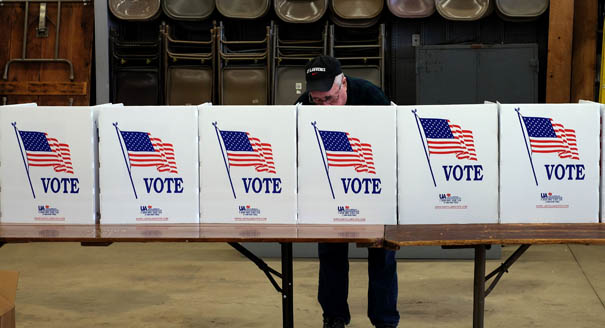
I have watched with concern the tone, substance and trajectory of the national debate about Russian efforts to interfere in the 2016 U.S. presidential election. I write today to set the record straight about the events of last fall and, more important, to ensure that we as a nation do not lose sight of what happened — and what we must do to preserve our democracy.
On Oct. 7, as part of a painstaking intelligence, homeland security and diplomatic effort to safeguard the integrity of our election infrastructure and the sanctity of each American’s vote, the homeland security secretary and director of national intelligence released an unprecedented joint statement about an unprecedented development. In that statement, these two senior officials stated unequivocally that the Russian government, had directed the theft of emails from U.S. “persons and institutions. . . . These thefts and disclosures are intended to interfere with the U.S. election process. . . . [and] only Russia’s senior-most officials could have authorized these activities.”
The events that led to that public statement began last summer, as national security professionals in the government grew increasingly concerned about Russian intentions to interfere in our election. President Barack Obama directed his staff to brief appropriate members of Congress, prepare possible responses, assess the vulnerabilities of the electoral infrastructure, and help state and local election authorities secure their networks.
Congressional briefings began in early August and finished once Congress returned to Washington after the summer recess. At that point, the president invited the majority and minority leaders of the House and Senate to the White House, ostensibly to discuss the budget and his trip to Asia. The real purpose of this meeting was to discuss the alarming news about Russian ambitions to interfere with the election and ask the four leaders to draft a statement of concern. This joint, bipartisan statement was thought by the White House to be particularly important since state and local authorities had been reluctant to accept the assistance being offered by the Department of Homeland Security, and we believed a bipartisan statement would help persuade them to put aside their concerns and work with the federal government to protect our election infrastructure.
This bipartisan outreach was harder and more time-consuming than it needed to be, but it was ultimately successful, with a statement released by the four congressional leaders on Sept. 29. By Election Day, 33 states and 36 counties and cities had used Homeland Security tools to scan or strengthen their systems.
During this period we took extraordinary steps to avoid letting our legitimate concern about Russian interference be characterized as partisan. For instance, I asked two Democrats to withhold a public statement on the matter mainly to avoid politicizing the issue, and they initially honored that request. We did this not just because it was the right thing to do in the heat of a campaign, but also because we were extremely concerned that the perception of partisan motives would undermine Americans’ confidence in the vote and make state authorities more reluctant to cooperate.
While these efforts were underway, we were simultaneously conducting urgent diplomatic efforts to make sure that the Russians understood that we knew what they were up to, that it would not be allowed to succeed and that it needed to stop. On Sept. 5, Obama delivered this message to President Vladimir Putin with stark clarity about the consequences if the Russians continued their efforts. Later that month, a similarly unambiguous message was passed through Russia’s embassy. We believe that these direct warnings in fact caused the Russians to dial back their efforts to interfere.
Because we assumed that Russia might have ambitions to interfere in elections in other democracies, as it appears to have tried to do in France, we set out to capture and make public as much as possible the evidence of what Russia had done. That public description of Russian actions also served to ensure that Russia paid a price — as did the individual and economic penalties we applied to Russian actors in December. We viewed the Russian efforts as a serious national security threat unrelated to the outcome of this particular election, and we firmly believed that Russia should be punished irrespective of who won.
That is why it remains important that the new administration follows through on the steps we took to make clear that the United States is united in our opposition to Russian interference and will not tolerate such activities in the future.
Findings since that Oct. 7 statement prove that the intelligence community was dead right: Russia poses a threat to our democracy. Yet the past several months have also seen too much denial, finger-pointing and partisan posturing on this issue. Instead, we must build on the experience of past year, find a bipartisan path to complete a comprehensive review of what happened — and ensure that renewed efforts by Russia will not succeed.
This article was originally published in the Washington Post.

Former Nonresident Scholar, Technology and International Affairs Program
Denis McDonough was a nonresident scholar in Carnegie’s Technology and International Affairs Program.
Carnegie does not take institutional positions on public policy issues; the views represented herein are those of the author(s) and do not necessarily reflect the views of Carnegie, its staff, or its trustees.

A leak of Russian gas price data helps establish that China is paying Russia far less than Central Asian countries and Gazprom’s former European customers.

Sergey Vakulenko

Japan’s long-term security policy is driven by concerns about China, and there is little appetite for (or interest in) pursuing a confrontation with Moscow.

James D.J. Brown

The truth of the strategic situation is that Europe and Russia are extremely unlikely to be able to “turn the page” on their confrontation within the next two decades.

Arkady Moshes
Russia spent years building a “sovereign internet,” concentrating web infrastructure exclusively within Russian territory. Ukrainian drone attacks have shown how vulnerable that approach has left the Russian internet.

Maria Kolomychenko

Putin’s conservative staffing policies and search for ever greater control have cemented parliament’s transformation into a bureaucratic appendage of the executive branch.

Andrey Pertsev