

Article
C. Raja Mohan, Darshana M. Baruah
{
  "authors": [
    "C. Raja Mohan"
  ],
  "type": "legacyinthemedia",
  "centerAffiliationAll": "dc",
  "centers": [
    "Carnegie Endowment for International Peace",
    "Carnegie India",
    "Malcolm H. Kerr Carnegie Middle East Center"
  ],
  "collections": [],
  "englishNewsletterAll": "ctw",
  "nonEnglishNewsletterAll": "",
  "primaryCenter": "Carnegie India",
  "programAffiliation": "SAP",
  "programs": [
    "South Asia"
  ],
  "projects": [],
  "regions": [
    "Asia",
    "South Asia",
    "India",
    "Gulf",
    "Middle East",
    "Qatar",
    "Saudi Arabia"
  ],
  "topics": [
    "Foreign Policy",
    "Political Reform",
    "Economy",
    "Religion"
  ]
}
Source: Getty
The ideas of religious moderation and social modernization have been steadily pushed on the defensive in the four decades since 1979. Any effort to reverse 1979, therefore, must be welcomed in the Subcontinent.
Source: Indian Express
Mohammad bin Salman, the bold crown prince of Saudi Arabia, has been making waves with a muscular foreign policy, an ambitious economic agenda to wean the kingdom away from oil, the will to destroy the domestic political order and plans for social liberalisation. Conventional wisdom warns pursuing any one of these four elements would be politically suicidal. But the 32-year old crown prince, promoted out of turn by his father King Salman, is pressing ahead.
Not all his exertions have succeeded. The Saudi intervention in Yemen has turned out to be prolonged and costly. His attempts to punish Qatar have not brought Doha to its knees. The recent arrest of 200 top royals, officials and business tycoons on charges of corruption, has been viewed by many as marking a political coup by Mohammad bin Salman, widely known as MbS.
It will be a while before his economic plans can be implemented and generate real results. His social reforms, such as letting women drive and calls for “moderate Islam”, are undermining the foundation of the modern Saudi state — an alliance between the House of Saud and Wahhabi clerics. Although MbS has been seen abroad as impatient and impetuous, he seems to have considerable support from the younger generation of Saudis that is fed-up with social oppression and economic stagnation.
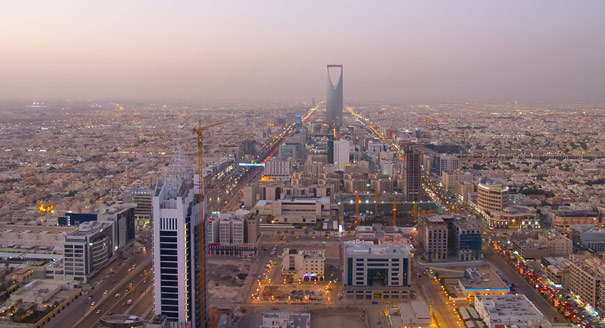
Speaking at an investors conference in Riyadh last month, MbS said, “We are returning to what we were before — a country of moderate Islam that is open to all religions and to the world. We will not spend the next 30 years of our lives dealing with destructive ideas. We will destroy them today.” In an interview to The New York Times last week, MbS said, “Do not write that we are ‘reinterpreting’ Islam — we are ‘restoring’ Islam to its origins — and our biggest tools are the Prophet’s practices and [daily life in] Saudi Arabia before 1979.”
Other Arab leaders in the region including Abdul Fattah al-Sisi, the president of Egypt and Mohammed bin Zayed al Nayhan, the crown prince of Abu Dhabi and the deputy supreme commander of the United Arab Emirates armed forces, have been pushing for moderate Islam over the last few years. But coming from Saudi Arabia, which is the centre of the Islamic world, and its royal family whose legitimacy rests on the claim to be custodian of the holy sites, Mecca and Medina, it is significant.
Why is MbS constantly harping on 1979 — and the times before and after? It was indeed a critical year that transformed the Middle East and had powerful consequences for the whole world, especially the Indian Subcontinent. The first among the three pivotal events was the seizure of the grand mosque in Mecca by a group of zealots, who accused the Saudi royalty of abandoning Islam and selling its soul to the West.
From then on, the House of Saud moved rapidly towards conservativism. To counter the extremist flank from the right, it pandered to the Wahhabi clergy at home and promoted extremist groups abroad. But the Sunni flank has become ever more radical and sees the House of Saud as the most important political target.
The second event was the Islamic revolution in Iran that overthrew Shah Reza Pahlavi in Tehran. Claiming to be the true guardian of Islam, Ayatollah Khomeini presented a big political threat to Saudi Arabia’s leadership role in the Islamic world. The Saudi rivalry with the Islamic Republic of Iran for influence in the Islamic world, inevitably acquired a sectarian colour (Sunni versus Shia) as well as an ethnic dimension (Arab versus Persian).
The third event was the Soviet occupation of Afghanistan at the end of 1979. As US-Russian detente of the 1970s collapsed, Washington stepped in to mobilise a jihad against godless Russian communists with the help of the Saudis and the Pakistan Army. The Russian bear was pushed out of Afghanistan a decade later, but radical political Islam had been legitimised.
If the Middle East paid a huge price for the turmoil generated by 1979, so did the Subcontinent. Before 1979, the Subcontinent was a very different place. It had no dearth of economic and political problems. But violent religious extremism was not one of those. This is an awful legacy from 1979. General Zia-ul-Haque’s imposition of conservative Islam on Pakistani society and the promotion of religious radicalism to achieve political objectives in Afghanistan, India and Bangladesh has radically transformed the Subcontinent’s political dynamic.
But can MbS put the genie back in the bottle? Sceptics will caution against too much hope, for a strong resistance to the new agenda of “moderate Islam” is inevitable. Even among those who think MbS is on the right path, there will be much political disputation on how to exorcise the ghosts of 1979.
Delhi though must cheer on MbS and his effort to take religion back from the extremists. The ideas of religious moderation and social modernisation have been steadily pushed on the defensive in the four decades since 1979. Any effort to reverse 1979, therefore, must be welcomed whole-heartedly in the Subcontinent.
This article was originally published in the Indian Express.
Former Nonresident Senior Fellow, Carnegie India
A leading analyst of India’s foreign policy, Mohan is also an expert on South Asian security, great-power relations in Asia, and arms control.
Recent Work

C. Raja Mohan, Darshana M. Baruah


Alexander Gabuev, Paul Haenle, C. Raja Mohan, …
Carnegie does not take institutional positions on public policy issues; the views represented herein are those of the author(s) and do not necessarily reflect the views of Carnegie, its staff, or its trustees.

For every ruble allocated to social policy, health, and education in 2027, double that amount is earmarked for the army, the police, and the security services.

Alexandra Prokopenko

Cargo traffic through Russia’s Northern Sea Route has increased because of the disruption caused by the conflict in the Middle East, the Ukraine war, and U.S.-China tensions.

Mikhail Korostikov

Sergei Kiriyenko used Russia’s parliamentary vote to further hone his strategy of corporate mobilization that is designed to maximize votes for United Russia.

Andrey Pertsev

The European far right might fail to steer EU policy in the direction Russia wants, but they will create enough chaos inside Europe to benefit the Kremlin.

Dimitar Bechev

Minsk clearly expected the dialogue with Washington to yield more results, in particular the lifting of EU sanctions and permission to export potash.

Artyom Shraibman