

Article
C. Raja Mohan, Darshana M. Baruah
{
  "authors": [
    "C. Raja Mohan"
  ],
  "type": "legacyinthemedia",
  "centerAffiliationAll": "dc",
  "centers": [
    "Carnegie Endowment for International Peace",
    "Carnegie India"
  ],
  "collections": [],
  "englishNewsletterAll": "ctw",
  "nonEnglishNewsletterAll": "",
  "primaryCenter": "Carnegie India",
  "programAffiliation": "SAP",
  "programs": [
    "South Asia"
  ],
  "projects": [],
  "regions": [
    "United States",
    "South Asia",
    "Afghanistan",
    "Pakistan",
    "India"
  ],
  "topics": [
    "Foreign Policy",
    "Security",
    "Military"
  ]
}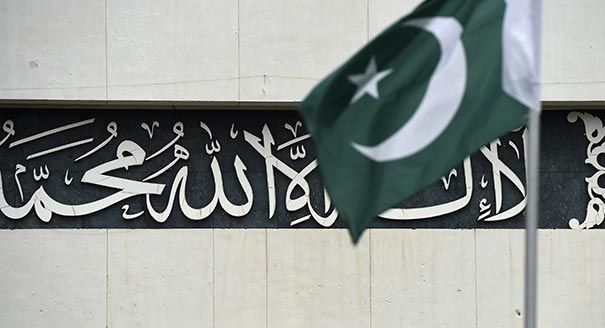
Source: Getty
In the face of unexpected and significant pressure from the United States to deliver some top militants of the Taliban and the Haqqani Network, the generals in Rawalpindi are locked in a serious debate.
Source: Indian Express
Hand in the Haqqanis or hang on to them? That is the dilemma before the Pakistan Army chief General Qamar Javed Bajwa, so aptly summed by a Pakistani columnist for the Dawn newspaper. In the face of unexpected and significant pressure from the United States to deliver some top militants of the Taliban and the Haqqani Network, the generals in Rawalpindi are locked in a serious debate.
That debate behind closed doors is surely very different from the one in the public. The talking heads on Pakistani television are outdoing each other in the denunciation of President Donald Trump’s decision to suspend a billion dollars of aid. Pakistan’s politicians have postured with predictable bravado. The religious groups have burnt the American flag in the streets.
All these familiar rituals are interesting but inconsequential. What matters is the line adopted by the Pakistan Army. The statements from GHQ so far have been rather moderate and underlined the need for continued engagement with Washington.
Rawalpindi has also avoided hasty retaliatory steps like the withdrawal of logistical support for American forces in Afghanistan. US Defence Secretary James Mattis has said that the the US military establishment is in contact with General Bajwa.
There is no question that Rawalpindi would want to find a way out of the current impasse with Washington. For General Bajwa, the question of suspension of American aid is not the problem. It is the demand for immediate action against terrorist groups that destabilise Afghanistan. The US has combined this demand with the threat to escalate the confrontation if Rawalpindi does not act decisively.
The next steps under consideration in Washington apparently include the targeted sanctioning of Pakistan Army generals involved in fomenting trouble in Afghanistan and limiting economic assistance from international financial institutions. To make matters worse, Washington appears to have set a firm deadline for decisive action.
The Pakistan Army has not been prepared to deal with an American president who publicly accuses it of “lies and deceit” and whose security advisers promise to act against terrorists in Pakistan if Rawalpindi does not.
That puts General Bajwa in the kind cleft stick that Pervez Musharraf found himself on September 11, 2001, when al Qaeda launched spectacular terror attacks on New York and Washington. The then US Deputy Secretary of State, Richard Armitage, warned General Musharraf that Pakistan will be bombed to the Stone Age if Rawalpindi did not assist America in destroying al Qaeda in Afghanistan.
After reflecting on the US ultimatum, Musharraf went public on September 19 to explain his decision to support the US military invasion of Afghanistan. He argued that Pakistan’s territorial integrity could be undermined if he chose to confront the US and the international community. Musharraf also pointed to the need to counter India’s campaign to declare Pakistan a state sponsor of terrorism, and Delhi’s alleged plans to open a second front against Pakistan in Afghanistan. He also stressed the importance of promoting Pakistan’s economic growth, protecting its nuclear and missile arsenal, and securing the “Kashmir cause”.
Musharraf also turned to religion to defend his decision. “Islamic law provides that if we are faced with two difficulties and we have to select one of them, it is always better to choose the lesser trouble.” So what might General Bajwa choose: Sacrifice the Haqqanis or save them from the American wrath? Embark on a prolonged confrontation with America or do filicide against the Taliban and the Haqqani network?
Bajwa, like his predecessors, Generals Musharraf, Pervez Kayani and Raheel Sharif, would want to alter the terms of the negotiation with the US. He would want to bring in other issues like the alleged terror sanctuaries in Afghanistan and the Kashmir dispute with India. Bajwa would want the US to pare down its demands and offer something to Pakistan in return. Above all, he would want to string this out.
For now, though, Washington is not having any of this. It says fighting terrorists is in “Pakistan’s own interest”. And the Trump administration has set the clock ticking. Unlike many in Washington who worry about the consequences of confronting Pakistan, the Trump administration seems ready to test the limits of coercive diplomacy against Rawalpindi.
It is not clear if Bajwa has Musharraf’s gumption to feign tactical cooperation with America as part of a strategic deception. He might want to keep playing the old game with America. But Trump is laying down new rules.
As it waits for the outcomes from the current dynamic between the US and Pakistan, India should do three things. The first is to hold its tongue in public. For now, the focus of the US-Pak confrontation is Afghanistan. Delhi has no reason to inject itself into that conversation.
Second, India could contribute in a modest way to the eventual outcomes in Afghanistan by raising the level of India’s security cooperation with Kabul. Unlike Presidents George W. Bush and Barack Obama, Trump is asking India to help shore up the government in Afghanistan. India must shed its past inhibitions on doing more in Afghanistan.
Finally, Delhi must sustain the current channel of communication between national security adviser Ajit Doval and his Pakistani counterpart, General Nasir Khan Janjua. At this moment of great turmoil in India’s north-western frontiers, regular contact with the Pakistan Army is quite important.
This article was originally published in the Indian Express.
Former Nonresident Senior Fellow, Carnegie India
A leading analyst of India’s foreign policy, Mohan is also an expert on South Asian security, great-power relations in Asia, and arms control.
Recent Work

C. Raja Mohan, Darshana M. Baruah


Alexander Gabuev, Paul Haenle, C. Raja Mohan, …
Carnegie does not take institutional positions on public policy issues; the views represented herein are those of the author(s) and do not necessarily reflect the views of Carnegie, its staff, or its trustees.

Despite unhappiness on the ground, Moscow is determined to use both carrot and stick to ensure there is record support for United Russia in occupied Ukraine.

Konstantin Skorkin
The recent damage inflicted by Ukrainian drones and missiles on Russia has made Belarus aware of its own vulnerabilities—and surprisingly amenable to Kyiv’s demands.

Artyom Shraibman
It is not a phenomenon unique to Russia that the public of a country at war (even the aggressor) enduring airstrikes will not overturn its government but rather show solidarity with it and blame its woes on the enemy.

Vladislav Gorin

Russia looks set to reap economic benefits from closer ties with Southeast Asian countries that are keen to find reliable energy suppliers and diversify trade ties.
Alexander Gabuev

Ongoing uncertainty in the Middle East allows Moscow to both increase its influence in Tehran and continue to enjoy the financial windfall of higher oil prices.

Nikita Smagin