

Paper
Julia Gurganus, Eugene Rumer
{
  "authors": [
    "Julia Gurganus"
  ],
  "type": "legacyinthemedia",
  "centerAffiliationAll": "dc",
  "centers": [
    "Carnegie Endowment for International Peace"
  ],
  "collections": [],
  "englishNewsletterAll": "ctw",
  "nonEnglishNewsletterAll": "",
  "primaryCenter": "Carnegie Endowment for International Peace",
  "programAffiliation": "russia",
  "programs": [
    "Russia and Eurasia"
  ],
  "projects": [
    "The Return of Global Russia: A Reassessment of the Kremlin’s International Agenda"
  ],
  "regions": [
    "United States",
    "Afghanistan",
    "Russia"
  ],
  "topics": [
    "Foreign Policy"
  ]
}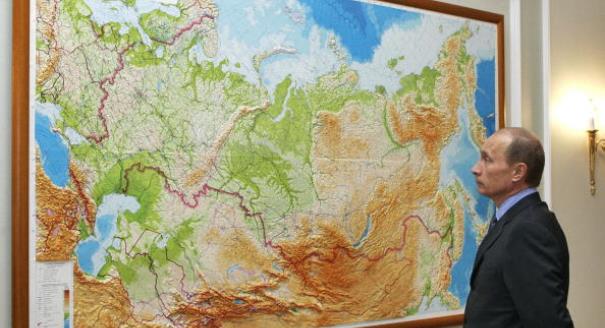
Source: Getty
Over the last couple of years, the gap between the Russian and U.S. strategies in Afghanistan has grown. Russia increasingly believes that the U.S. approach isn’t working and is convinced that it must be prepared to deal with an unstable Afghanistan on its own.
Source: Foreign Affairs
For the last decade and a half, Russia and the United States have had largely similar aims in Afghanistan: preventing chaos and the reemergence of a safe haven for terrorists. That convergence has allowed the two countries to work together. But beneath the surface, there are important differences. Although both want stability, they define it in very different ways. The U.S. approach is founded on creating a strong central government in Kabul and a well-equipped and well-trained national security force; Russia, meanwhile, works with a wide range of actors, some of which compete directly with the government in Kabul. Moscow has even reached out to the Taliban, legitimizing a group that continues to threaten the security of both the Afghan government and U.S. and NATO forces.
Former Nonresident Scholar, Russia and Eurasia Program
Julia Gurganus was a nonresident scholar with the Russia and Eurasia Program at the Carnegie Endowment for International Peace. Her research focus is on trends in Russian foreign policy and Russia-U.S. relations.
Recent Work
Julia Gurganus, Eugene Rumer
Julia Gurganus
Carnegie does not take institutional positions on public policy issues; the views represented herein are those of the author(s) and do not necessarily reflect the views of Carnegie, its staff, or its trustees.

Russian strikes are weakening the economy sustaining Ukraine’s war effort. Closing the growing funding gap will require more European support and politically contentious reforms in Kyiv.

Balázs Jarábik

Despite a new textbook, an influx of Russian teachers and managers, and an end to the teaching of Ukrainian, the Kremlin is unlikely to have “reprogrammed” locals.

Konstantin Skorkin

For every ruble allocated to social policy, health, and education in 2027, double that amount is earmarked for the army, the police, and the security services.

Alexandra Prokopenko

Cargo traffic through Russia’s Northern Sea Route has increased because of the disruption caused by the conflict in the Middle East, the Ukraine war, and U.S.-China tensions.

Mikhail Korostikov
An analysis of traffic accident data suggests that Ukrainian drone attacks caused a material but not disastrous fall in Russian gasoline consumption over the summer.

Sergey Vakulenko