

Research
- +4
Milan Vaishnav, Rahul Verma, Rukmini S., …
{
  "authors": [
    "Christophe Jaffrelot"
  ],
  "type": "legacyinthemedia",
  "centerAffiliationAll": "dc",
  "centers": [
    "Carnegie Endowment for International Peace"
  ],
  "collections": [],
  "englishNewsletterAll": "ctw",
  "nonEnglishNewsletterAll": "",
  "primaryCenter": "Carnegie Endowment for International Peace",
  "programAffiliation": "SAP",
  "programs": [
    "South Asia"
  ],
  "projects": [
    "India Elects 2019"
  ],
  "regions": [
    "South Asia",
    "India"
  ],
  "topics": [
    "Democracy",
    "Religion"
  ]
}
Source: Getty
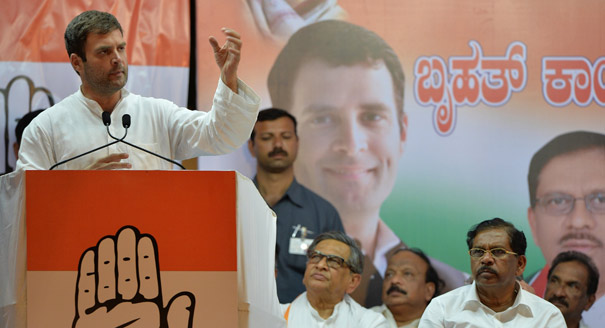
The recent contestation of Rahul Gandhi’s religious identity highlights the challenge in India today to recover the secularism of Nehru and Gandhi, for whom the assertion of one’s Hindu identity did not imply an anti-Muslim or anti-Christian attitude.
Source: Indian Express
During the last election campaign in Gujarat, Rahul Gandhi was challenged by the BJP to say whether he was a Hindu or not. The party, and maybe the nation, wanted to know and he was asked the same question repeatedly, as if the religious identity of the political leader was now a key factor of his legitimacy. The question arose after Rahul had been accused of signing the temple trust register for non-Hindus, while visiting the temple of Somnath. As it turned out, he had not been presented any register during his visit and someone had signed for him and for Ahmed Patel, who was accompanying him. But before this new instance of fake news had been exposed, social media and TV channels had exploited the issue to the full.
Zee News presented the story with the title “Rahul ko Hindu hone ka garv nahi?” Republic TV ran the hashtag #RahulHinduorCatholic and asked questions such as “When you were 27-years-old, the New York Times listed you as a Catholic. Did you correct them?” Times Now conducted a prime-time debate at 8 pm and 9 pm with the hashtag #RagaSomnathSelfGoal. On the defensive, the Congress communication chief, Randeep Surjewala, declared: “We have no hesitation in saying that Rahul Gandhi is not only a Hindu but wears a sacred thread.”
The question of the Gandhis’ religion had arisen before. Not only had Congress leaders, including Sharad Pawar, seceded to form the NCP in the late 1990s partly because the new president, Sonia Gandhi, was a Christian, but in 2002, the BJP of Gujarat suggested that the Chief Election Commissioner, J M Lyngdoh, refused to organise elections after Narendra Modi had dissolved the assembly in order to get a post-riot and post-polarisation fresh mandate, not because refugee camps were full of Muslims who would not be in a position to vote, but because he was playing into the hands of another Christian, Sonia Gandhi, again. Such a discourse reflects an equation between religion and national allegiance that transforms non-Hindus into potentially anti-national elements. A similar approach resulted in one of the provisions of the first Pakistani Consitution according to which the head of the state had to be a Muslim.
The Somnath-related controversy unfolded while Rahul was visiting one temple after another in the framework of the Gujarat election campaign. He visited almost as many temples as Modi this time. Subsequently, Ashok Gehlot, the chief architect of the Congress campaign in Gujarat, explained that the Congress had to do it to dispel the impression created by the BJP that the grand old party was for Muslims and against Hindus. A few months later, another senior Congress leader, Shashi Tharoor, published a book titled “Why I am a Hindu”, another way to contest the BJP’s claim that it epitomised and maybe monopolised the religion of the largest community.
These developments are revealing not only of the role of a sensationalist media hardly interested in cross checking sources, but also, and more importantly, of the political use of religion in India today. To be or not to be a Hindu has become a key question, as if the legitimacy of a politician and even his ability to govern was measured by this criterion.
Critics have denounced the “soft Hindutva” syndrome of the Congress, a very complicated subject indeed. In fact, the party has never defined secularism as hostility to religion or even as an a-religious ideology. Jawaharlal Nehru presented this “ism” in this manner in 1961: “We talk about a secular state in India. It is perhaps not very easy even to find a good word in Hindi for ‘secular’. Some people think it means something opposed to religion. That obviously is not correct. What it means is that it is a state which honours all faiths equally and gives them equal opportunities”.
Sarvepalli Radhakrishnan, President of India when Nehru was Prime Minister, expressed Nehru’s vision in equally eloquent terms: “When India is said to be a secular state, it does not mean that we as a people reject the reality of an unseen spirit or the relevance of religions to life or that we exalt irreligion. It does not mean that secularism itself becomes a positive religion or that the state assumes divine prerogatives. Though faith in the supreme spirit is the basic principle of the Indian tradition, our state will not identify itself with or be controlled by any particular religion.”
In other words, religion was recognised in the public sphere by these leaders, but in the plural, in a multicultural perspective. Nehru and Radhakrishnan — like several articles of the Indian Constitution — drew some of their inspiration from Mahatma Gandhi himself, who wrote in Hind Swaraj (1909): “If the Hindus believe that India should be peopled only by Hindus, then they are living in dreamland. The Hindus, the Mahommedans, the Parsis and the Christians who have made India their country are fellow countrymen, and they will have to live in unity, if only for their own interest. In no part of the world are one nationality and one religion synonymous terms; nor has it ever been so in India.”
Gandhi was a Hindu the secular way. On the one hand, he followed the Bhagavad Gita and venerated the cow. On the other hand, considering that each religion was equally valid, he chaired the All India Khilafat Committee in 1919 and constantly defended the religious minorities. For decades and even more than one hundred years, Congress has been a party of temple-going Hindus who respected other faiths and were, therefore, secular the Indian way.
The challenge for the party today is to restore an idea of India where to assert one’s Hindu identity would not imply some anti-Muslim or anti-Christian attitude, at a time when xenophobia has gained so much momentum. Hindu majoritarianism has become such a powerful discourse that it may well be the main reason why not only are Congress leaders visiting temples again, but why they have also stopped nominating Muslim candidates in substantial numbers at the time of elections (only six out of 170 in Gujarat). Congress leaders may argue that this is a tactical move, but Mahatma Gandhi would object that the end is in the means and, indeed, there may only be a difference of degree and not of nature between the Congress and BJP if this trend continues, reaching a point of no return.
This article was originally published in the Indian Express.
Former Nonresident Scholar, South Asia Program
Jaffrelot’s core research focuses on theories of nationalism and democracy, mobilization of the lower castes and Dalits (ex-untouchables) in India, the Hindu nationalist movement, and ethnic conflicts in Pakistan.
Recent Work

Milan Vaishnav, Rahul Verma, Rukmini S., …
Christophe Jaffrelot
Carnegie does not take institutional positions on public policy issues; the views represented herein are those of the author(s) and do not necessarily reflect the views of Carnegie, its staff, or its trustees.
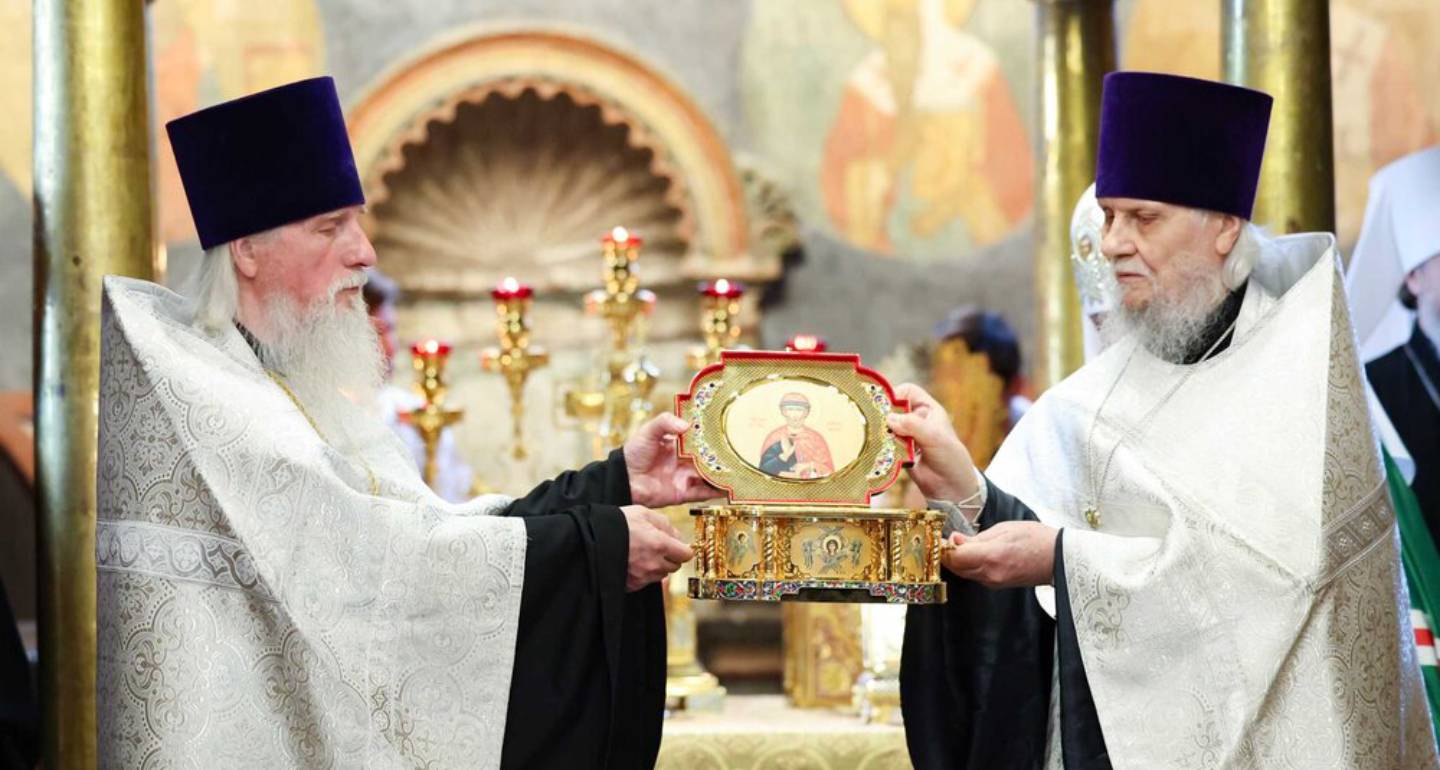
The recent uncovering of Dmitry Donskoy’s relics in the Cathedral of the Archangel is yet another attempt by the Russian Orthodox Church to help the state solve its problems. However, parroting the state’s version of Russian history leaves the Church with no message except “patriotism.”
Alexander Zanemonets

With the growth in points of friction between the great powers, organizations like the SCO will continue to play a role in the strategic adaptation of the smaller powers caught between them.

Temur Umarov
Ultimately, Zelensky sided neither with the reform camp nor with the military establishment as such, but with political control.

Balázs Jarábik

The demands of the Kremlin’s war in Ukraine, demographic problems, and public hostility toward Central Asians mean Russia does not have enough workers.

Salavat Abylkalikov
The differences between Moscow and the Vatican have been laid bare in recent years by the war in Ukraine and the ideological convictions of Pope Francis.
Ksenia Luchenko