

Commentary
Minsk clearly expected the dialogue with Washington to yield more results, in particular the lifting of EU sanctions and permission to export potash.
Artyom Shraibman
{
  "authors": [
    "Chen Qi"
  ],
  "type": "legacyinthemedia",
  "centerAffiliationAll": "",
  "centers": [
    "Carnegie Endowment for International Peace",
    "Carnegie China"
  ],
  "collections": [
    "U.S.-China Relations",
    "China’s Foreign Relations"
  ],
  "englishNewsletterAll": "",
  "nonEnglishNewsletterAll": "",
  "primaryCenter": "Carnegie China",
  "programAffiliation": "",
  "programs": [],
  "projects": [],
  "regions": [
    "North America",
    "United States",
    "East Asia",
    "China"
  ],
  "topics": [
    "Economy",
    "Trade",
    "Foreign Policy"
  ]
}
Source: Getty
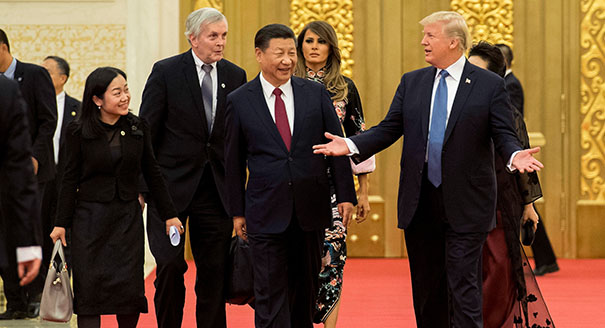
Amid the escalating Sino-U.S. trade friction, Xi’s speech can be seen as creating a mediating space for potential negotiation between Beijing and Washington in order to prevent the global economy from suffering another big blow.
Source: China Daily
China will never be a threat to any country and will not try to overthrow the world order; instead, it is determined to safeguard peace and order and contribute more to global development, President Xi said in his keynote speech at the Boao Forum for Asia.
China’s rapid development over the past four decades has earned the recognition of the international community as well as raised doubts among some countries, because a few Western powers are not ready to accept the rise of a country that has an economic model, culture and institutions different from theirs. Some Western powers, especially the United States, have even said China’s influence will have a negative impact on the world in the future.
By withdrawing from multilateral mechanisms, such as the 2015 Paris Agreement, and taking anti-globalization measures, the U.S. is destabilizing global free trade and the world order. On the contrary, China has long adhered to regional and global cooperation mechanisms and followed international rules, with Xi reiterating the importance of bilateral and multilateral cooperation in trade and security and responsible leadership in matters of global significance.
To facilitate China’s economic structural upgrading and deepen win-win cooperation with other countries and regions, as well as to strengthen globalization, Xi promised to ease access to the Chinese market, improve the investment environment, enhance IPR protection, and deepen opening-up.
Amid the escalating Sino-U.S. trade friction, Xi’s speech can be seen as creating a mediating space for potential negotiation between Beijing and Washington in order to prevent the global economy from suffering another big blow.
A country does not have to resort to a beggar-thy-neighbor policy to achieve economic gains. Instead, through deeper cooperation, all countries can share the benefits of globalization.
Despite still being a superpower, the U.S. has been losing its global leadership role thanks to its unilateral and selfish policies. But instead of reflecting on its own actions, it sees China’s peaceful rise as posing a threat to its global leadership.
Although the Sino-U.S. trade conflict may eventually be resolved with the two countries striking a new balance in their relations — China increasing imports and lowering tariffs and the U.S. easing restrictions on the export of high-tech products — China will face more severe challenges in the future, particularly from those countries that play important roles in the post-Cold War world order.
So China should be prepared to deal with such eventualities. Perhaps it can prevent such situations from arising by involving more and more countries in the Belt and Road Initiative in order to make concerted efforts to build a shared community and make greater contributions to global development.
Chen Qi
Former Resident Scholar , Carnegie-Tsinghua Center for Global Policy
Chen Qi was a resident scholar at the Carnegie-Tsinghua Center until June 2020.
Carnegie does not take institutional positions on public policy issues; the views represented herein are those of the author(s) and do not necessarily reflect the views of Carnegie, its staff, or its trustees.

Minsk clearly expected the dialogue with Washington to yield more results, in particular the lifting of EU sanctions and permission to export potash.

Artyom Shraibman

Depleted financial reserves and a shrinking tax base mean it is no longer possible to simultaneously deliver high defense spending, price stability, and economic growth.

Alexandra Prokopenko

With the growth in points of friction between the great powers, organizations like the SCO will continue to play a role in the strategic adaptation of the smaller powers caught between them.

Temur Umarov

When faced with fuel shortages in the past, Central Asian governments could always count on additional supplies from Moscow. That safety net no longer exists.

Galiya Ibragimova

Despite unhappiness on the ground, Moscow is determined to use both carrot and stick to ensure there is record support for United Russia in occupied Ukraine.

Konstantin Skorkin