

Commentary
Minsk clearly expected the dialogue with Washington to yield more results, in particular the lifting of EU sanctions and permission to export potash.
Artyom Shraibman
{
  "authors": [
    "Sharanya Rajiv"
  ],
  "type": "legacyinthemedia",
  "centerAffiliationAll": "",
  "centers": [
    "Carnegie Endowment for International Peace",
    "Carnegie India"
  ],
  "collections": [],
  "englishNewsletterAll": "",
  "nonEnglishNewsletterAll": "",
  "primaryCenter": "Carnegie India",
  "programAffiliation": "",
  "programs": [],
  "projects": [],
  "regions": [
    "South Asia",
    "India",
    "Europe"
  ],
  "topics": [
    "Foreign Policy"
  ]
}
Source: Getty
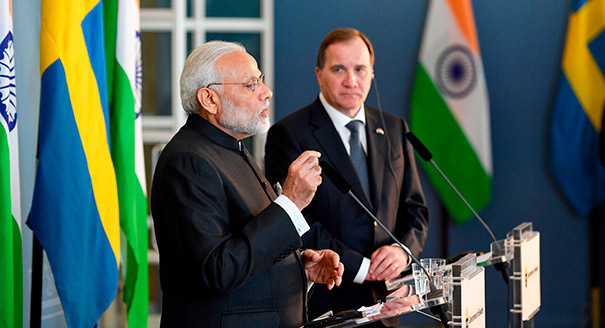
The India-Nordic Summit, which explored areas for practical cooperation and strategic convergence between both sides, represents a fundamentally new approach toward the relationship.
Source: Diplomat
During Prime Minister Narendra Modi’s visit to Stockholm last week, the first in 30 years, in addition to bilateral meetings with the prime ministers of Denmark, Finland, Iceland, Norway, and Sweden (the Nordic states), India and Sweden also co-hosted the first ever India-Nordic Summit. The summit, which explored areas for practical cooperation and strategic convergence between both sides, represents a fundamentally new approach toward the relationship.
Sharanya Rajiv
Carnegie does not take institutional positions on public policy issues; the views represented herein are those of the author(s) and do not necessarily reflect the views of Carnegie, its staff, or its trustees.

Minsk clearly expected the dialogue with Washington to yield more results, in particular the lifting of EU sanctions and permission to export potash.

Artyom Shraibman

If the Russian-speaking community in Latvia cannot articulate their interests without being seen as disloyal, they could end up embracing a pro-Kremlin agenda.

Sergejs Potapkins

With the growth in points of friction between the great powers, organizations like the SCO will continue to play a role in the strategic adaptation of the smaller powers caught between them.

Temur Umarov

When faced with fuel shortages in the past, Central Asian governments could always count on additional supplies from Moscow. That safety net no longer exists.

Galiya Ibragimova

Andrey Melnichenko’s essay offers no answer to the fundamental question of how, under any kind of negotiated settlement, Europe can protect itself from the Russian ressentiment that is inevitable in all scenarios except for an outright victory for Putin.

Leonid Bershidsky