

Article
C. Raja Mohan, Darshana M. Baruah
{
  "authors": [
    "C. Raja Mohan"
  ],
  "type": "legacyinthemedia",
  "centerAffiliationAll": "",
  "centers": [
    "Carnegie Endowment for International Peace",
    "Carnegie India"
  ],
  "collections": [],
  "englishNewsletterAll": "",
  "nonEnglishNewsletterAll": "",
  "primaryCenter": "Carnegie India",
  "programAffiliation": "",
  "programs": [],
  "projects": [],
  "regions": [
    "India"
  ],
  "topics": [
    "Foreign Policy"
  ]
}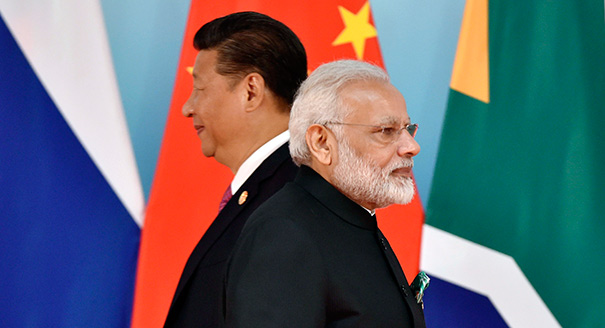
Source: Getty
While New Delhi struggles to meet the growing demand in Africa for security cooperation, Beijing, a latecomer in this business, is racing ahead.
Source: Indian Express
By the time Prime Minister Narendra Modi lands in Kigali, Rwanda on the first hop of his tour, China’s president Xi Jinping would have completed his trip to the central African nation. Although the paths of Modi and Xi to the BRICS summit in Johannesburg this week crossed in Kigali, the trajectories of their security engagement with Africa have begun to diverge. While Delhi struggles to meet the growing demand in Africa for security cooperation, Beijing, a latecomer in this business, is racing ahead.
To be sure, defence diplomacy is certainly a part of Modi’s agenda. For example, in Kigali, Modi is expected to preside over the signing of a broad agreement for bilateral defence cooperation. Rwanda is not the only one eager for security cooperation with India. Almost all of the African leaders who came to the Third India-Africa Summit in October 2015 sought greater defence engagement with India. But the gap between Delhi’s promise and performance on defence diplomacy continues to grow. Meanwhile, Chinese security cooperation with Africa has advanced at a break-neck pace.
China’s military diplomacy culminated recently in a fortnight-long China-Africa Defence and Security Forum in Beijing that saw senior military leaders from 50 nations across the continent in attendance. At the forum which concluded earlier this month, China promised “comprehensive support” for the modernisation of the armed forces of African nations. According to the Chinese media, that support includes supply of new technologies as well as lending personnel and strategic advice.
According to the Stockholm Institute of Peace Research, China’s arms exports to Africa have increased 55 per cent during the period 2013-17 in comparison to the preceding five years. China’s share of the total arms imports to Sub-Saharan Africa have reportedly gone up to 27 per cent from 16 per cent in the same period.
While China does not boast of high quality conventional weapons, its military gear is seen as quite cost effective in Africa. India does not have much of a defence industrial base to enter the African arms bazaar. But India’s military training facilities have always been attractive to other developing countries, including those in Africa.
China has, however, stepped up its military training programmes in Africa. Besides facilities in China, Beijing opened a comprehensive training centre near Bagamoyo, Tanzania. China is also in negotiations with Tanzania to build a major port in Bagamoyo. Besides the Tanzanian troops, the CTC is involved in training forces from other countries in East Africa including Kenya, Uganda, Rwanda and Burundi.
While India has been involved in international peacekeeping in Africa for more than five decades, China has, over the last decade, ramped up its role in the continent. India has seen African peacekeeping in narrow diplomatic terms, for example in reinforcing its claims for a permanent seat in the UN Security Council. China, in contrast, has seen peacekeeping as a means to enhance its military profile in Africa and learning the arts of power projection.
Beijing has nearly 2,400 peacekeepers currently deployed in Africa and is training many regional peacekeepers. China has offered $100 million in grant aid to establish an African Rapid Response Force to cope with regional crises. Along with growing military assistance and arms sales, China is stepping, somewhat gingerly, into political mediation and conflict resolution in the continent.
Besides the traditional areas of military security, Beijing has taken big steps towards cooperation with the African governments on internal security, including in the areas of countering terrorism and money laundering. Strengthening domestic police forces has become an important element of China’s security strategy in Africa.
Beijing has also begun to invest considerable energy into what is being called “law-enforcement diplomacy”. In Senegal as well as in Rwanda, on his way to the BRICS summit in Johannesburg, Xi underlined the importance of bilateral cooperation in law-enforcement. The issue could also figure in Mauritius, where Xi is making a brief stopover on the way back home.
China is also exporting artificial intelligence software that is boosting the surveillance capabilities of the African states through the use of such new technologies as facial recognition. China’s use of big data and AI for internal security surveillance has become the envy of many states in the world.
Beijing is now eager to export this technology to Africa’s security establishments. In March this year, a tech company called Cloud Walk Technology based in Guangzhou, signed an agreement with Zimbabwe on a massive project for facial recognition. Earlier, a Chinese company, Hikvision, concluded a lucrative deal to sell thousands of CCTV cameras to Zimbabwe.
China’s AI export to Zimbabwe is just the beginning. Chinese media suggest that Beijing collaboration with Africa on AI is mutually beneficial: It will promote social and political stability in Africa while improving the performance of China’s algorithms. Originally developed to recognise Asian faces, they will now have access to large amounts of African data.
Senior officials briefing the press on Modi’s visit to Africa pointed out that India is not in a race with China in Africa. That is quite true, since India can’t match the massive resources that China deploys in the continent. But it does not mean Delhi can continue to ignore its responsibility to put India’s defence diplomacy in Africa and beyond on a modern and credible footing.
This article was originally published in the Indian Express.
Former Nonresident Senior Fellow, Carnegie India
A leading analyst of India’s foreign policy, Mohan is also an expert on South Asian security, great-power relations in Asia, and arms control.
Recent Work

C. Raja Mohan, Darshana M. Baruah


Alexander Gabuev, Paul Haenle, C. Raja Mohan, …
Carnegie does not take institutional positions on public policy issues; the views represented herein are those of the author(s) and do not necessarily reflect the views of Carnegie, its staff, or its trustees.
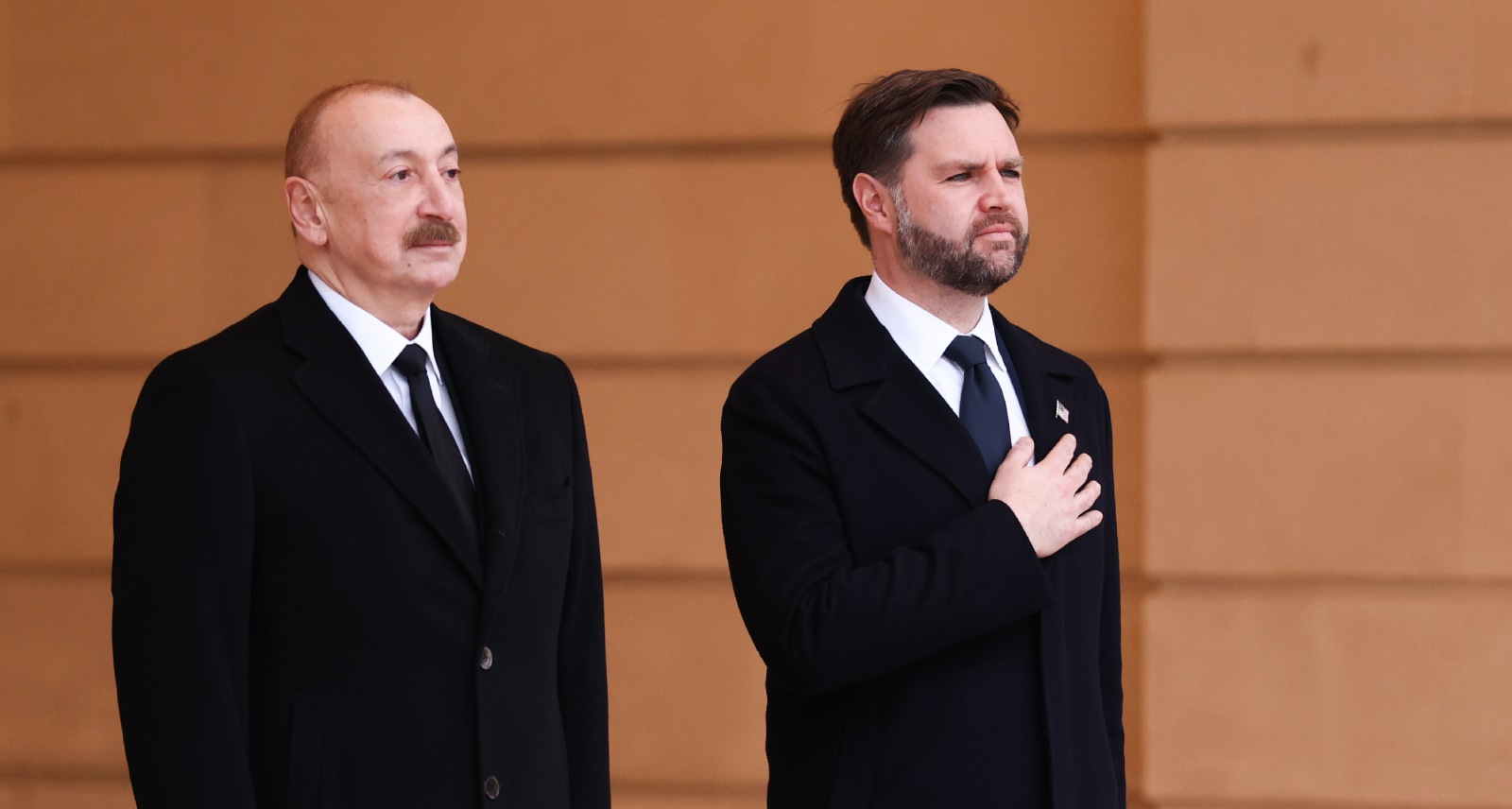
With the White House only interested in economic dealmaking, Georgia finds itself eclipsed by what Armenia and Azerbaijan can offer.

Bashir Kitachaev
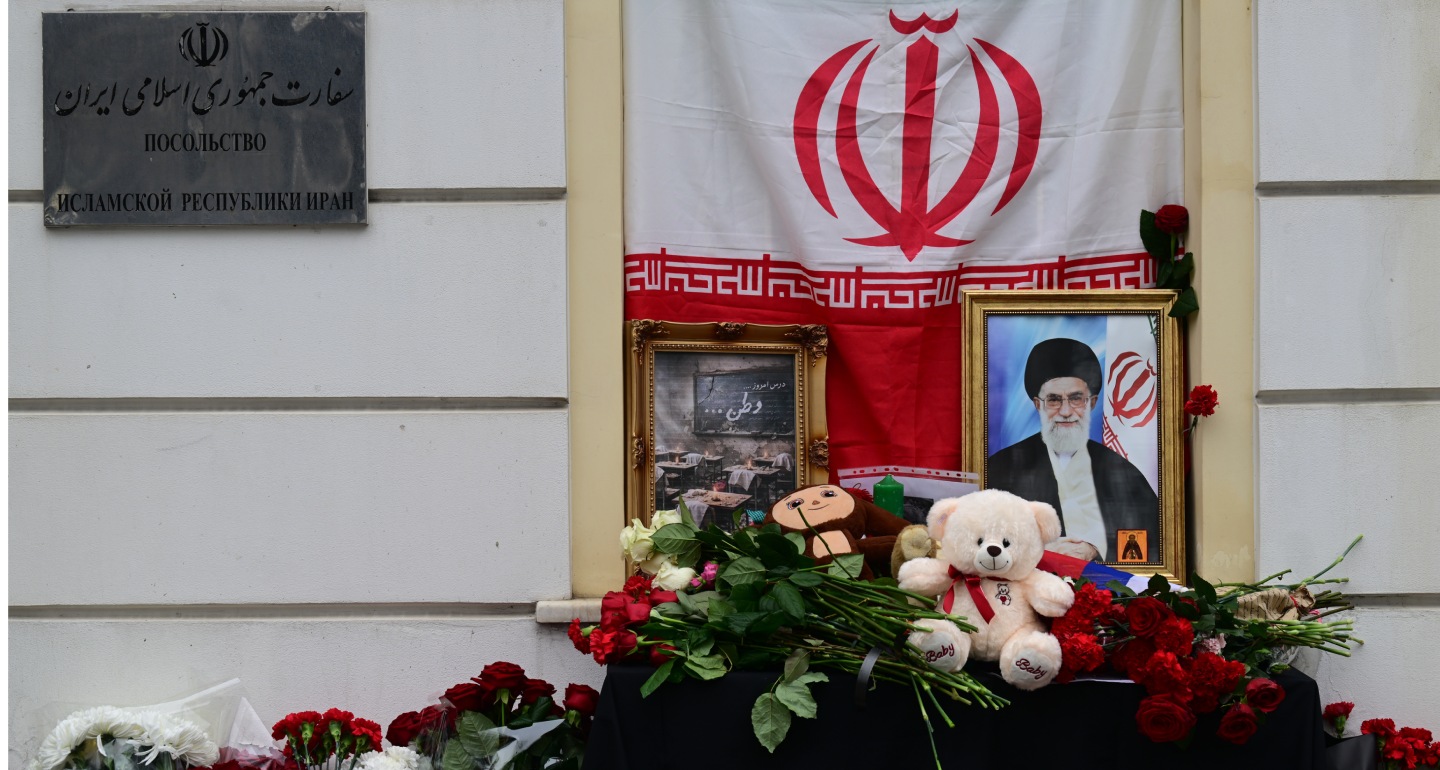
If the regime in Tehran survives, it could be obliged to hand Moscow significant political influence in exchange for supplies of weapons and humanitarian aid.

Nikita Smagin
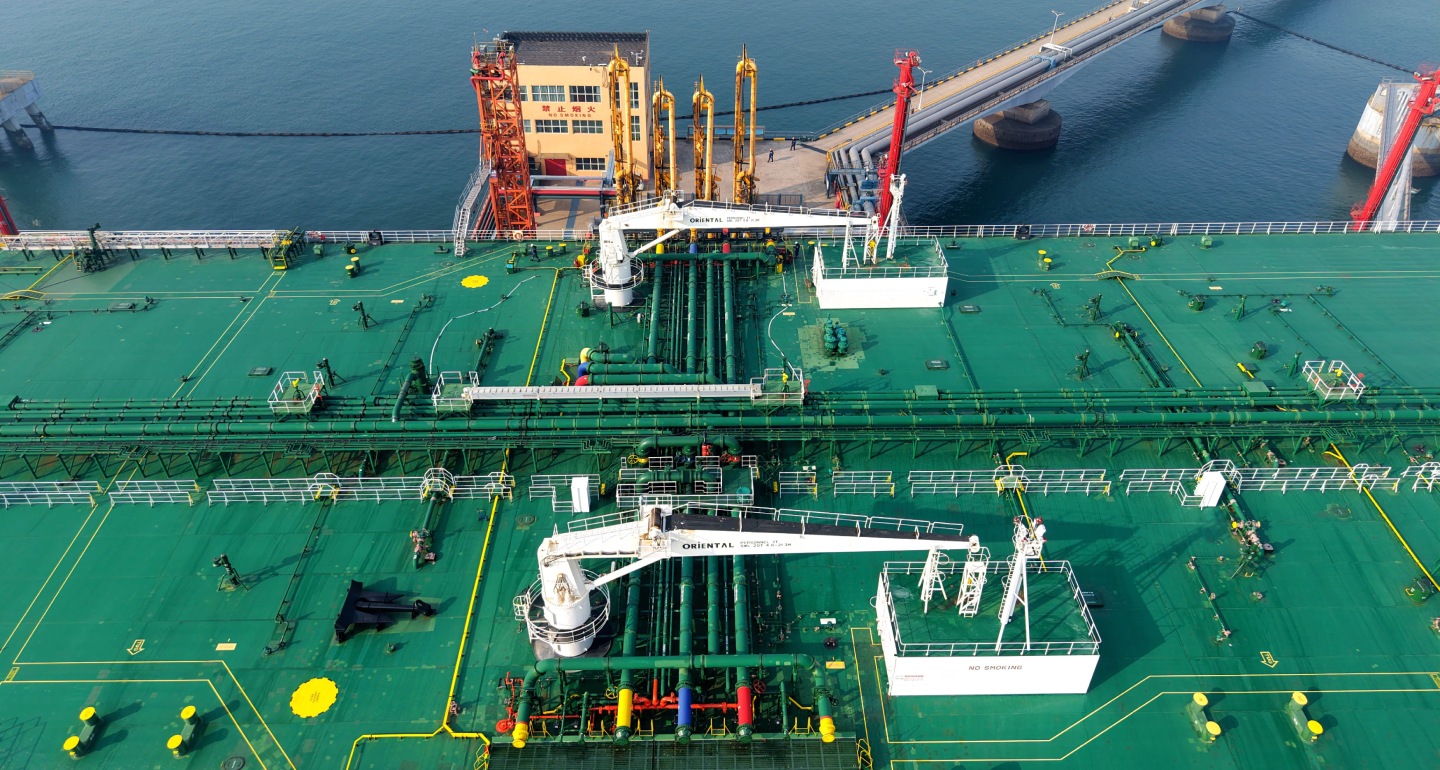
The interventions in Iran and Venezuela are in keeping with Trump’s strategy of containing China, but also strengthen Russia’s position.

Mikhail Korostikov
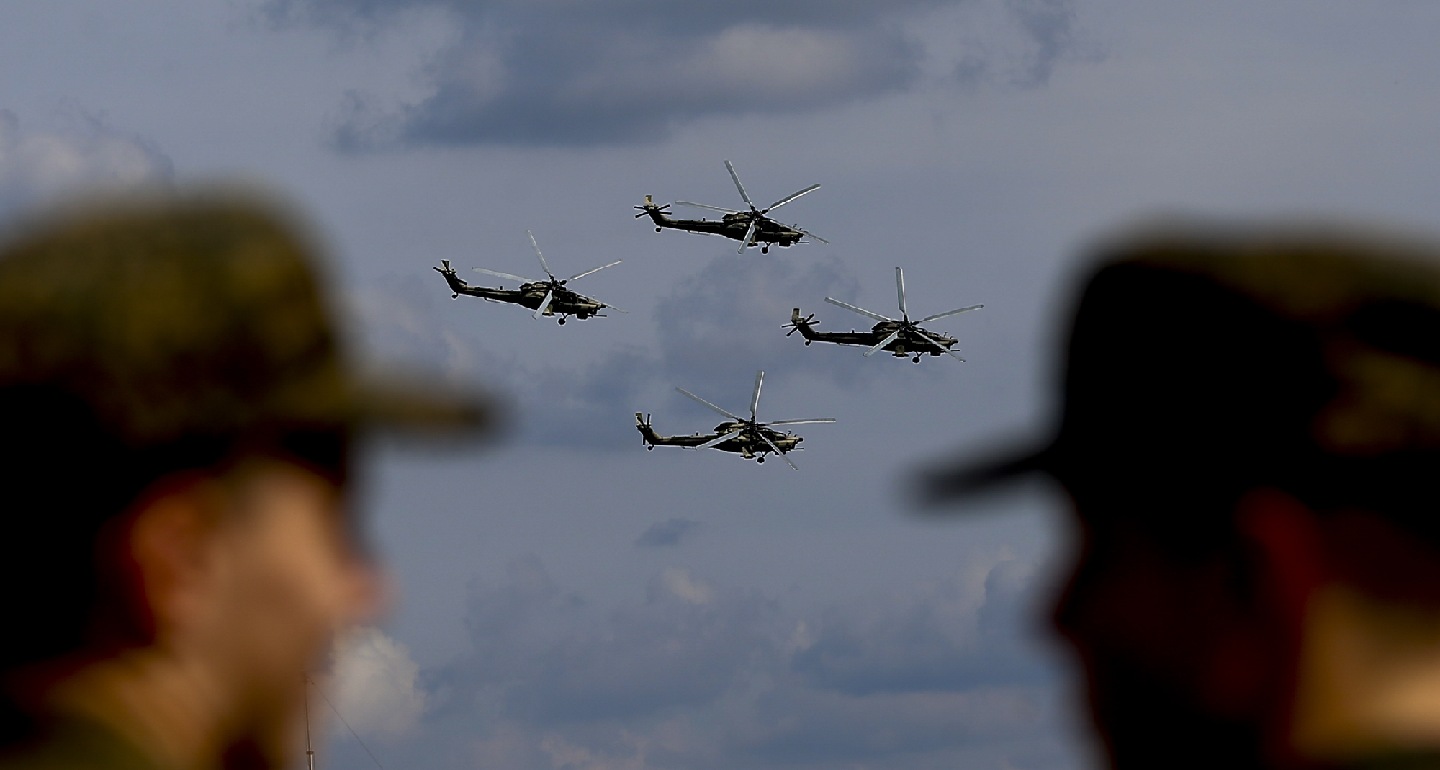
Arms supplies from Russia to Iran will not only continue, but could grow significantly if Russia gets the opportunity.
Nikita Smagin
Putin is stalling, waiting for a breakthrough on the front lines or a grand bargain in which Trump will give him something more than Ukraine in exchange for concessions on Ukraine. And if that doesn’t happen, the conflict could be expanded beyond Ukraine.

Alexander Baunov