

Article
Paul Stronski
{
  "authors": [
    "Paul Stronski"
  ],
  "type": "legacyinthemedia",
  "centerAffiliationAll": "dc",
  "centers": [
    "Carnegie Endowment for International Peace"
  ],
  "collections": [],
  "englishNewsletterAll": "ctw",
  "nonEnglishNewsletterAll": "",
  "primaryCenter": "Carnegie Endowment for International Peace",
  "programAffiliation": "russia",
  "programs": [
    "Russia and Eurasia"
  ],
  "projects": [
    "The Return of Global Russia: A Reassessment of the Kremlin’s International Agenda"
  ],
  "regions": [
    "Southern, Eastern, and Western Africa",
    "Russia"
  ],
  "topics": [
    "Foreign Policy"
  ]
}
Source: Getty
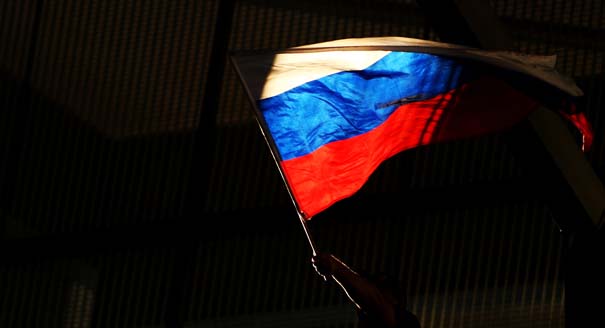
The Wagner Group’s activity in the Central African Republic reveals how Russia has grown its influence in Africa, even in regions where Western countries traditionally have wielded considerable influence.
Source: Axios
Three independent Russian journalists were murdered on July 31 in the Central African Republic (CAR) while filming a documentary on the Wagner Group, the mysterious Kremlin-linked military contractor operating in that country. The circumstances of their deaths are still unknown, but the incident follows the mysterious death of another Russian journalist who investigated the organization.
The big picture: With deployments in Ukraine, Syria and Sudan in addition to CAR, the Wagner Group has become an active, although still unofficial, component of Russia’s foreign policy and military toolkit at a time when the Kremlin is expanding its reach across Africa.
The Wagner Group gained notoriety in February after hundreds of its fighters were killed in a failed attack on U.S. forces in Syria, although the Russian government then denied any connection to the group. But Russia has clearly been increasing its African presence, providing debt relief, weapons sales and military assistance.
Russia is by far Africa’s largest arms supplier, accounting for about 35% of the continent’s weapons imports. Russian companies often get lucrative access to explore for and extract oil, gas and other natural resources in return.
In December 2017, Russia secured a United Nations exemption to the CAR arms embargo allowing it to supply light weapons to its military struggling to contain the sectarian violence that has ravaged the country since 2014. The exemption came two months after Russian Foreign Minister Lavrov met with CAR President Touadéra to strengthen ties, resulting in infrastructure contracts and mining exploration concessions.
Moscow sent the arms in early 2018, along with 175 military and civilian trainers. The Wagner Group was part of that deployment, and it also reportedly provides protection for the country’s mines and government facilities.
The bottom line: The Wagner Group’s activity in CAR reveals how Russia has grown its influence in Africa, even in regions where Western countries traditionally have wielded considerable influence. As Russia rebuild its web of African relationships, the shadowy nature of Wagner’s mercenary network provides Moscow deniability should its military activities there go awry.
Former Senior Fellow, Russia and Eurasia Program
Paul Stronski was a senior fellow in Carnegie’s Russia and Eurasia Program, where his research focuses on the relationship between Russia and neighboring countries in Central Asia and the South Caucasus.
Recent Work
Paul Stronski
Paul Stronski
Carnegie does not take institutional positions on public policy issues; the views represented herein are those of the author(s) and do not necessarily reflect the views of Carnegie, its staff, or its trustees.

Cargo traffic through Russia’s Northern Sea Route has increased because of the disruption caused by the conflict in the Middle East, the Ukraine war, and U.S.-China tensions.

Mikhail Korostikov
An analysis of traffic accident data suggests that Ukrainian drone attacks caused a material but not disastrous fall in Russian gasoline consumption over the summer.

Sergey Vakulenko

Sergei Kiriyenko used Russia’s parliamentary vote to further hone his strategy of corporate mobilization that is designed to maximize votes for United Russia.

Andrey Pertsev

The European far right might fail to steer EU policy in the direction Russia wants, but they will create enough chaos inside Europe to benefit the Kremlin.

Dimitar Bechev

Minsk clearly expected the dialogue with Washington to yield more results, in particular the lifting of EU sanctions and permission to export potash.

Artyom Shraibman