

Commentary
Putin’s conservative staffing policies and search for ever greater control have cemented parliament’s transformation into a bureaucratic appendage of the executive branch.
Andrey Pertsev
{
  "authors": [
    "Rachel Kleinfeld",
    "David Solimini"
  ],
  "type": "other",
  "centerAffiliationAll": "dc",
  "centers": [
    "Carnegie Endowment for International Peace"
  ],
  "collections": [
    "U.S. Democracy in Comparative Perspective"
  ],
  "englishNewsletterAll": "democracy",
  "nonEnglishNewsletterAll": "",
  "primaryCenter": "Carnegie Endowment for International Peace",
  "programAffiliation": "DCG",
  "programs": [
    "Democracy, Conflict, and Governance"
  ],
  "projects": [],
  "regions": [
    "North America",
    "United States"
  ],
  "topics": [
    "Political Reform",
    "Democracy"
  ]
}
Source: Getty
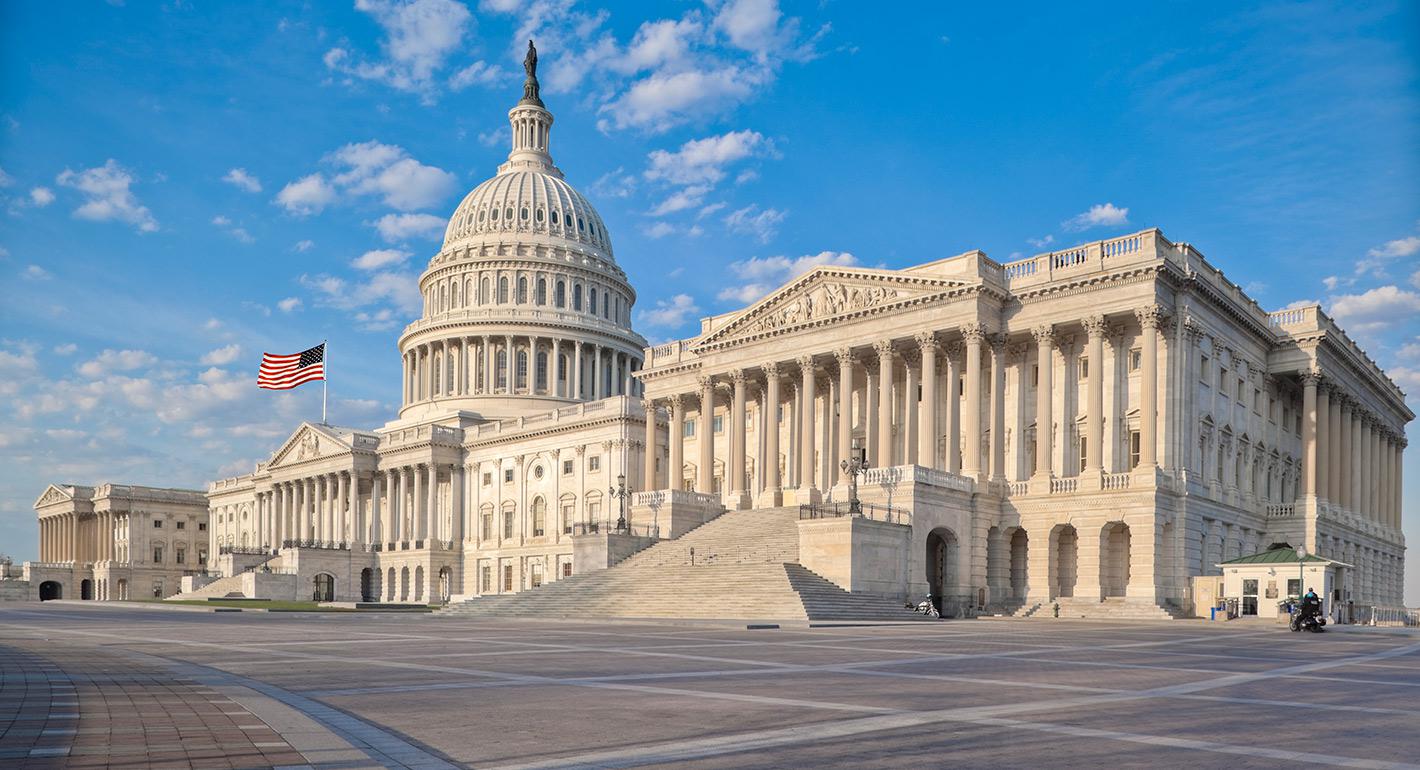
In the face of the decline of democracy in the United States, it is beneficial to look toward other democracies which declined and recovered. This analysis reveals that often recovery takes decades, can remain incomplete, and that it requires the dedication of individuals committed to renewal.
Source: Democracy Fund
Democracy in America suffers from a decades-long pattern of institutional decline. The candidacy and election of President Donald Trump is a symptom as well as an accelerant of this institutional degradation, catalyzing reactions from other institutions, parties, and voters. On the positive side, President Trump’s brazen disregard for the longstanding norms of American governance has drawn attention to long-running problems, creating new interest in what the United States might learn from the experience of other countries in similar situations.
What can we learn from other democracies that have faced executive degradation1 of pre-weakened democratic institutions, particularly countries with polarized populations? Based on the trajectories of other nations, what damage might we expect to see by the end of the Trump administration? Are there lessons for renewal that can be applied the day this administration exits the scene?
Few countries are directly comparable to the United States. As the world’s oldest continual democracy, the United States has far more established institutions than most other states. And yet the laws protecting the checks and balances of our government are older and thinner than those of most modern democracies, creating the impression of a strong state that has in practice relied more on norms than law to maintain its institutions. America’s implementation of federalism is deeper than in most other countries and is a significant buffer against executive overreach. On the other hand, its population is deeply — and often evenly — polarized by identity-driven divisions that do not lend themselves to compromise. For both sides, every political fight is an identity battle and each battle is potentially winnable. The temptation to engage in undemocratic behavior is significant.
In declining order of direct comparison, we looked at cases of democratic decline and subsequent renewal in Italy under Silvio Berlusconi, Colombia under President Álvaro Uribe, Louisiana during the Huey Long period, Argentina during the populist regimes of Carlos Menem and the Kirchners, South Korea’s President Park Geun-hye, Peru during the reign of Alberto Fujimori, and India under Indira and Rajiv Gandhi. We also looked at the similarities and differences between these states and countries that faced executive degradation and have not yet recovered, particularly Hungary, Poland, Turkey, and Venezuela.
Read full text (PDF)
This piece was originally published by the Democracy Fund.
1. We use this term from Larry Diamond's book In Search of Democracy, where he defines it to refer to the degradation of civil and political rights of citizens by a country's executive.

Senior Fellow, Democracy, Conflict, and Governance Program
Rachel Kleinfeld is a senior fellow in Carnegie’s Democracy, Conflict, and Governance Program, where she focuses on issues of rule of law, security, and governance in democracies experiencing polarization, violence, and other governance problems.
David Solimini
David Solimini has spent fifteen years at the intersection of politics, foreign policy, and communications. As co-owner and Principal of ADco, he provides strategic advice, issue expertise, and translates policy nuance into persuasive communications to achieve policy goals. He is also the host and creator of The Secure Line, a podcast on the policy and politics of America’s role in the world. In 2017, he advised on policy and led communications for ICAN’s Nobel Peace Prize-winning effort to create a treaty-based prohibition on nuclear weapons. Previously, as vice president at the Truman National Security Project, he crafted messaging for candidates, policy leaders, and media across the country, while serving as a senior leader in organizational strategy and program development. He was the founding executive director of the Virginia Redistricting Coalition and co-founder of Virginia21, the country’s first organization devoted to generational advocacy for young voters. He has also worked as a speechwriter and ghostwriter for numerous candidates, elected officials, and public figures. Solimini received his B.A. from the College of William and Mary and his master’s degree from Johns Hopkins SAIS. He lives with his family in Washington, D.C.
Carnegie does not take institutional positions on public policy issues; the views represented herein are those of the author(s) and do not necessarily reflect the views of Carnegie, its staff, or its trustees.

Putin’s conservative staffing policies and search for ever greater control have cemented parliament’s transformation into a bureaucratic appendage of the executive branch.

Andrey Pertsev

Ex-president Gurbanguly Berdimuhamedov remains interested in politics, but his son Serdar, Turkmenistan’s current president, is becoming increasingly independent and willing to break with his father’s legacy. If their covert rivalry goes too far, both risk losing power.

Galiya Ibragimova

Sergei Kiriyenko used Russia’s parliamentary vote to further hone his strategy of corporate mobilization that is designed to maximize votes for United Russia.
Andrey Pertsev

Trump has promised Belarus a massive potash deal. But Minsk is seeking something greater: restored Western transit and greater room for maneuver from Russia.

Balázs Jarábik

The European far right might fail to steer EU policy in the direction Russia wants, but they will create enough chaos inside Europe to benefit the Kremlin.

Dimitar Bechev