

Commentary
Tatiana Stanovaya
{
  "authors": [
    "Tatiana Stanovaya"
  ],
  "type": "commentary",
  "blog": "Carnegie Politika",
  "centerAffiliationAll": "",
  "centers": [
    "Carnegie Endowment for International Peace",
    "Carnegie Russia Eurasia Center"
  ],
  "englishNewsletterAll": "",
  "nonEnglishNewsletterAll": "",
  "primaryCenter": "Carnegie Russia Eurasia Center",
  "programAffiliation": "",
  "regions": [
    "Russia"
  ],
  "topics": [
    "Domestic Politics",
    "Political Reform"
  ]
}
Source: Getty
The pressures of war are gradually warping Russia’s system of governance, making it more vulnerable to a future crisis.
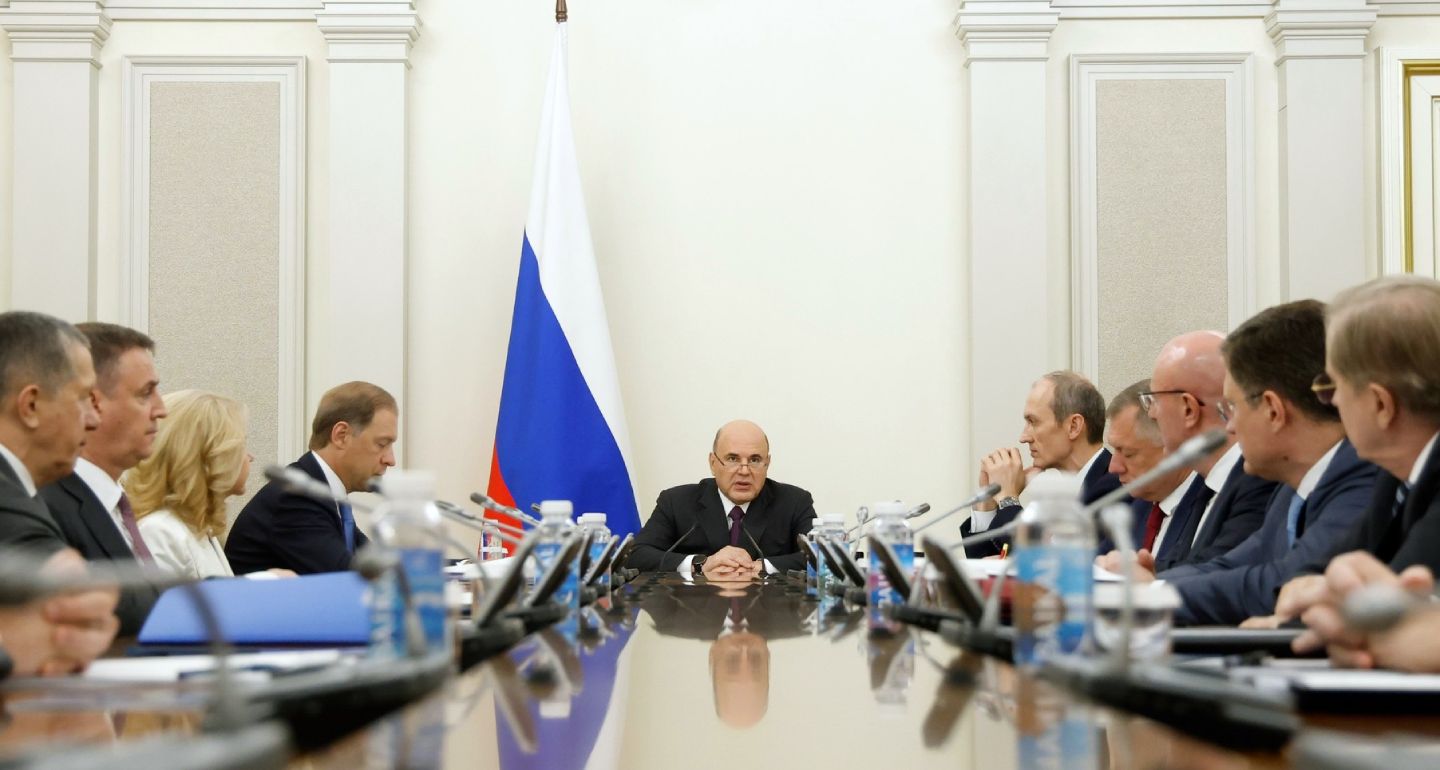
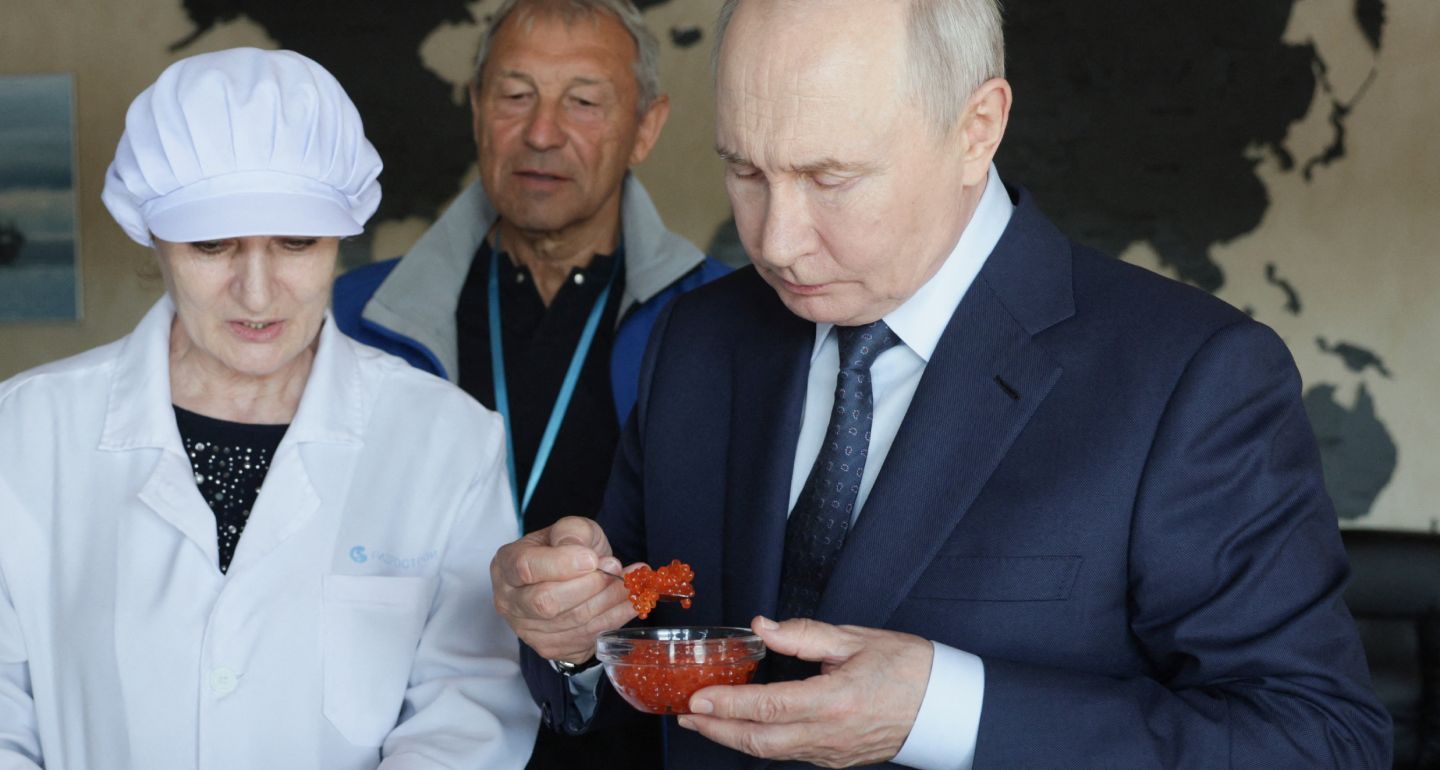
A month after Russia’s parliamentary elections, President Vladimir Putin has finally carried out a long-expected government reshuffle. While there are no formal rules mandating such a step, expectations for a reshuffle had built up in the system. At first glance, the changes were insignificant. But they once again highlight a growing trend of recent years in which the system’s administrative core is being weakened in favor of large, functionally oriented, sector-specific conglomerates. This is nothing less than the erosion of the state itself.
The most striking thing about the reshuffle is that it avoided any high-profile appointments: an approach entirely in keeping with Putin’s personnel policy. Unlike the radical government shakeup of 2020, the current reshuffle focused on strengthening the regime’s foundations in anticipation of a prolonged period of uncertainty and significant escalation risks. Putin decided to retain two key figures in their respective roles—Vyacheslav Volodin as speaker of the State Duma and Mikhail Mishustin as prime minister—despite not having a particularly warm relationship with either.
The reshuffle was presented as Mishustin’s initiative, but Putin clearly had the last word. The flip side of this outward show of respect for the prime minister was a genuine weakening of Mishustin’s position. First and foremost, Mishustin lost his right-hand man: Dmitry Grigorenko was dismissed as chief of government staff and deputy prime minister (he had also overseen finance and digital development). Grigorenko has a reputation as a conflict-prone politician, and it seems Mishustin was unable to protect him.
Since the full-scale invasion of Ukraine in 2022, Mishustin has striven to be politically inconspicuous. But that has not stopped speculation about his supposed anti-war views, stratospheric ambitions, and (mutual) dislike of Putin. Given that Mishustin would become acting president if Putin were to resign or die, it seems that Putin is not particularly worried about that scenario, and prefers to have a prime minister whom he views as lacking a political future. Putin is also aware that the war has strengthened the positions of deputy prime ministers including Denis Manturov, Dmitry Patrushev, and Alexander Novak.
The reshuffle created yet another influential deputy prime minister in the form of Anton Siluanov, who heads the Finance Ministry. The promotion confirms that Siluanov has become one of the most influential ministers in government since he took charge of redistributing the assets of Western companies that had left Russia. Siluanov’s new title also suggests the Kremlin will continue its uncompromising pursuit of macroeconomic stability. Putin apparently believes Siluanov has done a good job of managing Russia’s falling revenues, the growing demands of the military, and the need to avoid any social unrest.
The most intriguing aspect of the reshuffle was the decision to replace Grigorenko with Irina Okladnikova, who was made both chief of government staff and deputy prime minister. Okladnikova, forty-one, has risen through the ranks of the Finance Ministry, and some commentators have already labeled her an associate of Siluanov. But she’s also linked to Manturov, with whom she spent many years coordinating budget allocations for industrial programs. Okladnikova’s father Andrei Volf was a senior manager at the mechanical engineering company Tractor Plants (which was acquired by state-owned defense conglomerate Rostec in 2017).
Another interesting decision was the departure of Yury Trutnev as deputy prime minister and presidential envoy to the Far Eastern Federal District. His replacement is the governor of the Primorsky region, Oleg Kozhemyako, who was once close to Trutnev and is a familiar figure in the Far East.
Trutnev was a rare example of a presidential envoy who brought political heft to the job: in his case by combining a powerful deputy prime minister position with a substantive agenda, such as developing the Arctic. While Trutnev’s departure had been under discussion for a long time because of some health issues, he also has a conflict-prone reputation, having gone public with criticism of projects important to Rostec and to Igor Sechin, the influential CEO of state-owned oil giant Rosneft. Trutnev might now become one of Putin’s deputy chiefs of staff: a position that is not particularly burdensome, but is still prestigious.
Finally, Transport Minister Andrei Nikitin was made a deputy prime minister to replace Vitaly Savelyov, who now has a seat in the State Duma. Nikitin’s former role as transport minister was given to Dmitry Yadrov, head of Russian aviation watchdog Rosaviatsiya. In other words, the transport sector remains firmly in the hands of the powerful Rotenberg family.
While much of this may seem relatively insignificant, Putin’s changes are part of an important trend in which the administrative core of the Russian state is losing influence to increasingly distinct, specialized interest groups. Manturov and Rostec are gaining more control of industry and the defense sector; Patrushev has agriculture; Siluanov has finance; the Rotenbergs have transport; and Novak has energy.
The demands of fighting a war mean formal rules and procedures lose their value, the end increasingly justifies the means, and rules are changed on the fly. Regulations no longer provide order and predictability, and accountability becomes diluted.
In such a situation, it’s cheaper and easier to redistribute responsibilities among those “statesmen” who are closely aligned with large, influential corporations. The problem is that by trying to strengthen the framework of governance in this way, Putin is creating a system that will lose its ability to function predictably. Such a system will also find it hard to take account of the public interest, meaning that a serious crisis will almost certainly lead to instability. If that happens, a very different cohort of “statesmen” will come to the rescue: military and security officers. Their methods would be very different.
Senior Fellow, Carnegie Russia Eurasia Center
Tatiana Stanovaya is a senior fellow at the Carnegie Russia Eurasia Center.
Recent Work
Tatiana Stanovaya
Tatiana Stanovaya
Carnegie does not take institutional positions on public policy issues; the views represented herein are those of the author(s) and do not necessarily reflect the views of Carnegie, its staff, or its trustees.
A leak of Russian gas price data helps establish that China is paying Russia far less than Central Asian countries and Gazprom’s former European customers.
Sergey Vakulenko
Japan’s long-term security policy is driven by concerns about China, and there is little appetite for (or interest in) pursuing a confrontation with Moscow.
James D.J. Brown
The truth of the strategic situation is that Europe and Russia are extremely unlikely to be able to “turn the page” on their confrontation within the next two decades.
Arkady Moshes
Russia spent years building a “sovereign internet,” concentrating web infrastructure exclusively within Russian territory. Ukrainian drone attacks have shown how vulnerable that approach has left the Russian internet.

Maria Kolomychenko
Putin’s conservative staffing policies and search for ever greater control have cemented parliament’s transformation into a bureaucratic appendage of the executive branch.
Andrey Pertsev