

Research
- +10
Rosa Balfour, Frances Z. Brown, Yasmine Farouk, …
{
  "authors": [
    "Moisés Naím"
  ],
  "type": "legacyinthemedia",
  "centerAffiliationAll": "dc",
  "centers": [
    "Carnegie Endowment for International Peace"
  ],
  "collections": [],
  "englishNewsletterAll": "americanStatecraft",
  "nonEnglishNewsletterAll": "",
  "primaryCenter": "Carnegie Endowment for International Peace",
  "programAffiliation": "ASP",
  "programs": [
    "American Statecraft"
  ],
  "projects": [],
  "regions": [],
  "topics": [
    "Economy",
    "Trade"
  ]
}
Source: Getty
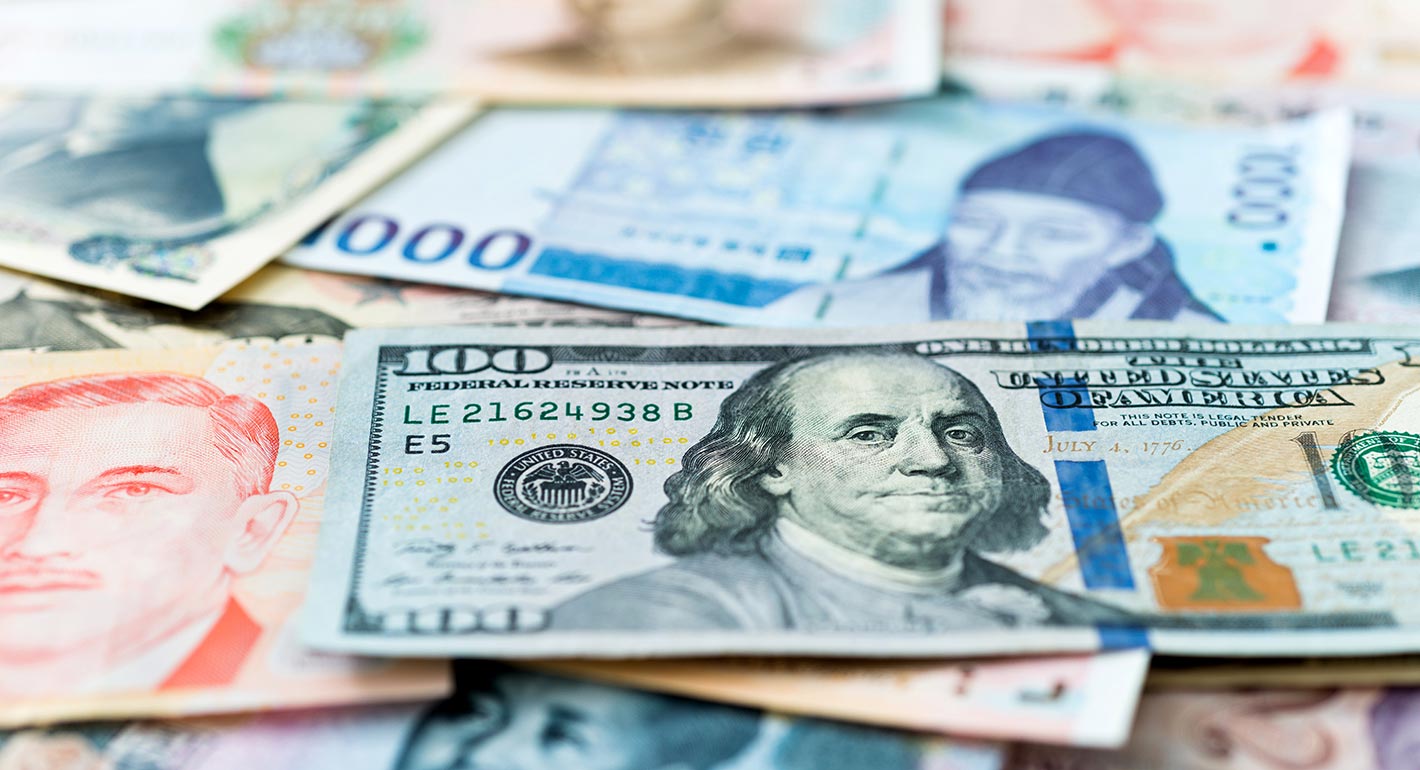
Until recently the idea of doing without bills and coins seemed like science fiction. But today, it’s a reality.
Source: El País
What’s going to happen to money? Until recently the idea of doing without bills and coins seemed like science fiction. But today, it’s a reality. In many countries, money – as we know it – is becoming obsolete. Wallets are being replaced by our ubiquitous smartphones, while banknotes and metal coins are being replaced by digital ones and zeros.
In Sweden, for example, 93% of transactions are made through direct transfers using a mobile phone app called Swish. It allows even small amounts to be transferred between individuals instantly and at very low cost. But it’s not only the prosperous and technologically savvy Swedes who make do more and more without old-fashioned money. China, Kenya, Tanzania, Bangladesh and India have also made huge strides in the use of electronic payments through mobile phones. Increasingly, the use of cash is becoming an anachronism: relying on bits of colored paper as a means of payment doesn’t feel very 21st century.
For governments, the advantages of the widespread use of technologies such as Swish are obvious: every transaction is registered and can be tracked by, among others, the authorities. For those who launder money, evade taxes, traffic drugs, or finance terrorists, the digital trail left by digital money transactions is a problem. In contrast, for hackers who know how to break into an account and transfer funds to another owner, these new technologies open up immense opportunities.
The rise of cryptocurrencies, for example, brings unprecedented challenges. These virtual currencies (or digital assets) are complex encrypted algorithms that can be used as a verifiable and guaranteed method of payment. The most common is the ubiquitous Bitcoin, although there are other cryptocurrencies – 2,000 others, in fact, and growing.
The most transformative feature of these currencies is that – save for a few fraudulent exceptions – governments and central banks have nothing to do with them. Another important feature is that cryptocurrency transactions can be done anonymously. Digital technologies and the internet facilitate the possibility of acting anonymously in many areas (in business, romance, crime, terrorism, etc.). Thus, at the same time that some new technologies hinder anonymity, others are deliberately designed to ensure it.
One example is ZCash, a cryptocurrency that promises to do everything cash does, only virtually... and anonymously. Using extremely complex cryptographic mechanisms, ZCash offers absolute privacy over the chain of transactions in which its “coins” are involved. When you receive a $100 bill there is no way to know who had it before the person who gave it to you, or who will have it after the person you give it to. ZCash promises to do the same thing: anonymity across the entire chain of users.
Naturally, governments don’t like ZCash. The feeling is mutual. Like many cryptocurrencies, ZCash was developed by a community of libertarian programmers hostile to government control. Governments are right to be alarmed, simply because the destabilizing potential of platforms like ZCash is unlimited. For a drug trafficker, transporting $10 million in bills through customs at an airport is as logistically dicey as it is legally risky. But with ZCash anyone can transfer any sum, at any time, and to any destination instantly, without cumbersome briefcases full of paper money. And without risking the identity of the participants.
Governments are quickly learning the unprecedented challenges posed by new technologies like ZCash. The great advantage that the authorities still have is that they control the so-called “off ramp” from the crypto-highway. Since the number of businesses that accept payments in cryptocurrencies is still relatively small, it is often necessary to trade them for one of the traditional currencies still issued by governments. This gives the authority the possibility of controlling that exit ramp and this is, of course, a critical lever that governments have.
But there’s no reason to think that advantage will remain indefinitely. Today, there are already more than 100,000 virtual businesses that accept cryptocurrencies as a form of payment and this number will continue to grow rapidly. It is perfectly conceivable that, in a few years, you will be able to buy a car, a trip, or a house with ZCash.
We still cannot tell if the future belongs to transparent technologies such as Swish or opaque ones such as ZCash. Most likely, they will coexist, depending on the country and the sector of the economy. But there is no doubt that, as the 21st century marches on, it will become more common to find bills and coins in museums rather than in our pockets.

Distinguished Fellow
Moisés Naím is a distinguished fellow at the Carnegie Endowment for International Peace, a best-selling author, and an internationally syndicated columnist.
Recent Work



Rosa Balfour, Frances Z. Brown, Yasmine Farouk, …
Moisés Naím

Trump has promised Belarus a massive potash deal. But Minsk is seeking something greater: restored Western transit and greater room for maneuver from Russia.

Balázs Jarábik

Depleted financial reserves and a shrinking tax base mean it is no longer possible to simultaneously deliver high defense spending, price stability, and economic growth.

Alexandra Prokopenko

When faced with fuel shortages in the past, Central Asian governments could always count on additional supplies from Moscow. That safety net no longer exists.

Galiya Ibragimova

Russia looks set to reap economic benefits from closer ties with Southeast Asian countries that are keen to find reliable energy suppliers and diversify trade ties.

Alexander Gabuev
If it proves impossible for the Russian authorities to avoid a gasoline deficit, the question then becomes how they will organize the distribution of a scarce resource.

Sergey Vakulenko