

Commentary
The truth of the strategic situation is that Europe and Russia are extremely unlikely to be able to “turn the page” on their confrontation within the next two decades.
Arkady Moshes
{
  "authors": [
    "Frederic Wehrey",
    "Jalel Harchaoui"
  ],
  "type": "legacyinthemedia",
  "centerAffiliationAll": "dc",
  "centers": [
    "Carnegie Endowment for International Peace"
  ],
  "collections": [],
  "englishNewsletterAll": "menaTransitions",
  "nonEnglishNewsletterAll": "",
  "primaryCenter": "Carnegie Endowment for International Peace",
  "programAffiliation": "MEP",
  "programs": [
    "Middle East"
  ],
  "projects": [],
  "regions": [
    "North Africa",
    "Libya"
  ],
  "topics": [
    "Political Reform",
    "Security",
    "Military",
    "Foreign Policy"
  ]
}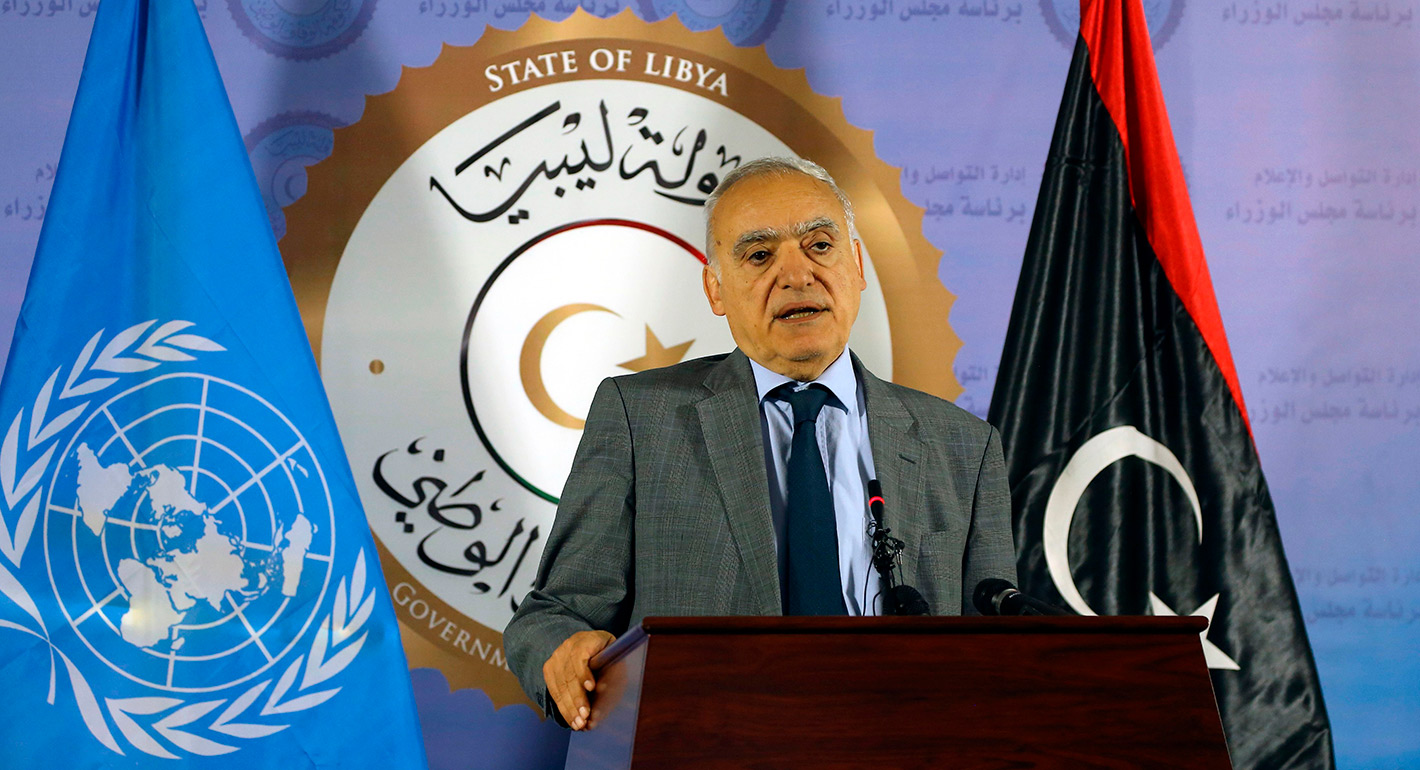
Source: Getty
Over the years, Libya’s leaders have met, led by earnest Western ministers and heads of state. But beyond this, these meetings produce no breakthrough agreements.
Source: Foreign Affairs
Pity Libyans for the pageantry of their international summits. Over the years, at palaces, resorts, and hotels across several continents, the country’s factional leaders have met, shepherded by earnest-looking Western ministers and heads of state. Action plans are laid out and deadlines set. The participants emerge with verbal promises of consensus, a photo op, sometimes even a hug. Meanwhile, back in Libya citizens languish under warring militias, economic misery, and aloof elites. Invariably, after each summit, vows pronounced in remote locales disintegrate on contact with these more proximate realities.
On November 12–13, Italy’s populist government played host to the latest such event, this time in the city of Palermo, Sicily. The meeting occurred in the shadow of intense Italian rivalry with France over Libya. Last May, at a largely unilateral summit in Paris, French President Emmanuel Macron had obtained from four Libyan leaders a verbal commitment to hold general elections by December of this year—a deadline that the UN quietly shelved earlier this month as untenable. Palermo was meant as Italian revenge. By forging a new local and international consensus on Libya, a successful summit would have bolstered Italy’s claim to being the most relevant and credible Western power broker in the embattled North African country.
This is not what happened, as no clear message emerged from Palermo. The Libyan participants—most crucially Prime Minister Fayez al-Serraj, who heads the internationally recognized Government of National Accord (GNA) in Tripoli; and his rival, the military leader Field Marshal Khalifa Hafar, who rules the so-called Tobruk government in the country’s east—emerged with yet another UN-backed pledge to hold an election, now slated to take place by June 2019. Libyan delegates held side working groups on security and the economy. But beyond this, the summit produced no breakthrough agreement.
Senior Fellow, Middle East Program
Frederic Wehrey is a senior fellow in the Middle East Program at the Carnegie Endowment for International Peace, where his research focuses on governance, conflict, and security in Libya, North Africa, and the Persian Gulf.
Jalel Harchaoui
Associate Fellow at the Royal United Services Institute (RUSI).
Jalel Harchaoui is a political scientist specialising in North Africa, with a specific focus on Libya. He worked on the same topics previously at The Global Initiative Against Transnational Organised Crime, a Geneva-based NGO, as well as at the Clingendael Institute, based in The Hague. His research has concentrated on Libya’s security landscape and political economy.
Carnegie does not take institutional positions on public policy issues; the views represented herein are those of the author(s) and do not necessarily reflect the views of Carnegie, its staff, or its trustees.

The truth of the strategic situation is that Europe and Russia are extremely unlikely to be able to “turn the page” on their confrontation within the next two decades.

Arkady Moshes

Putin’s conservative staffing policies and search for ever greater control have cemented parliament’s transformation into a bureaucratic appendage of the executive branch.

Andrey Pertsev

Russia’s AI-driven propaganda campaigns operate in a fragmented, chaotic, and often illogical manner. That’s not necessarily a problem for the Kremlin, though: It’s much easier to mimic genuine public debate that way.

Ilya Klishin

Without a ceasefire with Ukraine on attacking each other’s energy infrastructure—to which the Kremlin is unlikely to agree—the diesel agreement between Putin and Trump is largely for show, rather than representing a genuine increase in the volumes of Russian diesel on the global market.

Sergey Vakulenko

Russian strikes are weakening the economy sustaining Ukraine’s war effort. Closing the growing funding gap will require more European support and politically contentious reforms in Kyiv.

Balázs Jarábik