

Article
Paul Stronski
{
  "authors": [
    "Paul Stronski"
  ],
  "type": "legacyinthemedia",
  "centerAffiliationAll": "dc",
  "centers": [
    "Carnegie Endowment for International Peace"
  ],
  "collections": [],
  "englishNewsletterAll": "ctw",
  "nonEnglishNewsletterAll": "",
  "primaryCenter": "Carnegie Endowment for International Peace",
  "programAffiliation": "russia",
  "programs": [
    "Russia and Eurasia"
  ],
  "projects": [
    "Changing Geopolitics of Eurasia"
  ],
  "regions": [
    "Caucasus",
    "Georgia"
  ],
  "topics": [
    "Political Reform"
  ]
}
Source: Getty
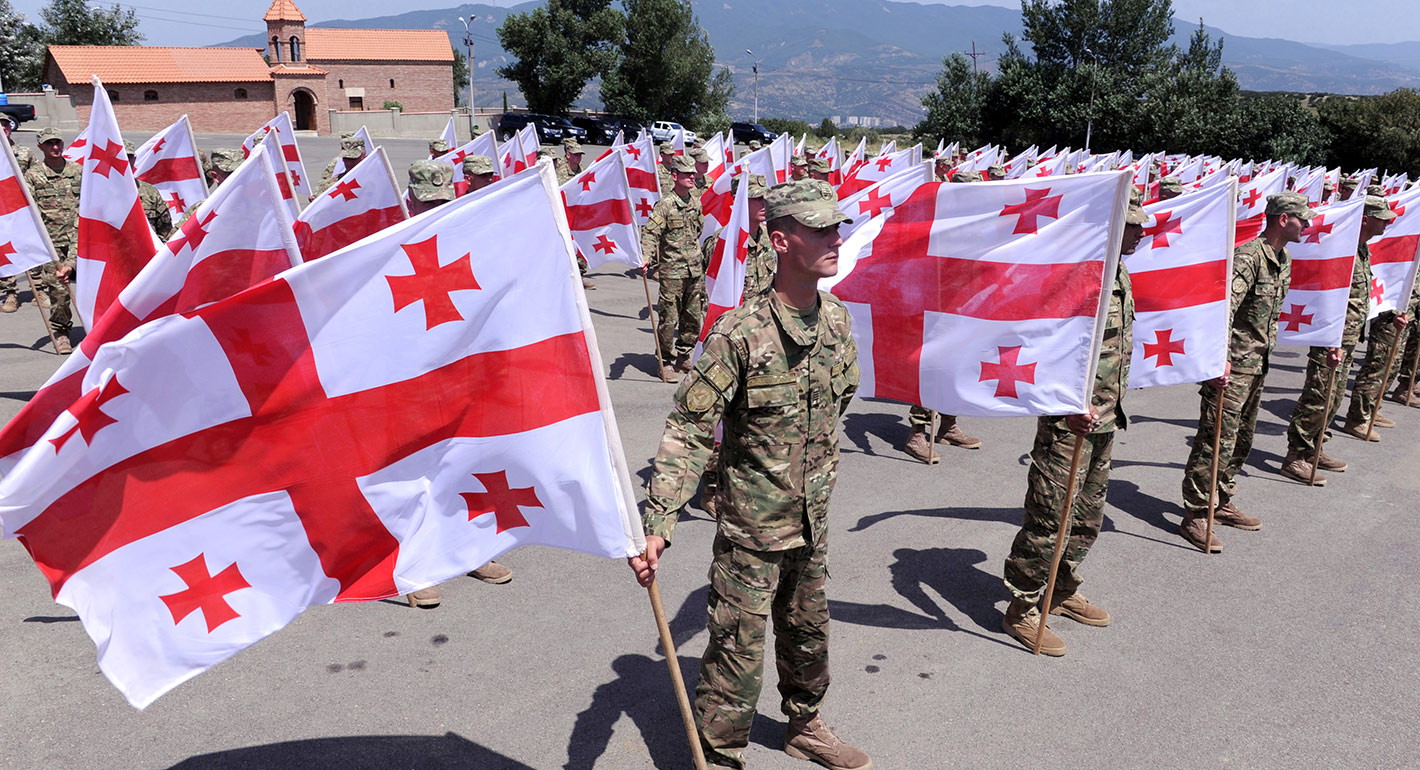
Georgian society has been politically divided for years, so the heated tone of the recent presidential election was not all that surprising. Increasingly entrenched political polarization, however, would complicate the consolidation of Georgian democracy
Source: World Politics Review
In the South Caucasus state of Georgia, Salome Zurabishvili, who was backed by the ruling Georgian Dream party, won a bitterly contested presidential runoff last week against Grigol Vashadze, who was supported by the opposition United National Movement. Zurabishvili’s 16-point margin of victory was unexpectedly wide given her razor-thin lead in the first round of voting held in October, and the election process was marred by accusations of electoral irregularities and an unlevel playing field. In an interview with WPR, Paul Stronski, a senior fellow in the Russia and Eurasia Program at the Carnegie Endowment for International Peace, discusses the election results and explains why entrenched political polarization could spell trouble for the future of Georgian democracy.
Paul Stronski: Georgian society has been politically divided for years, so the heated tone of this election was not all that surprising, although some of the rhetoric was more extreme than normal. The general debasement of politics around the globe—most visibly seen in the United States since 2016—may have contributed to the candidates’ decisions to go low in this campaign, but the polarization of Georgia’s political space likely played an important role as well.
Salome Zurabishvili and Grigol Vashadze were the formal candidates on the ballot, but as in every Georgian election since 2012, the race was dominated by outsized political personalities who are no longer officially serving in government. As usual, those were the billionaire former prime minister and Georgian Dream founder Bidzina Ivanishvili and former President Mikheil Saakashvili. As a result, instead of choosing between two well-articulated policy visions for the future, Georgian voters were faced with a choice between two political factions that have long opposed each other tooth and nail. Each accused the other of cronyism, corruption and authoritarian tendencies in black-and-white terms. It was ugly...
This article was originally published by World Politics Review.
Former Senior Fellow, Russia and Eurasia Program
Paul Stronski was a senior fellow in Carnegie’s Russia and Eurasia Program, where his research focuses on the relationship between Russia and neighboring countries in Central Asia and the South Caucasus.
Recent Work
Paul Stronski
Paul Stronski
Carnegie does not take institutional positions on public policy issues; the views represented herein are those of the author(s) and do not necessarily reflect the views of Carnegie, its staff, or its trustees.

The European far right might fail to steer EU policy in the direction Russia wants, but they will create enough chaos inside Europe to benefit the Kremlin.

Dimitar Bechev

If the Russian-speaking community in Latvia cannot articulate their interests without being seen as disloyal, they could end up embracing a pro-Kremlin agenda.

Sergejs Potapkins

Russia’s ruling party would have benefited from Putin appearing as its distant patron, but as an active frontman imposing his views on the public, he has done nothing but harm both the party’s election campaign and the ruling system overall.

Andrey Pertsev

In the tenth year of his presidency, President Mirziyoyev’s system is becoming even more personalized than that of his predecessor Karimov.

Galiya Ibragimova

The greater threat to Zelensky comes not from Fedorov alone, but from the convergence between the former defense minister’s political campaign and the anti-corruption investigations moving ever closer to the presidential administration.

Balázs Jarábik